🧠 YOUR BRAIN
🚨 STRESS MODE
👥 FRIENDS & CHOICES
⚡ Nicotine Plugged
🔌 Nicotine Unplugged
100
This part of your brain helps you plan, make decisions, control impulses, and think about consequences.
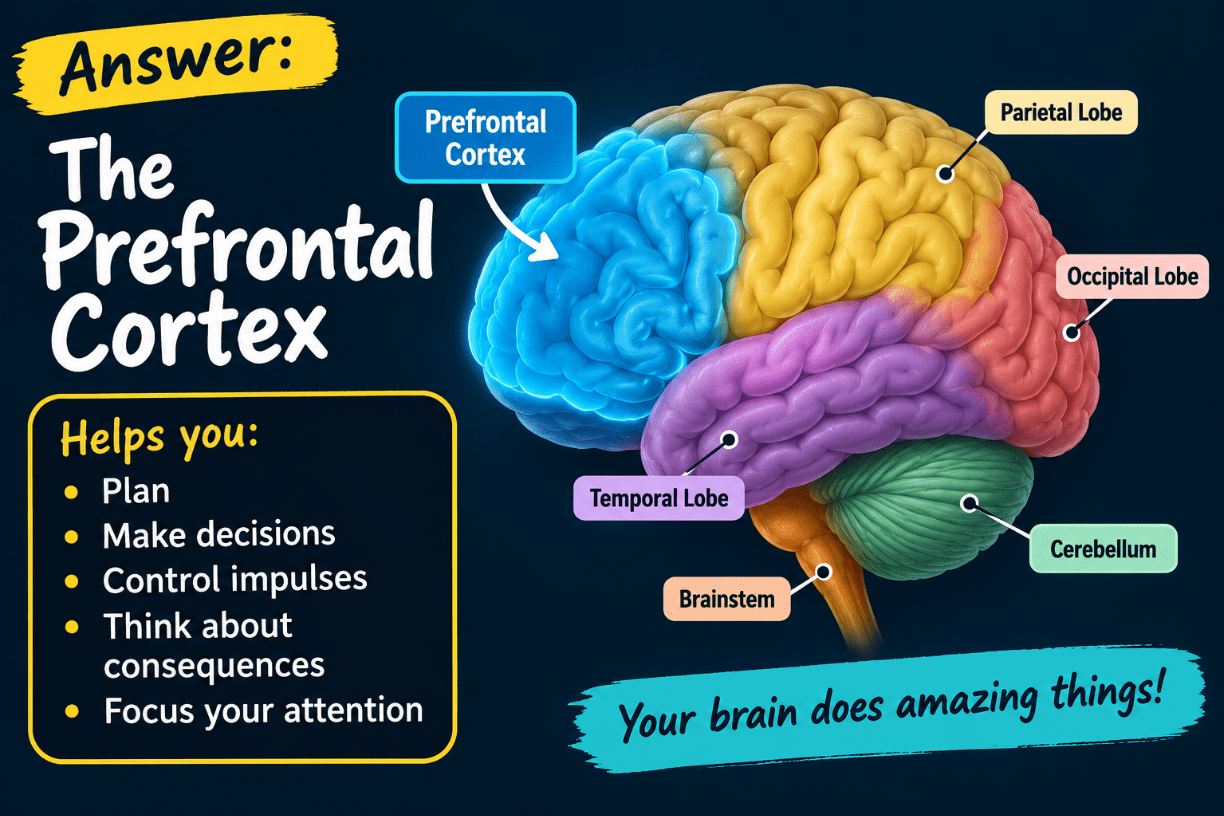
Answer: The prefrontal cortex
100
What part of the brain acts like an alarm system, helping detect possible threats and triggering an emotional response?
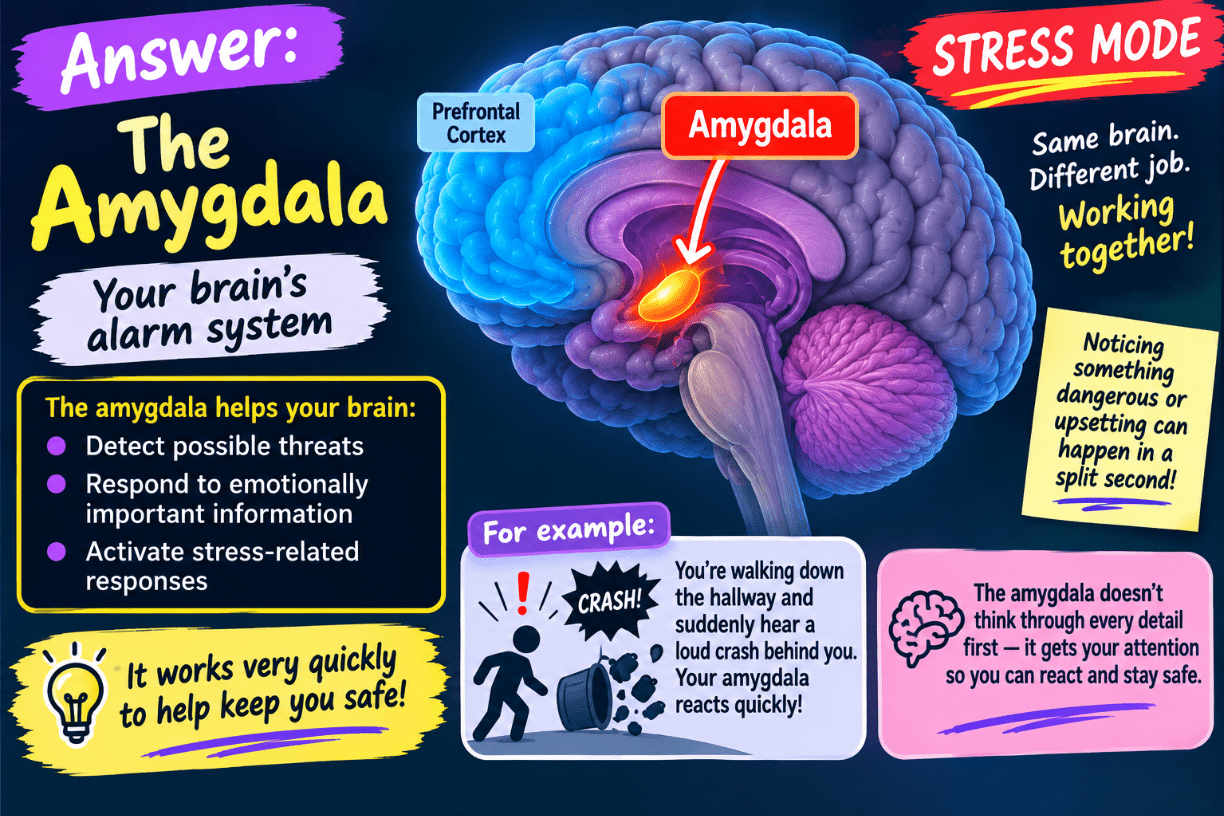
Answer: AMYGDALA
100
True or False: During the teen years, approval and acceptance from friends can have a strong influence on decisions.
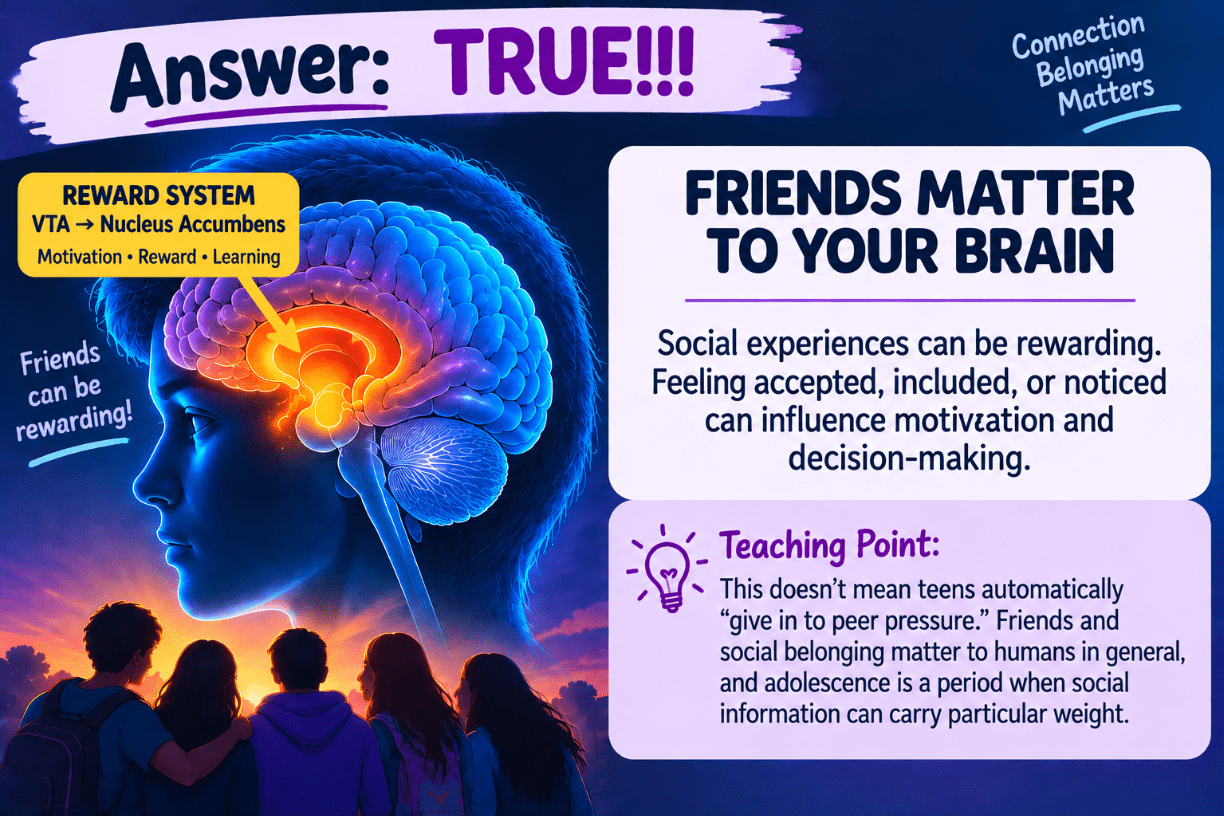
Answer: TRUE
100
Nicotine acts like a brain chemical you already have. What chemical does it mimic well enough to attach to its receptors?
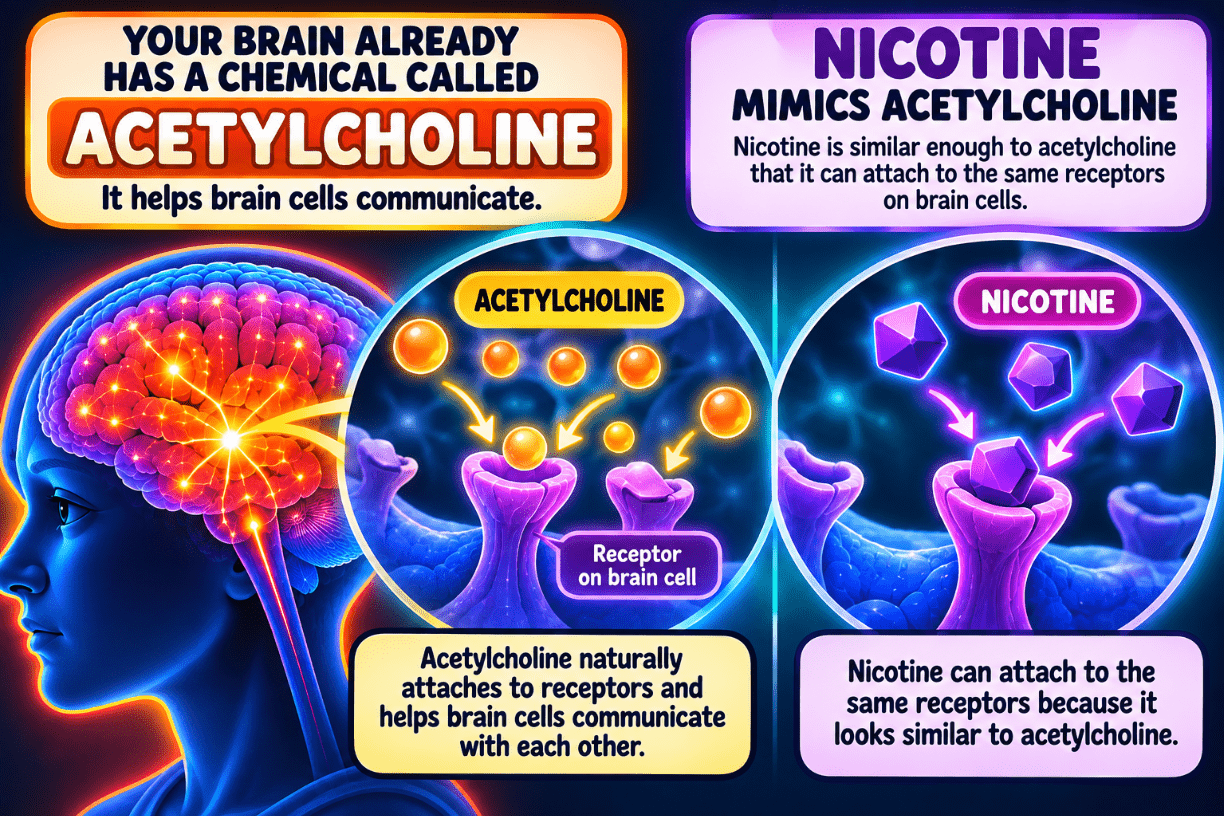
Answer: Acetylcholine
100
Question:
True or False: If your brain has learned to connect certain people, places, feelings, or routines with vaping, it can also learn new responses to those triggers.
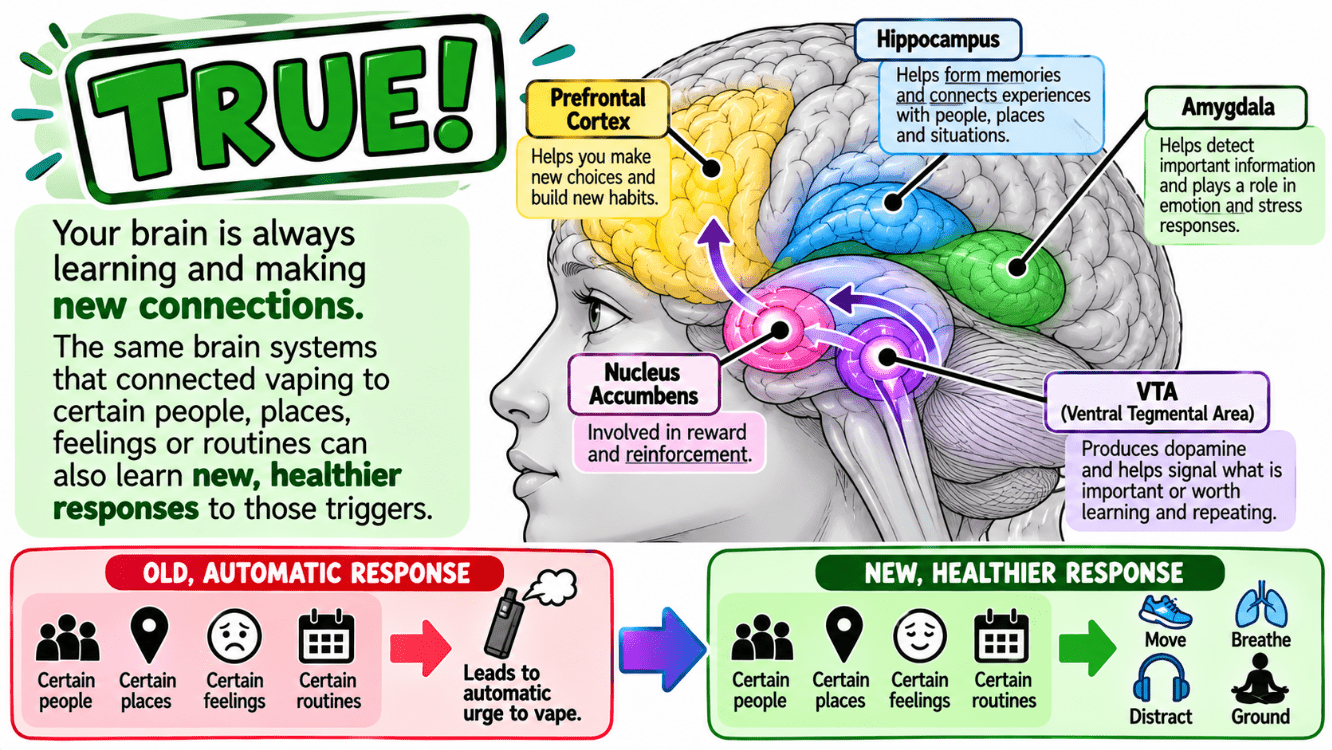
Answer: True.
300
This brain chemical helps your brain learn what is important and motivates you to do it again.
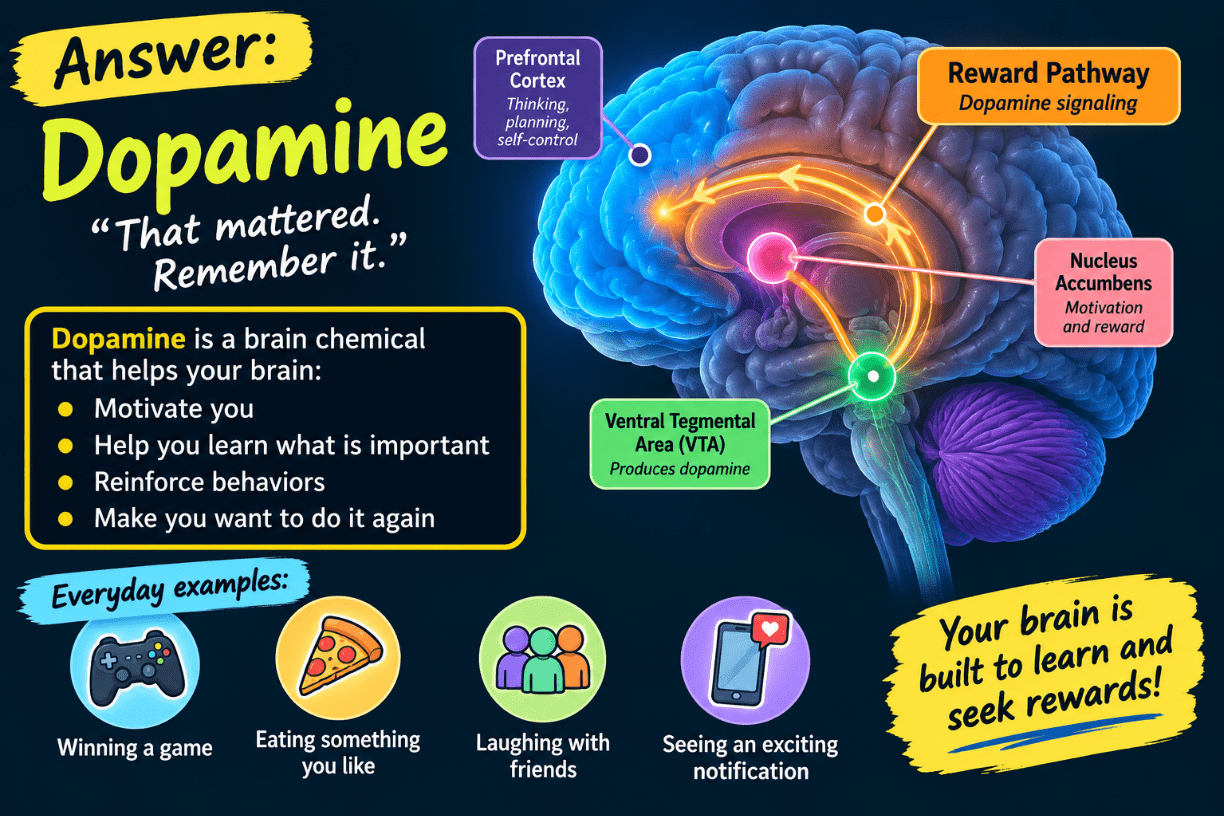
Answer: Dopamine
300
When stress gets really high, what can become harder for your brain to do?
Give me two examples
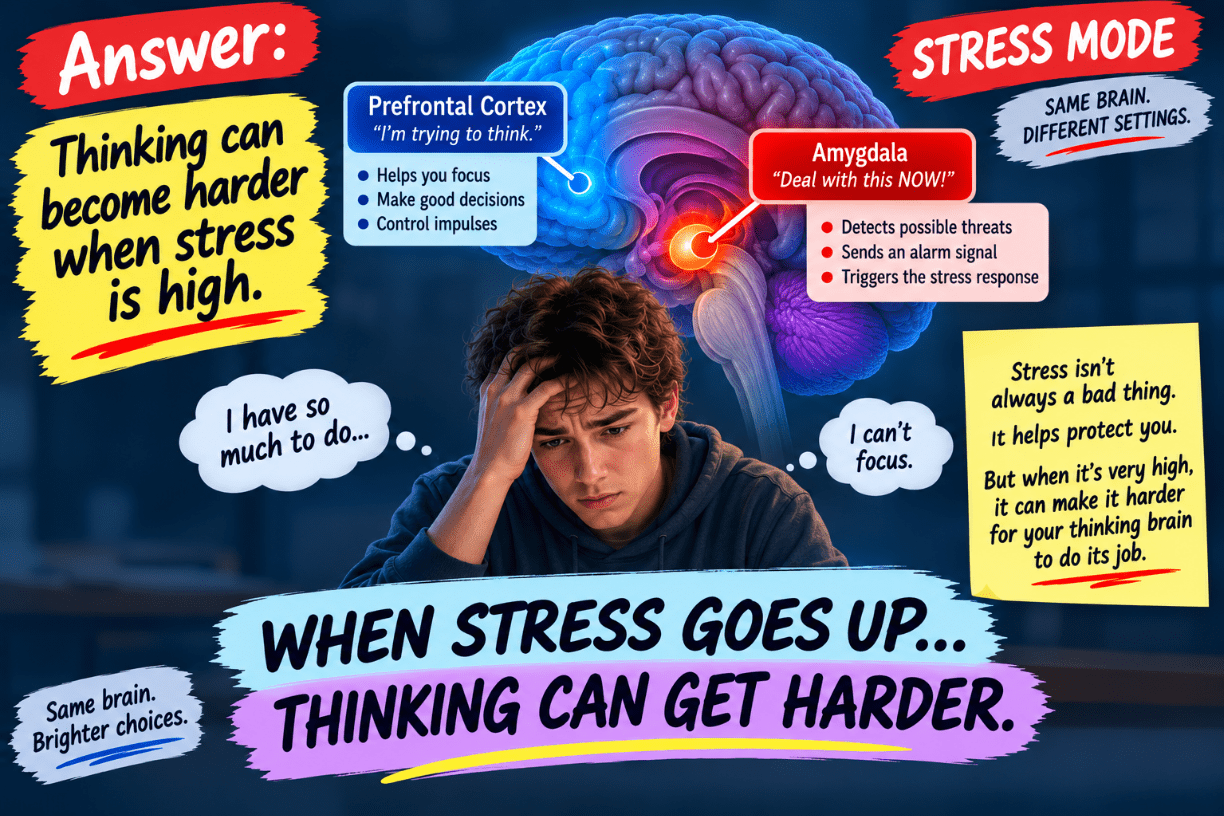
Answer: Any examples that demonstrate difficulty thinking and making decisions.
300
You're with friends and someone suggests doing something you know could get you in trouble. Part of you wants to go along because everyone is laughing and having fun. Another part is thinking about what could happen afterward.
What two brain systems are helping pull you in different directions?
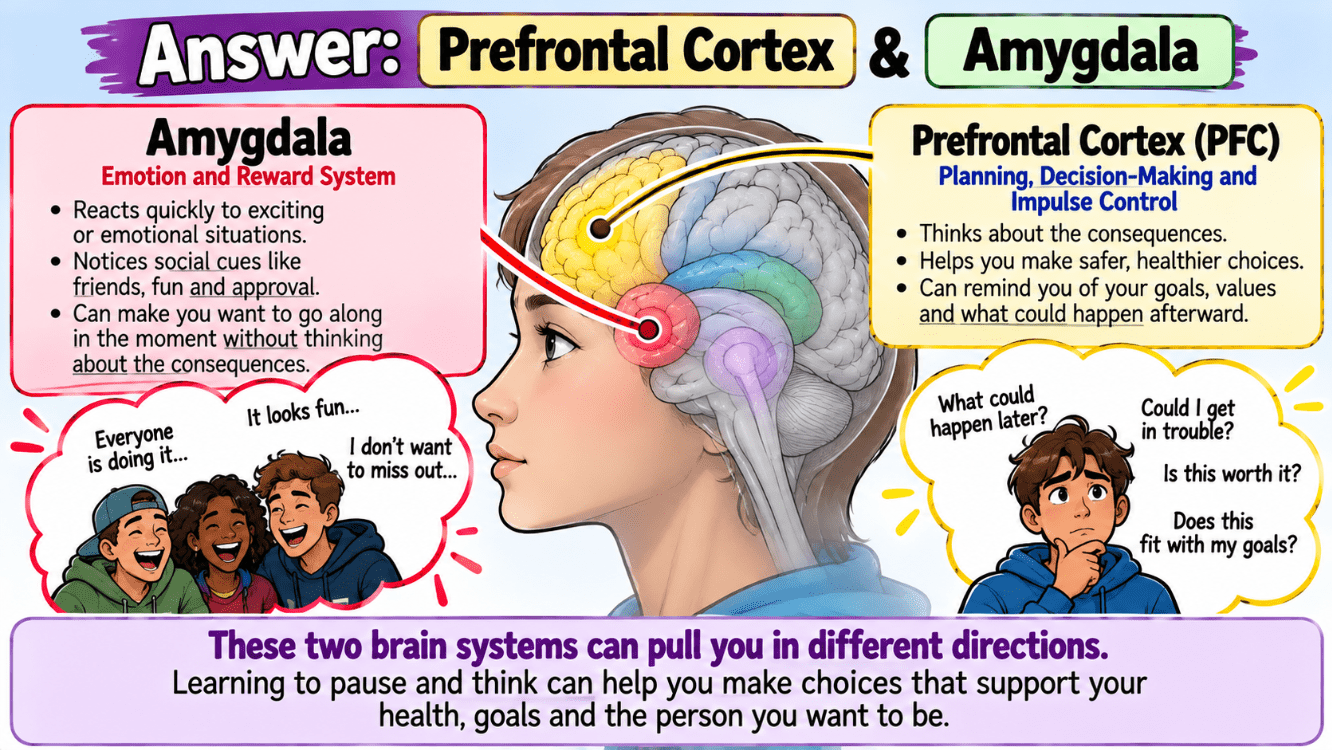
Answer: Amygdala (reward/social motivation systems)+ the prefrontal cortex
300
Taylor has been vaping for a while. Taylor takes a hit from a vape and shortly afterward feels a strong sense of, “I want to do that again.”
What is happening in the brain's reward system that can help reinforce the behavior?
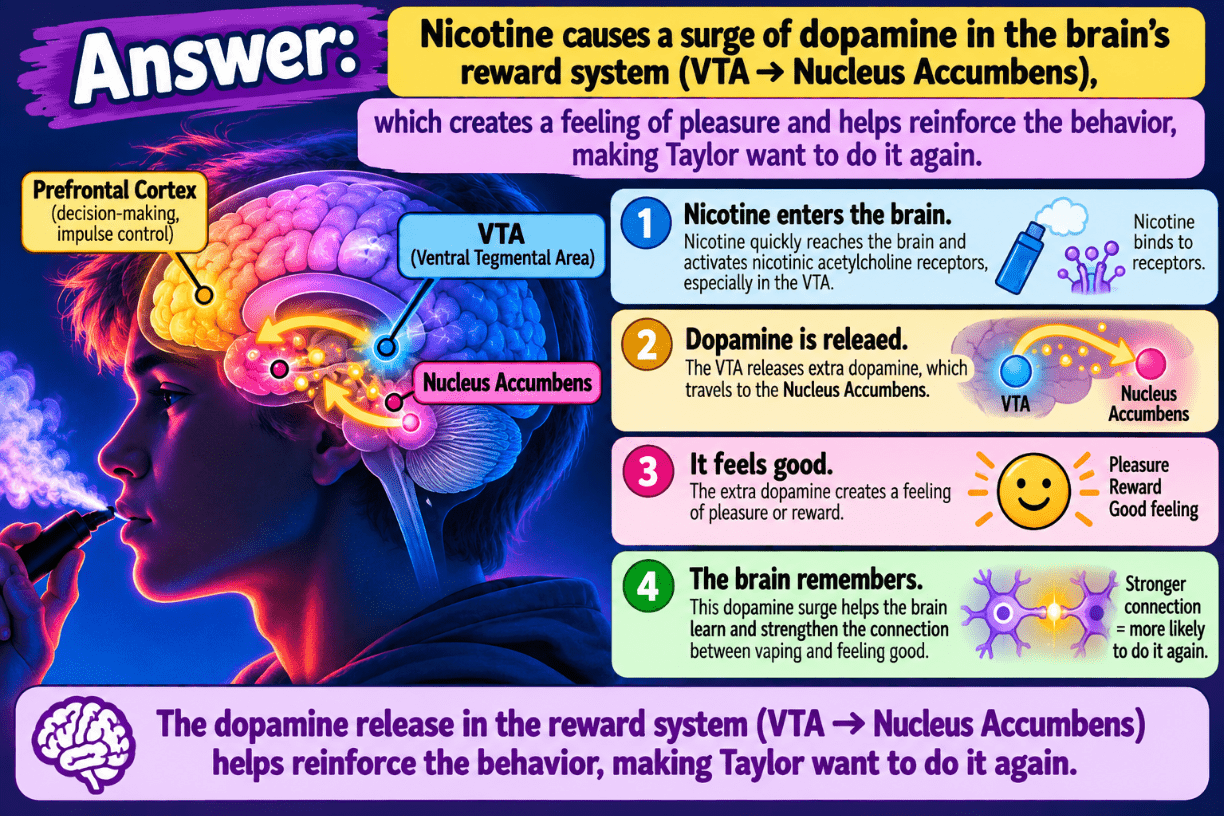
Answer: Nicotine is triggering the desire for more.
300
Every time Sam gets stressed while doing homework, Sam gets a strong urge to vape. Sam wants to break that connection. What could Sam do when the craving hits to start teaching the brain a NEW response to stress?
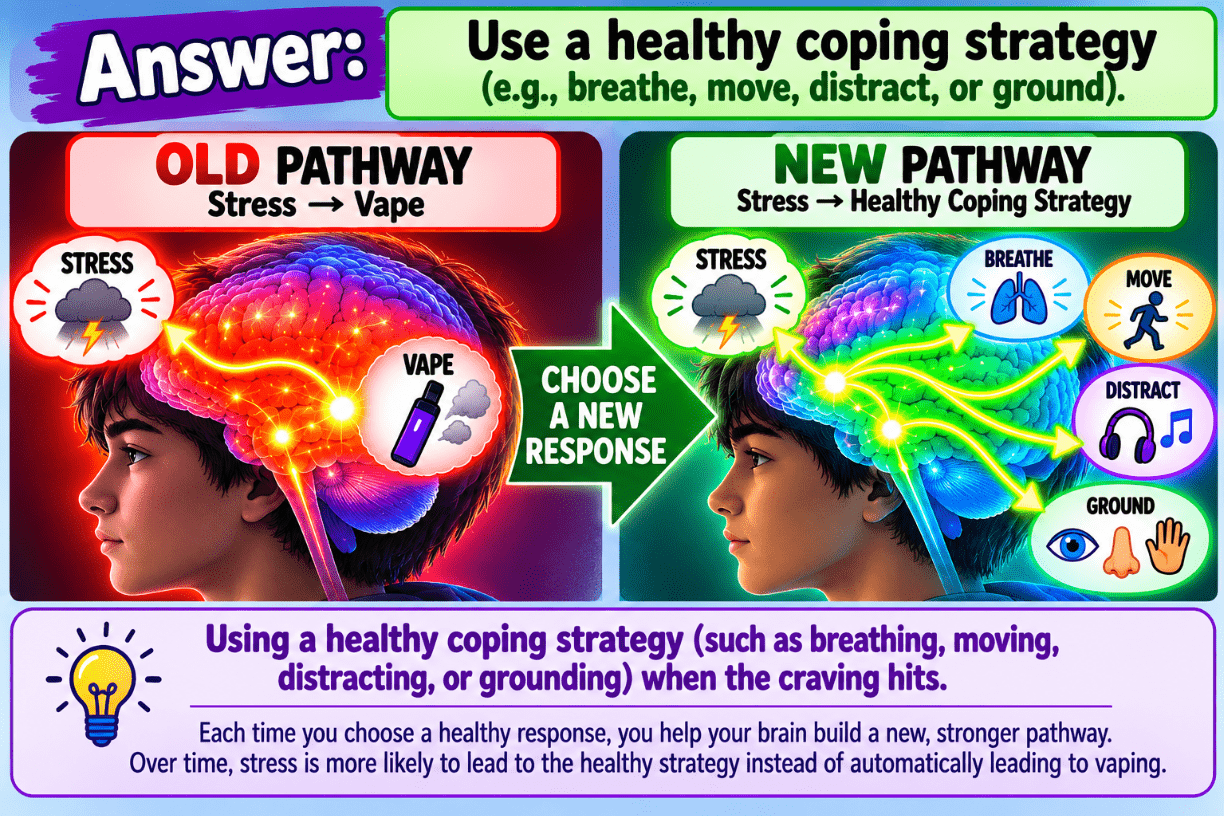
Answer: Recognize the pattern and choose a new response
500
You're supposed to be doing homework. Your phone buzzes with a notification. You tell yourself, “I'm not going to look.” But you REALLY want to check it.
What two brain systems are competing for your attention?
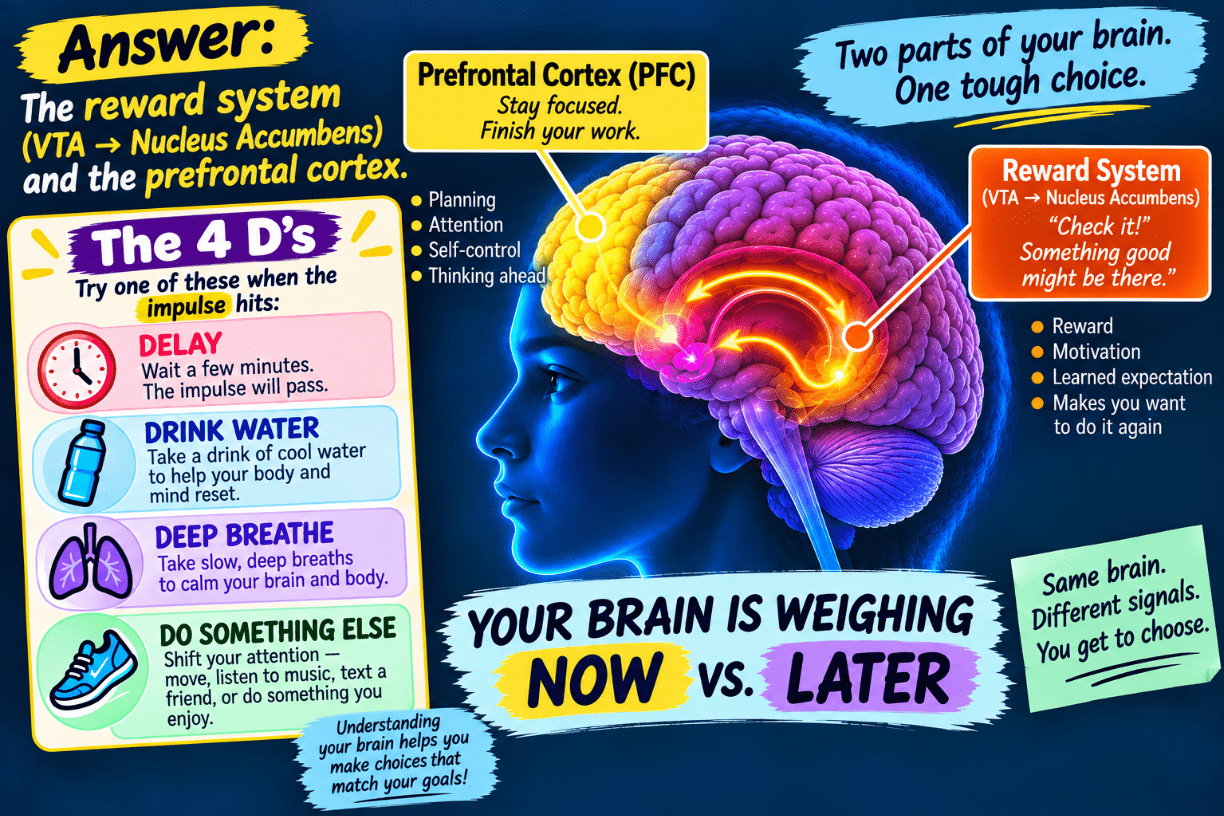
The VTA (reward system) and the prefrontal cortex.
500
Alex vapes regularly. Before a big test, Alex feels stressed and realizes they haven't vaped for several hours. They're irritable, restless, having trouble concentrating, and craving their vape.
Alex takes a few hits and says, “See? Vaping helps my stress.”
What might actually be happening?
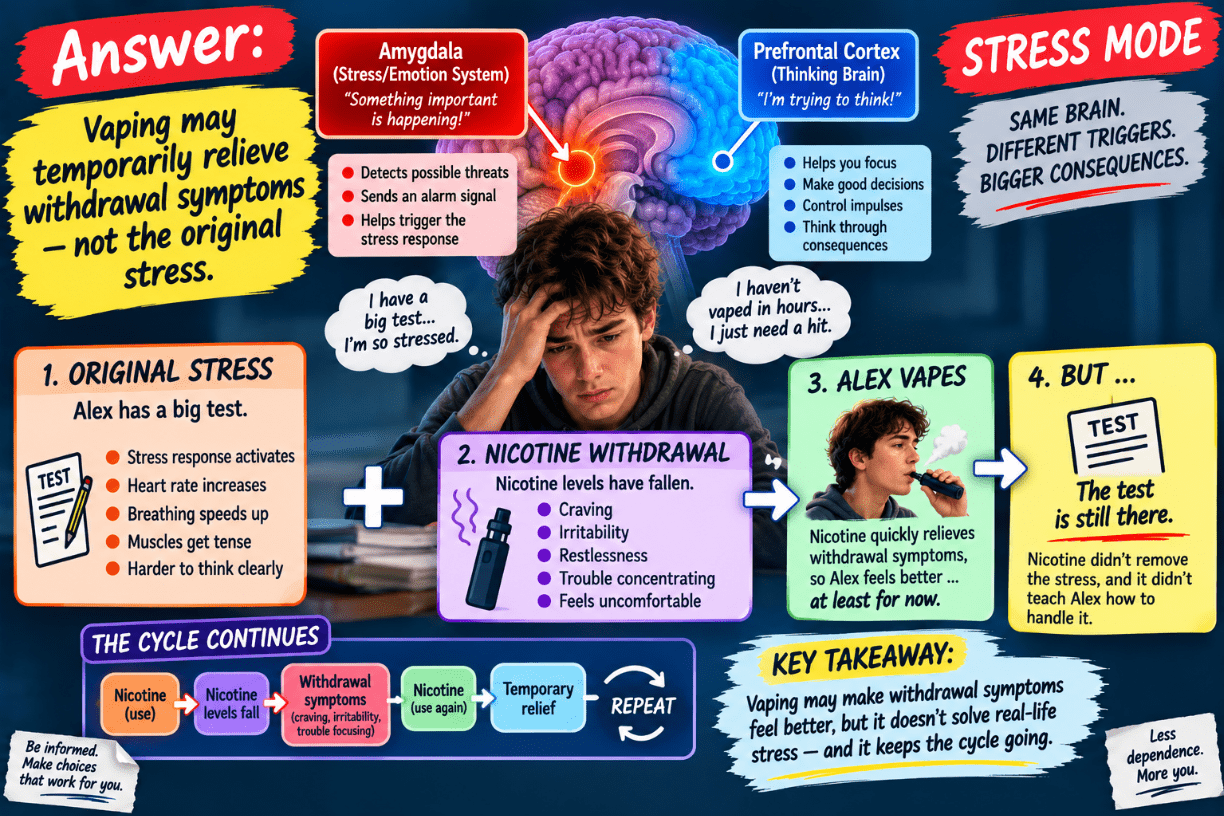
Answer: Stress is created by nicotine so requires nicotine to relieve it.
500
You're hanging out with friends and someone offers you a vape. You weren't planning to vape, but everyone else seems okay with it and you don't want to feel left out.
What might be happening in your brain as you decide what to do? Identify at least 2 things.
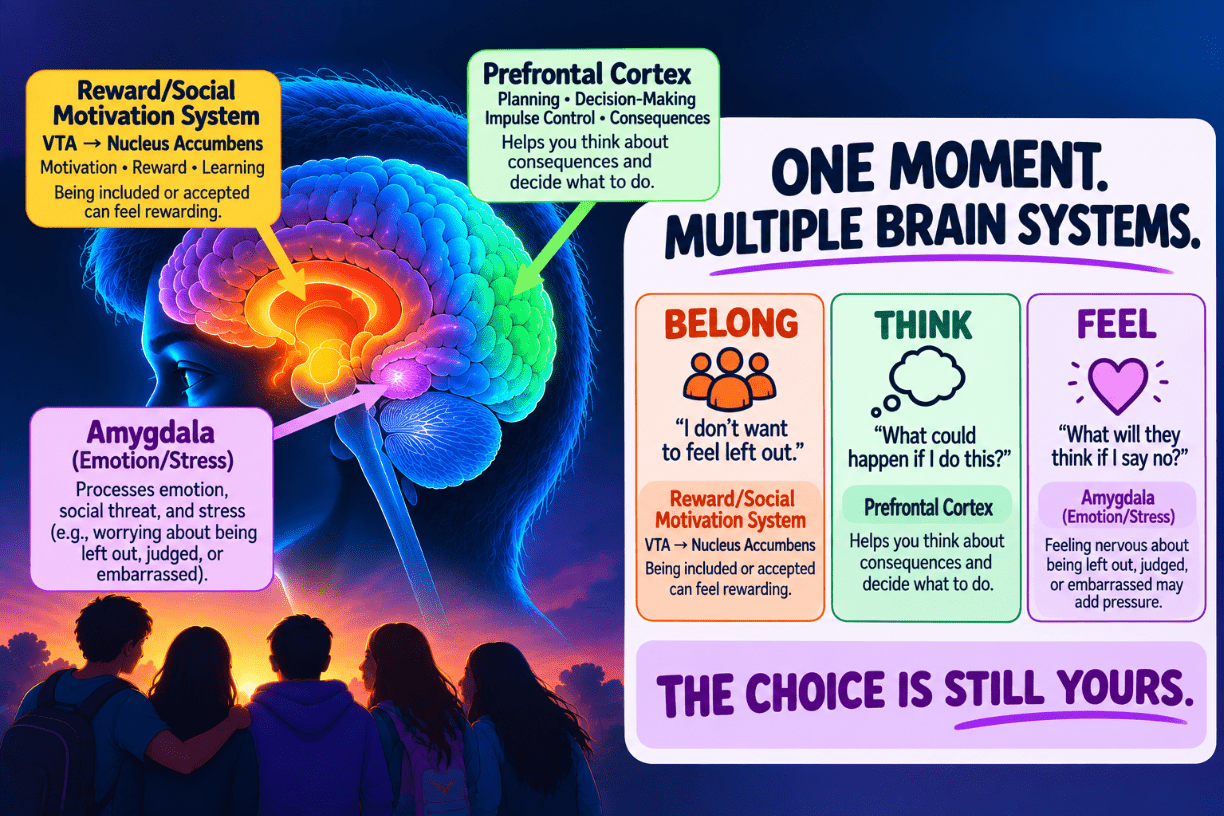
Answer: Multiple areas are being triggered at once.
500
Jordan usually vapes while hanging out with friends after school. After doing this repeatedly, Jordan notices that just meeting up with those friends can trigger a strong urge to vape—even before anyone takes out a vape.
Why might that happen?
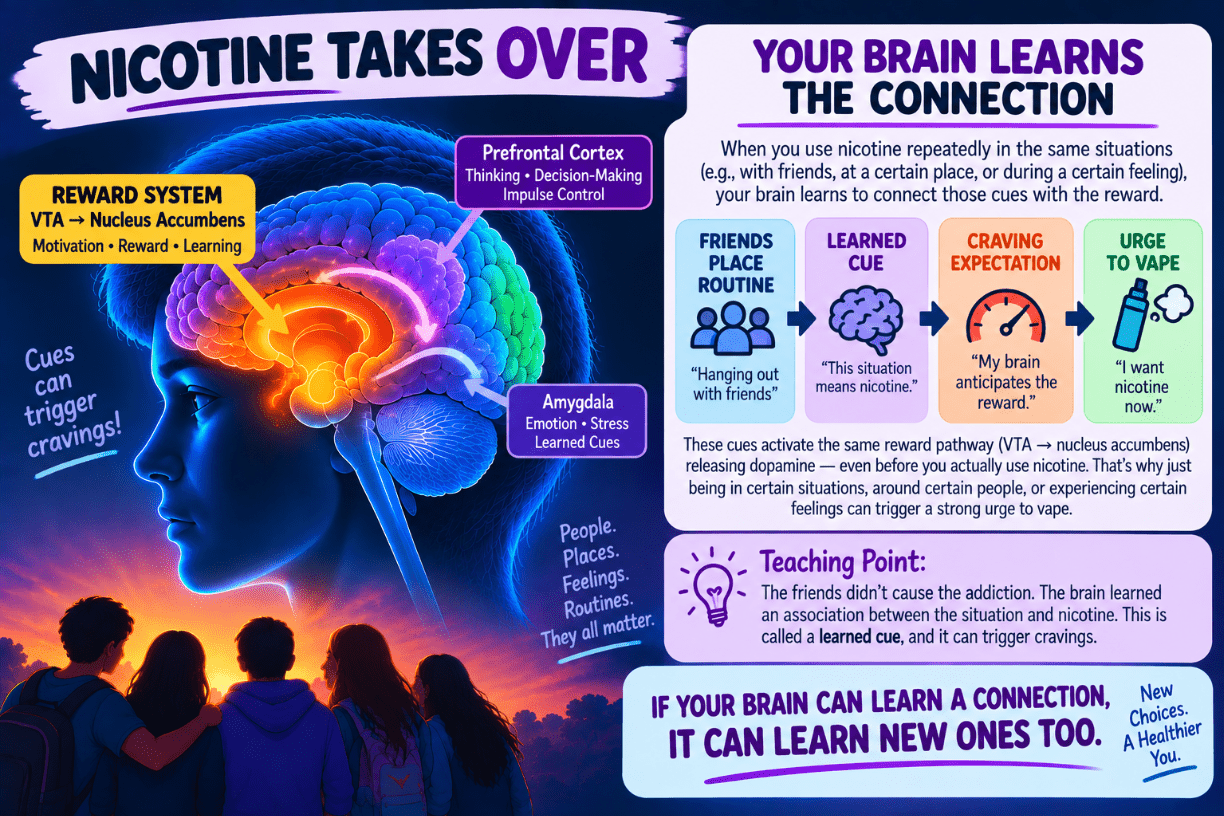
Answer: Learned response. Brain has created an association.
500
Maya has been vaping regularly for a while. She decides she’s going to stop. The next day she feels irritable, restless, and has trouble concentrating. At lunch, she sees friends vaping and suddenly really wants to vape. Part of her brain remembers how quickly vaping made those uncomfortable feelings go away, while another part remembers why she wanted to quit.
Why can quitting feel so difficult—even when Maya really wants to stop?
Name at least 3 different processes in the brain that are at work here.
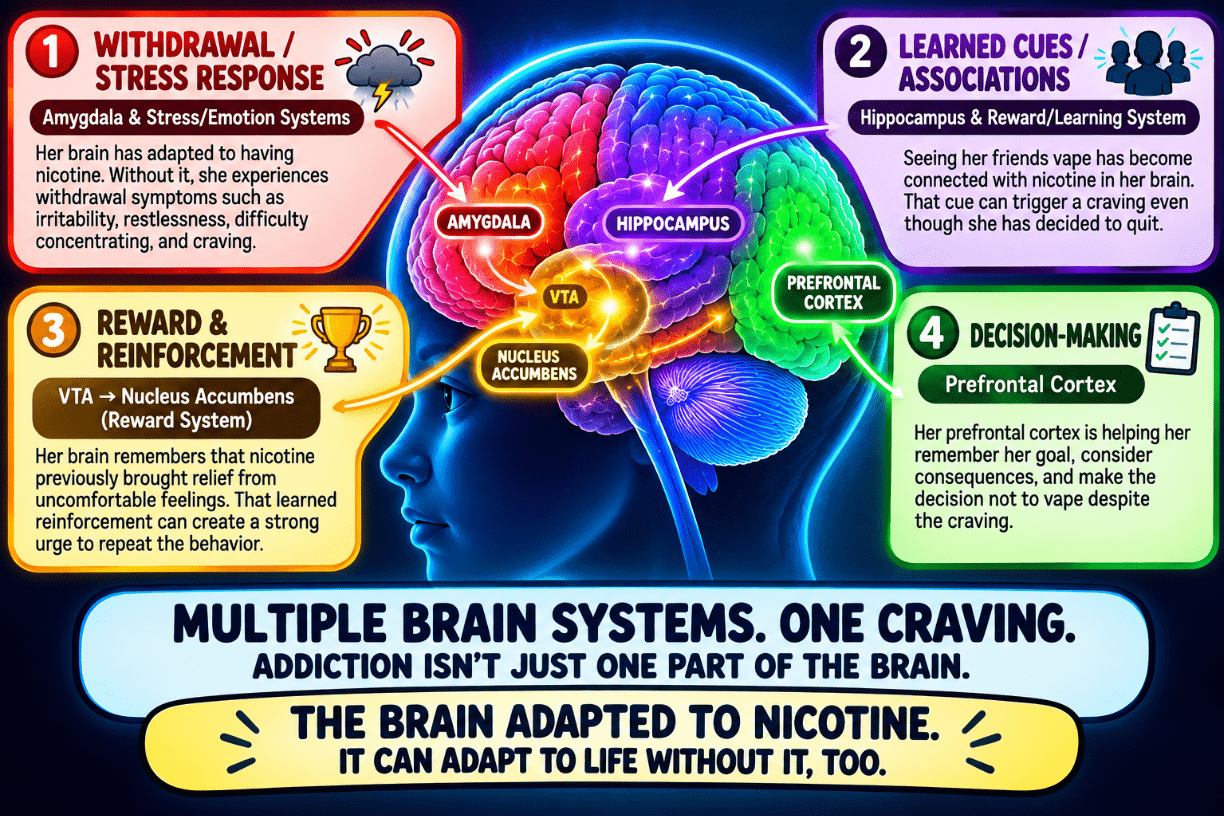
Answer: Different brain parts are competing for attention. Part 2: See above.