Pharmacology
Health Assessment
Fluid and Electrolytes
GU/GI Elimination
Miscellaneous
Skin Integrity
100
This class of medication thins and loosens respiratory secretions making them easier to cough up.
Expectorant
100
The lymph node located below the clavicle.
Infraclavicular
100
The term used when there is a fluid shift from the vascular space to an area where it is not available to support normal physiological processes.
Third spacing
100
The most common bacteria seen in Urinary Tract Infections (UTIs).
Escherichia Coli
100
The 6 rights of medication administration.
Right: patient, medication, dose, route, time, documentation
100
The term for swelling caused by excess fluid in the tissues that leaves an indentation when pressure is applied to the skin.
Pitting edema
200
This class of medication reverses the respiratory depressant effect of opioids.
Opioid Antagonist
200
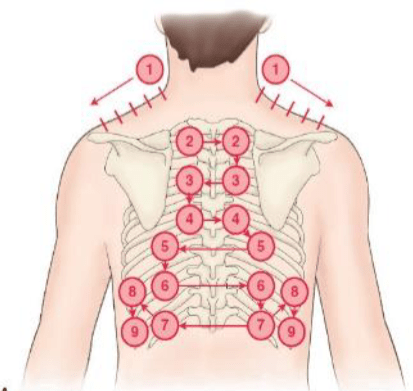
The number of landmarks auscultated posteriorly on the thorax. Demonstrate using the stethoscope provided.
18 total
200
The 3 types of IV solutions.
Isotonic
Hypotonic
Hypertonic
200
The typical expected time range (in hours) for a patient to void after removal of an indwelling urinary catheter.
6-8 hours
200
The 4 main types of transmission-based precautions.
1. Standard (all)
2. Contact (gown, gloves)
3. Droplet (mask)
4. Airborne (special mask and room)
200
The 4 types of wound drainage.
Serous
Serosanguinous
Sanguinous
Purulent
300
This class of medication relaxes muscles around bladder neck and prostate making it easier to urinate.
Alpha Adrenergic Blocker
300
The harsh, loud, high-pitched sound heard on inspiration as a result of narrowing or presence of foreign body in the upper airway.
Stridor
300
The result of leakage of a tissue-damaging drug outside of the vein into surrounding tissue.
Extravasation
300
The term used when 24-hour urine output is less than 400mL.
Oliguria
300
The term for presence of blood in the pleural space.
Hemothorax
300
Stage the wound below. 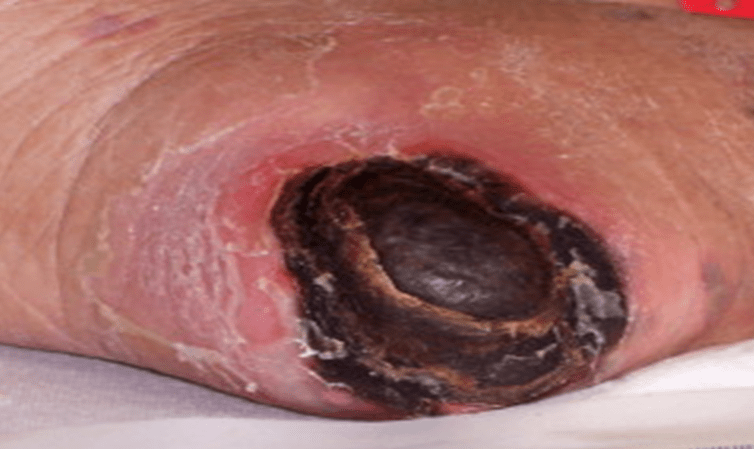
Unstageable
400
This class of laxative works by drawing water into the colon to soften stool.
Osmotic laxative (Ex: Miralax)
400
The 3 cranial nerves that have sensory function only.
Olfactory (I)
Optic (II)
Vestibulocochlear (VIII)
400
The normal values for sodium, potassium, calcium and magnesium.
Sodium: 135-145 mEq/L
Potassium: 3.5-5.3 mEq/L
Calcium: 9-11 mg/dL
Magnesium: 1.5-2.5 mE1/L
400
The clinical tool used to classify stool based on shape and consistency.
Bristol Scale
400
The patient has a new order for morphine 2mg IVP x1 now. The pharmacy stocks morphine 5mg/3mL vials. How many mL will the nurse administer?
1.2 mL
400
The acronym REEDA stands for.
Redness
Ecchymosis
Edema
Drainage
Amount
500
This antibiotic class is associated with pitting marks on the teeth.
Tetracyclines
500
The 5 landmarks of the cardiac exam and their locations.
APE TO MAN
Aortic: 2nd ICS R sternal border
Pulmonic: 2nd ICS L sternal border
Erb's Point: 3rd ICS L sternal border
Tricuspid: 4th ICS L sternal border
Mitral: 5th ICS L midclavicular line
500
Interpret this ABG and state the acid-base imbalance.
pH: 7.3
CO2: 50 mmHg
HCO3: 24 mEq/L
Uncompensated Respiratory Acidosis
500
The 5 classes of laxatives.
1. Bulk forming
2. Osmotic
3. Stimulant
4. Stool softener (Emollient)
5. Lubricant
500
The 5 levels of Maslow's Hierarchy of Needs.
1. Physiologic
2. Safety
3. Love and Belonging
4. Esteem
5. Self-actualization
500
This wound complication occurs when internal organs protrude through a surgical incision.
Evisceration