The Long Game
Golden Years,
Modern Meds
Modern Meds
Safety First,
Errors Never
Errors Never
Crunching the Caps
Call the Shots
100
This is the primary goal of rehabilitation, focusing on helping patients return to their highest possible level of function.
What is independence? (or "Restore to highest level of functioning")
100
This pharmacokinetic process is most affected by decreased intestinal motility in older adults.
What is absorption?
100
This critical "Universal Protocol" step occurs immediately before a procedure to verify the correct patient, site, and procedure.
What is a Time Out?
100
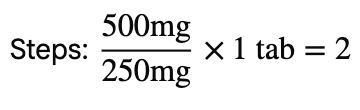
Order: Acetaminophen 500mg PO. On Hand: 250mg tablets. The nurse will administer this many tablets.
What is 2 tablets?

100
When a patient falls, this is the nurse's very first priority action.
What is assess the patient for injury?
200
A condition is generally classified as "chronic" if it requires management for at least this many months.
What is 3 months?
200
The concurrent use of multiple medications is often necessary for chronic conditions, but it increases the risk of adverse effects.
What is polypharmacy?
200
This fire safety acronym stands for Rescue, Alarm, Contain, and Extinguish.
What is RACE?
200
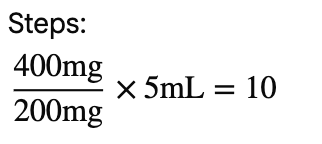
Order: Ibuprofen 400mg. On Hand: 200mg/5mL. The nurse will administer this many mLs.
What is 10 mL?
200
In a fire emergency, this is the "R" in RACE and the first priority for the nurse.
What is Rescue (or remove patients from immediate danger)?
300
These four specialized therapists often form the core of a rehabilitation team.
Who are Physiatrists, Physical Therapists (PT), Occupational Therapists (OT), and Speech-Language Pathologists (SLP)?
300
In older adults, this common mental status change is often the first sign of a physical issue like a UTI.
What is acute confusion (or delirium)?
300
This term describes an error that was caught and corrected before it actually reached the patient.
What is a "near miss"?
300
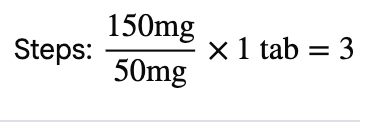
Order: Medication 150mg. On Hand: 50mg tablets. The nurse will administer this many tablets.
What is 3 tablets?
300
For an older adult with a new onset of dizziness, the nurse's priority safety intervention is this.
What are fall precautions (e.g., bed alarm, non-slip socks)?
400
This psychological concept is a major focus in rehab, as performing ADLs independently significantly boosts a patient's pride.
What is self-esteem (or self-image)?
400
When assessing medication adherence, this type of open-ended question is most effective.
What is "How many doses do you think you missed?"
400
These are "unexpected occurrences involving death or serious physical or psychological injury" that must be investigated.
What are sentinel events?
400
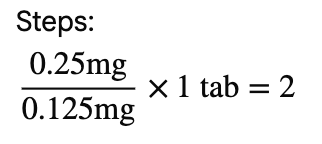
Order: Digoxin 0.25mg. On Hand: 0.125mg tablets. The nurse will administer this many tablets.
What is 2 tablets?
400
When teaching a patient with a new disability, the nurse should prioritize this to help them feel more in control.
What is giving the patient choices (promoting autonomy)?
500
These two respiratory and circulatory complications are common secondary problems resulting from immobility in chronic illness.
What are pneumonia and blood clots (DVT)?
500
Age-related declines in these two organs most significantly impact the metabolism and excretion of drugs.
What are the liver and kidneys?
500
After ensuring a patient is safe following a fall, the nurse must notify the provider and file this document (which does not go in the chart).
What is an incident (or occurrence) report?
500
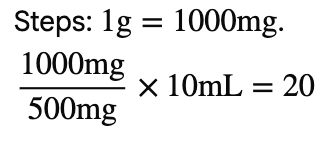
Order: Medication 1g. On Hand: 500mg/10mL. This nurse will administer this many mLs.
What is 20 mLs?
500
Before administering a new medication to an older adult, the priority assessment is to check for this risk factor.
What is potential drug-drug or drug-food interactions?