Subjective/ objective Data
I am in Pain!
Vitals sign?
Bone and muscle
My Heart
Skin, hair and nails
Neuro and CN
Mental Status
100
Name 3 subjective data that is included in a complete health history

100
A patient with myocardium infraction has pain on the center of his back. Describe this type of pain.
referred pain
100
This is the first action that a nurse would take after obtaining an unexpected blood pressure reading of 152/92.
Validate the date
100
List 4 types of join movements
Eversion
Inversion
Dorsiflexion
Plantar flexion
Flexion extension
Elevation
Abduction
Adduction
Pronation
Supination
100
List 3 subjective data for cardiovascular system review
Chest pain
◦Dyspnea
◦Cough
◦Fatigue
◦Edema
◦Nocturia
100
The nail changes on patient with chronic respiratory disease
clubbing
100
Please close your eyes and hold one of your nostrils closed. What do you smell? Which cranial nerve is this testing? 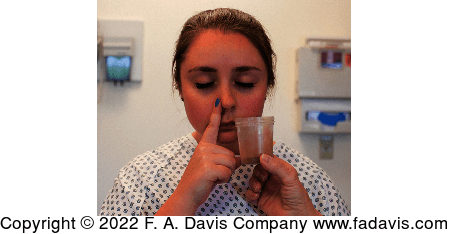 *-
*-
Cranial nerve 1
100
The nurse is assessing a client's mental status and asks him to explain the meaning of "A penny saved is a penny earned."
What is the nurse assessing?
abstract reasoning
200
Give an example of a closed end question
yes/no question
200
What are the differences between neuropathic and nociceptive pain?
nociceptive pain: defense mechanism, response to tissue damage, sharp, ache, localized
neuropathic: reaction from dysfunction of nervous system, burning, numbness, diffused
200
This can happen if you have the incorrect blood pressure cuff size
underestimate or overestimate the BP
200
You are performing a musculoskeletal assessment and ask the individual to move his right arm toward the midline of his body. What ROM are you assessing?
Adduction
200
This extra heart sound is characterized by either increased blood velocity, decreased blood viscosity, structural defects in valves, unusual openings in chambers.
murmur
200
A client is very anxious about numerous skin tags on the back and worried that they are skin cancer. What should be your response?
Skin tags are common benign skin lesions
200
You are assessing this cranial nerve and palpate an abnormally weak strength when the person open and closes their jaw. This indicates disorder of which CN?
cranial nerve V
200
When assessing this aspect of cognitive function when asking patient “What will you do if you feel the need to use cocaine again?”
Judgement
300
Name the four techniques use in health assessment
Inspection, palpation, percussion, auscultation
300
Which type of pain usually not affected the vital signs?
chronic pain
300
define bradycardia?
pulses < 60 bpm
300
This test is used to assess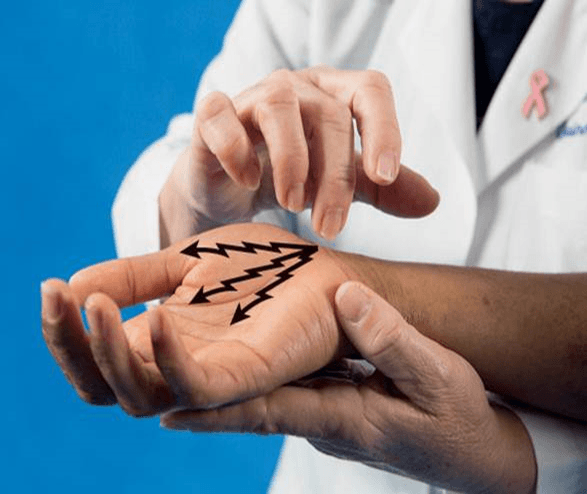
Tinels test for carpel tunnel.
300
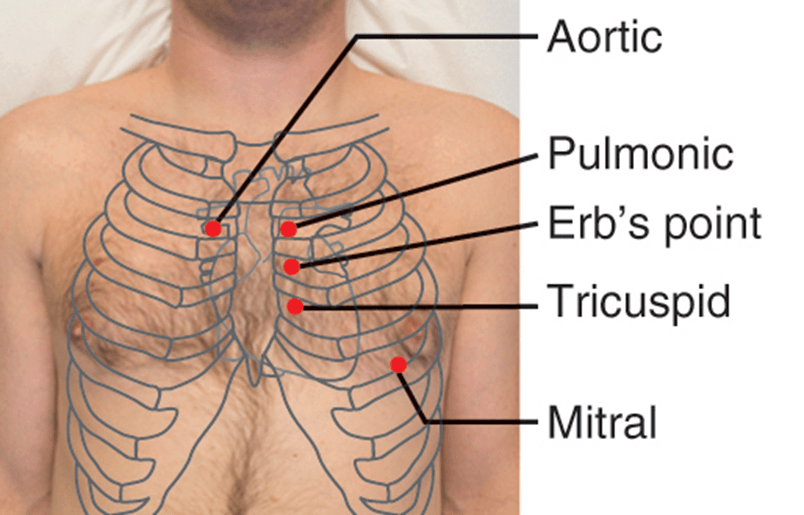
Name each landmark of the precordium
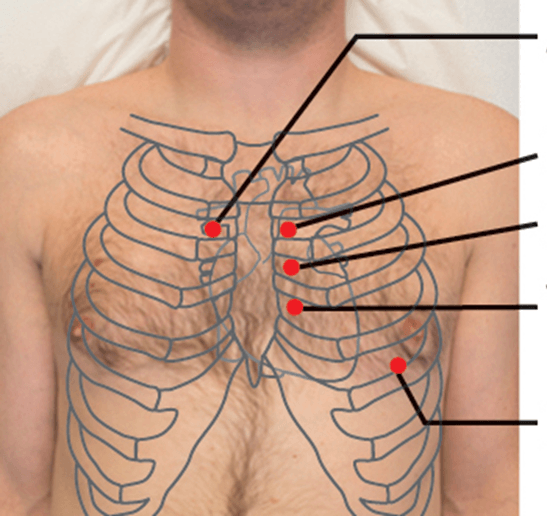
Right sternal border (RSB), 2nd intercostal space (ICS) (Aortic area)
Left sternal border (LSB), 2nd intercostal space (ICS) (Pulmonic area)
Left sternal border (LSB), 3rd intercostal space (ICS) (Erb’s point)
Left sternal border (LSB), 4th intercostal space (ICS) (Tricuspid valve)
Left sternal border (LSB), 5th intercostal space (ICS) (Mitral valve)
300
An assessment tool to assess the client's risk for skin breakdown?
Braden Scale
19 or higher = no risk
300
A patient cannot puff out their cheeks when asked. You know there is a dysfunction of this cranial nerve.
CN VII
300
A patient has slowed speech, poor concentration, and reports feelings of hopelessness. What psychiatric or neurological condition should the nurse suspect?
Depression
400
This is the single most important method of preventing infection transmission by the nurse when coming into contact with a client
Handwashing
400
What nerve sends pain message to the brain?
sensory neurons or afferent neurons.
400
You are obtaining a patient's vital signs. He told you he just finished a cup of coffee and then ran up the block for this appointment. What is your action?
Wait 2-5 min to assess blood pressure and take either a Tympanic or temporal blood pressure
400
You are assessing a joint and the person is able to move with full resistance through range of motion. How do you document the findings?
Strength 5/5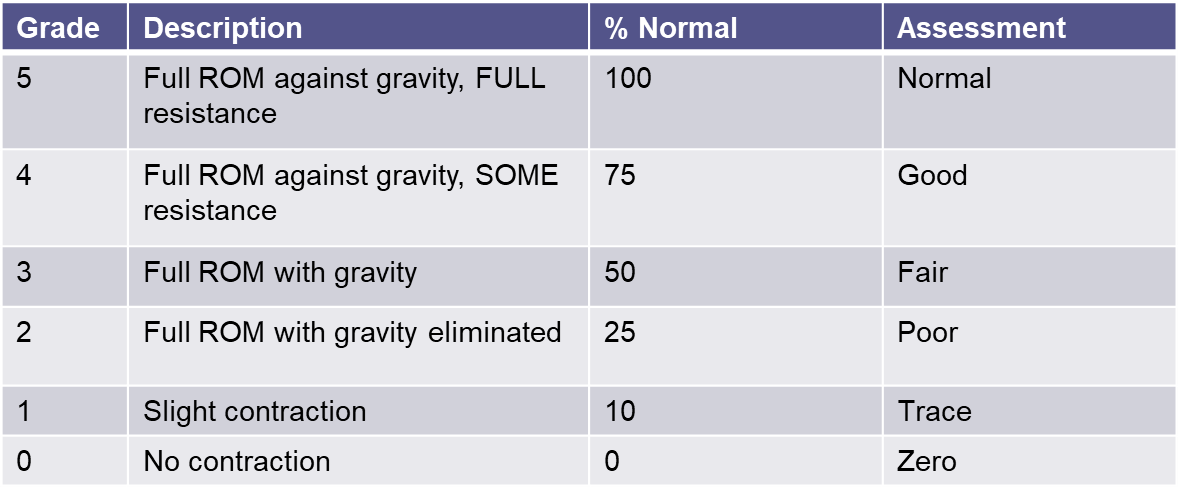
400
S3 and murmur are common in children, athletes and during pregnancy. True/false
True
400
A dark-skinned client visits the clinic because he “hasn’t been feeling well.” To assess the client’s skin for jaundice, the nurse should inspect the client’s
sclera
400
A client has an injury that affects the posterior sensory nerve columns of the spinal cord. The nurse will most likely find these things during the examination of the sensory system?
Alteration in the perception of position
Changes in the perception of vibration
400
A client has been diagnosed with stomach cancer, the PHQ 7 score is 25 (severe depression). What should you assess next?
Suicide
500
A nurse is preparing to perform a physical examination on a young man who appears anxious about the procedure. What could a nurse do to ease this client's anxiety
Before performing each procedure, explain what it involves and its purpose.
500
What pain assessment tool is used for patient with dementia?
PAINAD (>2 indicate pain)
- Breathing: Normal, rapid, shallow, labored, or gasping
- Negative vocalization: Moaning, groaning, crying, or sighing
- Facial expression: Grimacing, frowning, or wincing
- Body language: Restlessness, pacing, clenching fists, or pulling away
- Consolability: Difficulty being comforted or soothed
500
What is orthostatic hypotension?
a decrease in systolic blood pressure of 20 or more, or a decrease in diastolic blood pressure of 10 or more when BP are measured within 3 minutes of position changing from supine to standing.
500
Your patient has tenderness just below the tip of the acromion in the area of the tendon insertions with negative empty cup test. What is the most likely cause of it?
Rotator cuff tendinitis
500
This abnormal heart sound occurs during early diastole secondary to increased atrial pressure and dilated ventricle.
S3
500
A nurse working on an orthopedic unit is caring for four clients. Which of the following clients should the nurse identify as being at greatest risk for skin breakdown?
1) An adolescent who has a cervical fracture and is in a halo brace
2) A young adult who has a femur fracture and is in skeletal balanced suspension traction
3) A middle adult who has a fractured radius and an arm cast
4) An older adult who has a hip fracture and is in Buck's traction
An older adult who has a hip fracture and is in Buck's traction
500
A patient shows unilateral weakness, hyperreflexia, and positive Babinski sign. What does the lesion likely locate?
upper motor neuron (UMN) lesion,
500
A person that is falls asleep between assessments but does not require stimulus for a response to your question is experiencing this level of consciousness
Alert
LETHARGIC
Obtunded
Stuporous
Coma