OH! my bones and muscles
Help! it's my Heart
HEENT!!!
What are you eating
Help me Breath
100
List 4 types of muscle and join movements
§Eversion
§Inversion
§Dorsiflexion
§Plantar flexion
§Flexion extension
§Elevation
§Abduction
§Adduction
§Pronation
§Supination
Define them and know how to assess for each
100
This abnormal heart sound occurs during early diastole secondary to increased atrial pressure and dilated ventricle
What is S3
Know all 4 heart sounds, when they occur ... hint s1 and 2 are normal the other two have pathologic implications in most cases.
100
This abnormal nasal finding can occur due to fracture, nose picking, or anticoagulant usage
What is epistaxsis (nosebleed)
100
This occurs when nutritional reserves are depleted or nutrient intake is inadequate for metabolic demands
What is undernutrition
100
This is directly responsible for gas exchange.
Respiratory membrane
The respiratory membrane is the anatomical site of gas exchange in the lungs. It is located in the alveoli.
200
You are performing a musculoskeletal assessment and ask the individual to move his right arm toward the midline of his body. You are assessing this type of movement
Adduction
Adduction is movement toward the midline. Abduction is movement away from the midline.
200
This extra heart sound is characterized by either
increased blood velocity, decreased blood viscosity, structural defects in valves, unusual openings in chambers
What is a murmur
Know the four components involved in describing the extra heart sounds
200
How would you document this finding
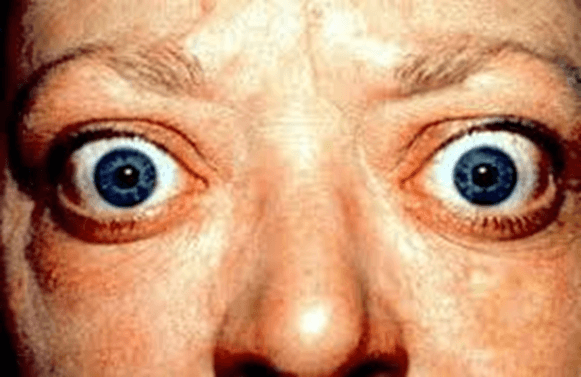
Exopthalmos
200
These are consequences of over nutrition (list 3)
•Heart disease and hypertension
•Type II diabetes
•Stroke
•Gallbladder disease
•Sleep apnea
•Certain cancers
•Osteoarthritis
200
This type of labored breathing occurs after exertion.
Dyspnea
300
This test is used to assess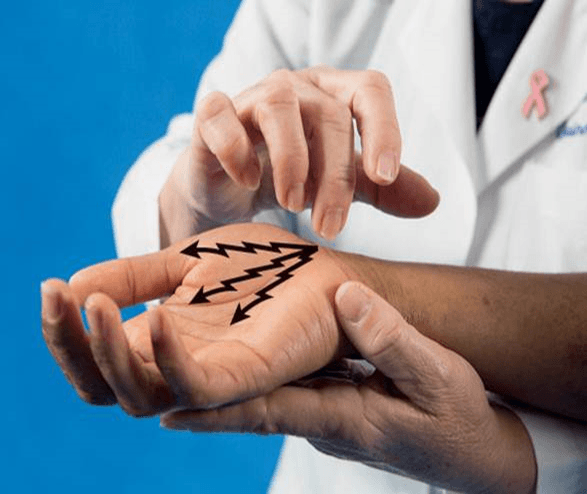
Tinels test for carpel tunnel.
know what it means when there is tingling or pins when this test is done
300
In addition to family history, and personal habits, you would obtain this subjective data during a ROS cardiovascular assessment
◦Chest pain
◦Dyspnea
◦Cough
◦Fatigue
◦Edema
◦Nocturia
300
You are assessing the facial movement of this person and see this when this person is asked to smile. You document this as
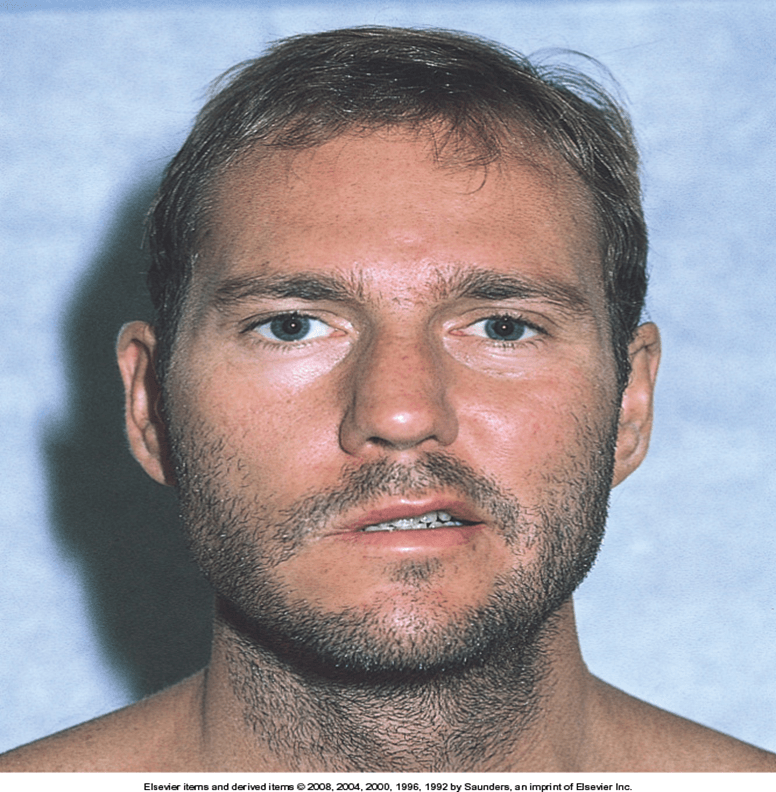
Bell's Palsy
Why isn't this a CVA finding
300
A person must consider these things when assessing nutritional intake.
cultural values, beliefs, customs,
How would you do this?
300
You will auscultate this sound in a person with Pneumonia.
Ronchi, Crackles,
400
You are assessing a joint and the person is able to move with full resistance through range of motion. They have this muscle strength grading
5
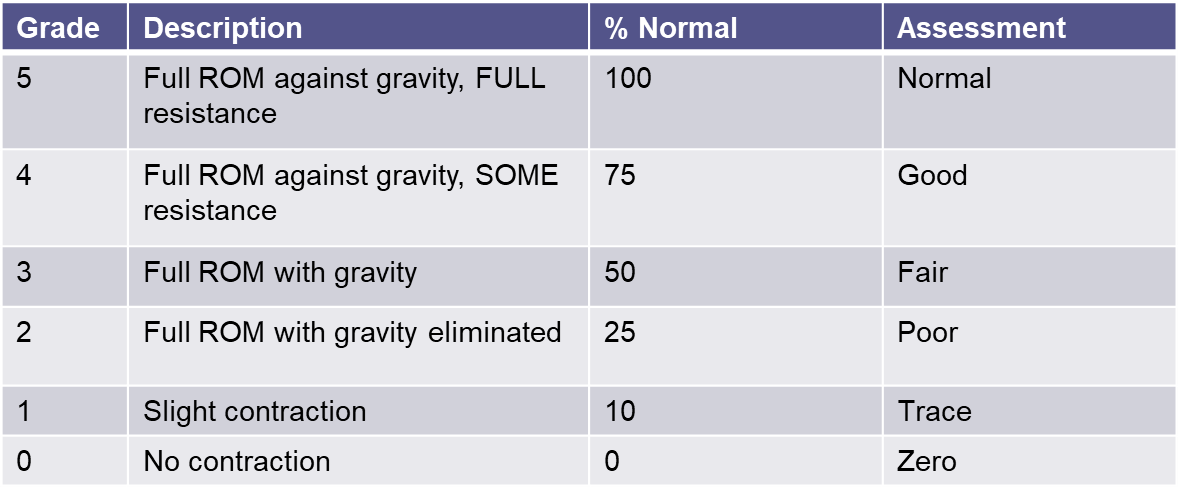
400
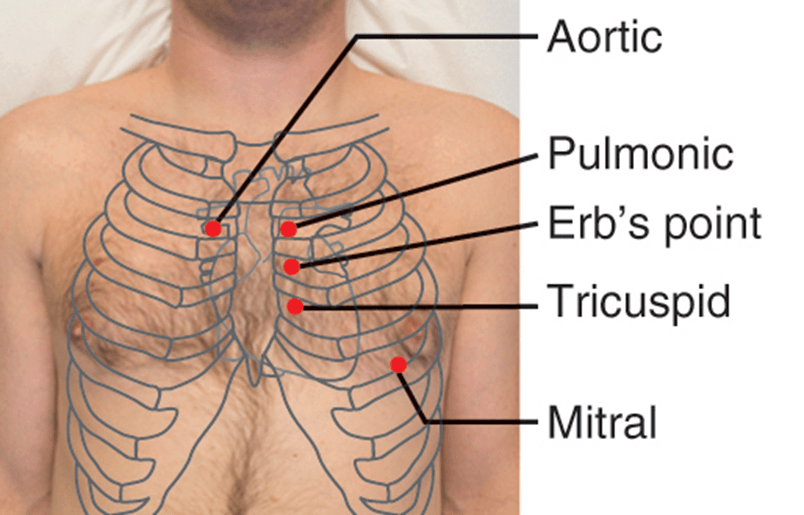
Name each landmark of the precordium
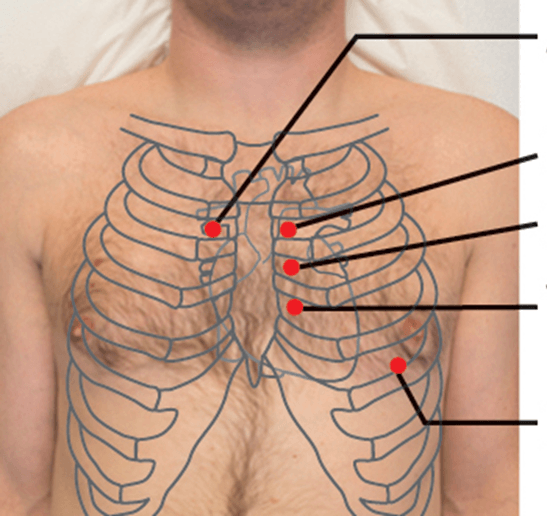
§Right sternal border (RSB), 2nd intercostal space (ICS) (Aortic area)
§Left sternal border (LSB), 2nd intercostal space (ICS) (Pulmonic area)
§Left sternal border (LSB), 3rd intercostal space (ICS) (Erb’s point)
§Left sternal border (LSB), 4th intercostal space (ICS) (Tricuspid valve)
§Left sternal border (LSB), 5th intercostal space (ICS) (Mitral valve)
400
A patient comes to the emergency room stating that he woke up this morning with swollen lips. He reports that he has just started a new medication for his allergies. This condition is known as
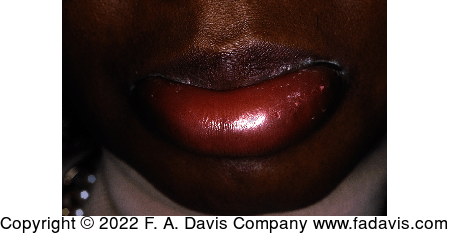
Angioedema
400
List the subjective data obtained during nutritional assessment (list 5)
Eating patterns
Usual weight
Changes in appetite, taste, smell, chewing, swallowing
Recent surgery, trauma, burns, infection
Chronic illnesses
Vomiting, diarrhea, constipation
Food allergies or intolerances
Medications or nutritional supplements
Self-care behaviors
Alcohol or illegal drug use
Exercise and activity patterns
400
A person with cyanotic fingernails may be experiencing this
Hypoxia
Is this a perfusion or Diffusion issue