Macronutrients
Food Sources
Food Labels
Digest this!
"Nutrition Facts"
100
What are the three energy providing nutrients?
Proteins, Carbohydrates and Lipids
100
What makes some fatty acids, and some amino acids "essential"?
They have to be obtained through your diet (must come from a food source). Your body doesn't make them.
100
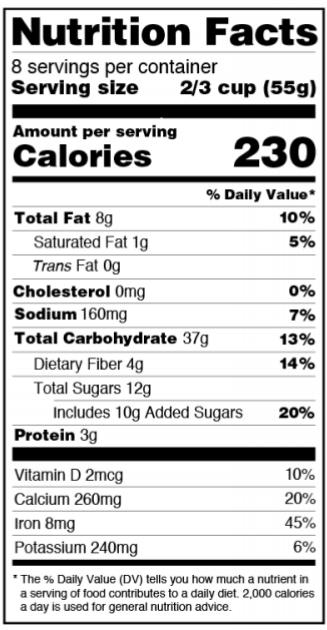
How much is 1 serving of this product?
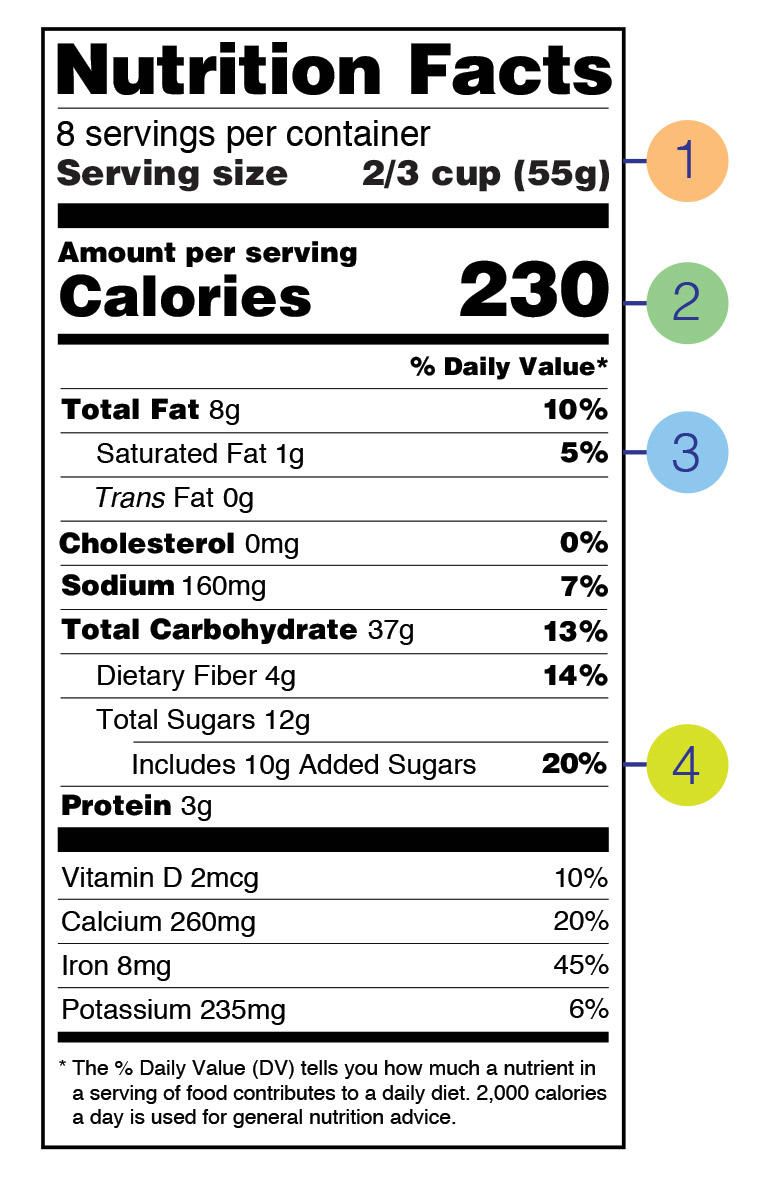
2/3 of a cup (55 g)
100
Digestion of which nutrient begins in the mouth?
Bonus: if you can name the process
Starches (carbohydrates)
They are broken down through chemical digestion by the enzyme Salivary Amylase
100
Fact or Fiction, the 2,000 calorie diet is backed by science and the recommended daily amount for everyone.
Fiction!
2,000 calories was a "nice round number" that is not based on hard scientific data.
Each individuals daily caloric needs are different due to age, height, BMR and other factors.
(It's still an "OK" approximation though..)
200
What are the three nutrients that don't provide energy?
Vitamins, Minerals and Water
200
What is are good sources of high quality (complete) proteins?
Meat and Dairy products
200
Looking at the %DV, what nutrient(s) is this product is low in?
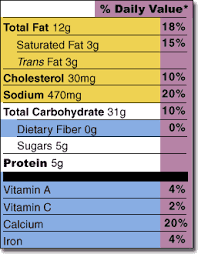
Fiber, Vitamin A, Vitamin C, and Iron
(a %DV of 5 or lower is considered "Low")
200
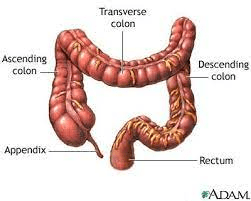
This organ is responsible for the reabsorption of water and the storage of solid waste until removal from the body.
The large intestine
200
Fact or Fiction?
Bananas are the only fruit that is high in potassium.
Fiction!
Avocados (techinically a fruit) have twice as much potassium as bananas!
300
Name the nutrient family that this structure belongs to.
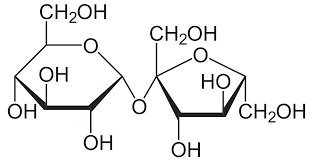
Carbohydrates
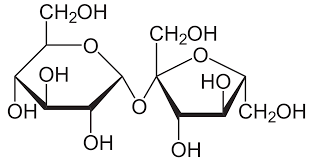
(This is a picture of Sucrose)
300
What category of food is generally NOT a good source of carbohydrates?
Your choices are: Fruits, Vegetables, Grains, Legumes, Dairy, and Meats
Meat proteins are generally NOT a good source of carbohydrates
300
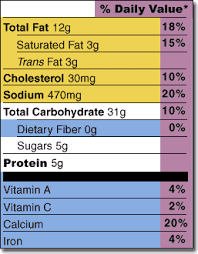
Looking at the %DV, what are two nutrients that this product is high in?
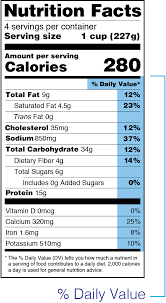
Saturated Fat and Sodium
(A %DV of 20 or above is concered "high")

Bonus if you noticed Calcium!
300
This system is the main transport of fats throughout the body
The lymphatic system.
300
Fact or Fiction
Broccoli contains more protein than steak.
Fact!
Broccoli contains more protein per calorie than steak, but it would take a LOT more broccoli to eat!
400
The following functions describe which cateogry of nutrient?
-Provide the most energy per molecule (of any nutrient)
-Regulate bodily functions such as; growth, puberty, and metabolism
-maintain cell membrane fluidity
Lipids (phospholipids, triglycerieds, and sterols)
400
What types of foods will contain unsaturated fatty acids?
Oils- such as those found in nuts, seeds, fish and avocados
400
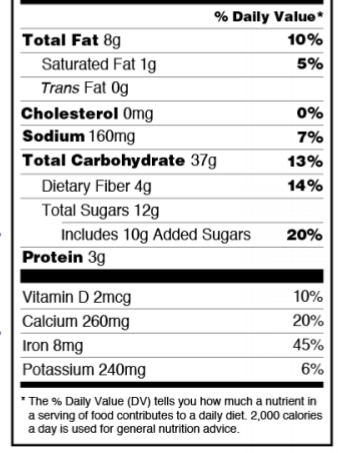
What should the calories per serving of this product be, based on the grams of fats, proteins and sugars?
(Hint: 4,4,9)
400
What are the two categories of digestion? Explain each one.
1. Mechanical = chewing, or grinding that physically breaks food into smaller pieces
2. Chemical = the breakdown of food pieces into their smaller components by enzymes or acids
400
Fact or fiction, this is a reliable claim. (explain your reasoning)

Fiction!

"Too good to be true"
Makes claims without evidence
"loose 70 lbs..." (is this a garuntee?)
500
What are the basic building blocks (smallest units) for each of the following nutrients:
Protiens-
Carbohydrates-
Lipids-
Protiens- AMINO ACID
Carbohydrates- GLUCOSE
Lipids- FATTY ACID
500
What sources can vegans use to meet their essential amino acid needs?
Proteins from Nuts, grains and legumes (beans)
500
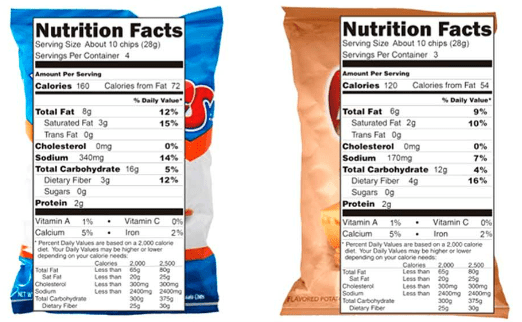
If you were to eat the entire package, which would be "healthier" AND WHY?
A B
A B

Package B:
Fewer calories from fat per serving
Has less saturated fat per serving
Has more fiber per serving
Less salt per serving (and per package)
500
You take a bite of a grilled cheese sandwich, describe in as much detail as possible where and how your body digests and absorbs each component (the bread and cheese) of your sandwich.
Your teeth grind the sandwich into smaller pieces (mechanical digestion). The salivary amylase in your saliva begins to breakdown the starch in the bread. You swallow and the bolus (chewed food passes through your esophagus to your stomach.
Your stomach uses mechanical digestion and chemical digestion to breakd the food down futher. Lactase breaks the lactose sugars in the cheese into glucose and galactose. Maltase breakds down the maltose sugar from the bread into two glucose sugars. The proteins in the cheese get broken down in the stomach as well.
The nutrients pass into the small intestine where bile (from the liver and pancrease) breaks down the fat in the cheese into fatty acids. The glucose, amino acids and triglycerides/fatty acids pass through the membrane of the villi in the small intestines and into the bloodstream (sugars and amino acids) and lymphatic system (fats).
The circulatory system carries the nutrients in the blood through arteries to capliaries to cells in the tissues. The nutrients enter into the cells and into the mitochondria where they are used in cellular respiration.
waste from cellular respiration (CO2) is then removed and carried out of the cell into the capillaries, to the veins and back to heart, to the lungs where it is breathed out.
Solid waste from the small intestine moves to the large intestine, where more water is absorbed, and it is stored until it is time to be removed from the body.
500
Fact or Fiction?
Bananas are clones.
Fact!
The bananas we eat are all regrown from a single individual!

This is done by taking a cutting of the young stem of a banana plant and replanting it, which eventually gives rise to a whole new banana plant. Because the new plants aren't grown from a fertilized seed, each banana plant therefore contains exactly the same genes as their 'parent' plant.