Development Across Lifespan
Psychopharm
Psychotherapy
Potpourri
Forensics/Ethics
100
The Freudian phallic stage most closely corresponds chronologically with which Eriksonian psychosocial stage?
A. Trust versus mistrust
B. Autonomy versus shame and doubt
C. Initiative versus guilt
D. Industry versus inferiority
What is C (Initiative versus guilt)?
:max_bytes(150000):strip_icc():format(webp)/freuds-stages-of-psychosexual-development-2795962-5b61cd3dc9e77c007be4124d.png)
:max_bytes(150000):strip_icc()/2795740-article-erik-eriksons-stages-of-psychosocial-development-5ac3df9e875db90037ffa803.png)
100
In selected patients undergoing ECT, intravenous atropine may be administered immediately before the electrical stimulus primarily to:
A. Prolong seizure duration
B. Prevent bradycardia and asystole
C. Reduce postictal hypertension
D. Prevent succinylcholine-associated myalgias
Correct answer: B. Prevent bradycardia and asystole
- A. Prolong seizure duration: Atropine does not meaningfully enhance ECT seizure duration.
- B. Prevent bradycardia and asystole — Correct: The initial electrical stimulus can produce a parasympathetic surge, causing marked bradycardia or rarely asystole. Atropine’s antimuscarinic action reduces this risk.
- C. Reduce postictal hypertension: The later sympathetic response may cause hypertension and tachycardia; atropine would not attenuate this response.
- D. Prevent succinylcholine-associated myalgias: Atropine does not prevent muscle soreness caused by succinylcholine.
100
During psychotherapy, a patient smiles while describing a painful breakup. The therapist says, “You describe feeling devastated, yet you are smiling as you discuss it.” Which therapeutic technique is being used?
A) Clarification
B) Confrontation
C) Interpretation
D) Reflection
Correct answer: B) Confrontation
Rationale: Confrontation brings the patient’s attention to a discrepancy, contradiction, avoidance, or behavior that may not be fully recognized. Here, the therapist highlights the incongruence between the patient’s reported distress and observed affect.
- A is incorrect: Clarification organizes or elaborates material that is vague, confusing, or incomplete.
- B is correct: Confrontation directly identifies the discrepancy between verbal content and emotional expression.
- C is incorrect: Interpretation proposes an underlying unconscious meaning, conflict, or defense.
- D is incorrect: Reflection restates or mirrors the patient’s expressed thoughts or feelings without explicitly identifying a contradiction.
100
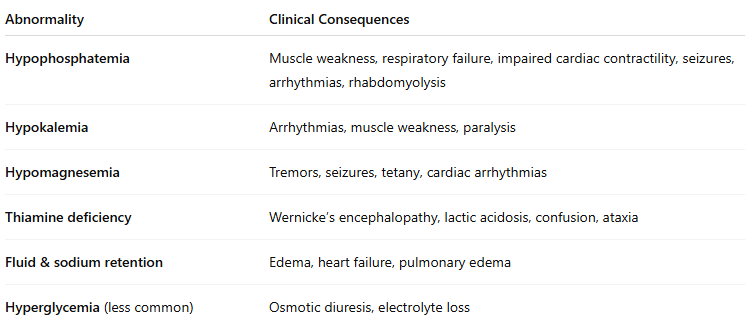
Which of the following abnormalities is associated with refeeding syndrome?
a) hypermagnesemia
b) hyperglycemia
c) hypocalcemia
d) hypophosphatemia
HypoPhos
100
In forensic psychiatry, the term “standard of care” refers to the use of treatments that are
a) used by average reasonable practitioners
b) used by experts in the field
c) recommended by health insurance companies
d) offered on the inpatient psychiatric unit
used by average reasonable practitioners
200
A cognitive capacity that characteristically emerges during Piaget’s formal operational stage is:
A. Conservation
B. Deductive reasoning
C. Object permanence
D. Deferred imitation
What is B. Deductive reasoning


200
A patient with treatment-resistant schizoaffective disorder is stabilized on clozapine but requires a mood stabilizer. Which medication should be avoided because of its potential for bone-marrow suppression and induction of clozapine metabolism?
A) Lamotrigine
B) Carbamazepine
C) Lithium
D) Topiramate
Correct answer: B) Carbamazepine
Rationale: Carbamazepine can cause agranulocytosis and is a strong CYP3A4 inducer that may reduce clozapine concentrations. Current prescribing information describes this combination as not recommended rather than absolutely contraindicated
- A is incorrect: Lamotrigine’s principal serious adverse effect is Stevens-Johnson syndrome; it is not a strong CYP3A4 inducer.
- C is incorrect: Lithium is not a hepatic enzyme inducer and commonly causes leukocytosis rather than neutropenia.
- D is incorrect: Topiramate may cause cognitive impairment, metabolic acidosis, and nephrolithiasis but is not the interaction tested here.
200
Psychotherapy that has been shown to be effective in bulimia nervosa:
a) psychoanalysis
b) cognitive behavior therapy
c) exposure therapy
d) group therapy
cognitive behavior therapy
200
A 55-year-old woman with bipolar I disorder has been stable on lithium for several years. Her serum lithium concentration was recently 0.8 mEq/L. She develops hypertension and osteoarthritis, and several medications are being considered.
Which three medications could increase her serum lithium concentration and precipitate toxicity?
A) Hydrochlorothiazide
B) Lisinopril
C) Ibuprofen
D) Acetaminophen
E) Caffeine
F) Theophylline
G) Acetazolamide
Correct answers: A, B, and C
- A) Hydrochlorothiazide: Thiazides cause sodium loss, leading to compensatory proximal reabsorption of sodium and lithium. Lithium concentrations may increase substantially.
- B) Lisinopril: ACE inhibitors can reduce renal lithium clearance and cause delayed lithium toxicity.
- C) Ibuprofen: Most NSAIDs decrease renal prostaglandin synthesis and renal blood flow, reducing lithium clearance.
Why the other options are incorrect:
- D) Acetaminophen: Does not meaningfully increase lithium concentrations and is generally preferred over NSAIDs when an analgesic is needed.
- E) Caffeine: Caffeine may increase lithium clearance and lower its concentration. Abruptly decreasing habitual caffeine intake, however, can cause lithium levels to rise.
- F) Theophylline: Increases renal lithium clearance and may decrease lithium concentrations.
- G) Acetazolamide: Increases lithium excretion and generally lowers its serum concentration.
200
Absent gross negligence, dereliction of duty in a malpractice trial is typically established by which of the following?
A) Evidence of a bad outcome
B) Testimony of expert witnesses
C) Testimony of the injured patient
D) Evidence of alternative practice procedures
What is B (Testimony of expert witnesses)?
What Are the Four Elements of Medical Malpractice?
Duty: The duty of care owed to patients.
Dereliction: Or breach of this duty of care.
Direct cause: Establishing that the breach caused injury to a patient.
Damages: The economic and noneconomic losses suffered by the patient as a result of their injury or illness.
300
Which developmental theorist proposed that moral reasoning progresses through sequential stages, from avoiding punishment to applying universal ethical principles?
A. Sigmund Freud
B. Jean Piaget
C. Erik Erikson
D. Lawrence Kohlberg
Correct answer: D. Lawrence Kohlberg
Kohlberg’s theory describes progressive levels of moral reasoning: preconventional, conventional, and postconventional.
Freud emphasized psychosexual development, Piaget cognitive development, and Erikson psychosocial development across the lifespan.
300
A patient with major depressive disorder, insomnia, weight loss, and prominent nausea is started on mirtazapine. Which receptor action most directly explains its relatively low propensity to cause nausea and its potential antiemetic benefit?
A) Histamine H₁ receptor antagonism
B) Presynaptic α₂-adrenergic receptor antagonism
C) Serotonin 5-HT₃ receptor antagonism
D) Peripheral α₁-adrenergic receptor antagonism
Correct answer: C) Serotonin 5-HT₃ receptor antagonism
Rationale: Mirtazapine antagonizes 5-HT₃ receptors, which mediate serotonin-associated nausea and vomiting. This property distinguishes mirtazapine from antidepressants that increase serotonergic activity at 5-HT₃ receptors.
- A is incorrect: H₁ antagonism primarily causes sedation and increased appetite.
- B is incorrect: Presynaptic α₂ antagonism increases noradrenergic and serotonergic transmission and contributes to the antidepressant effect.
- D is incorrect: Peripheral α₁ antagonism contributes to orthostatic hypotension.
300
Positive reinforcement, negative reinforcement, the operant, and the reinforcing stimulus are integral parts of what theory?
A. Operant conditioning developed by Skinner
B. Operant conditioning developed by Bandura
C. Attribution theory developed by Hull
D. Learned helplessness developed by Kandel
E. Habituation theory developed by Pavlov
Correct answer: A. Operant conditioning developed by Skinner
Skinner’s theory of operant conditioning explains how behavior—the operant—is shaped by its consequences. A reinforcing stimulus increases the likelihood that the behavior will recur:
- Positive reinforcement: Adding a desirable stimulus after a behavior.
- Negative reinforcement: Removing an aversive stimulus after a behavior.
Both forms of reinforcement increase behavior.
Why the other options are incorrect:
- B. Operant conditioning developed by Bandura: Bandura developed social learning theory, emphasizing observational learning, modeling, imitation, and reciprocal determinism.
- C. Attribution theory developed by Hull: Attribution theory concerns how people explain the causes of behavior and events. It is principally associated with Fritz Heider, not Clark Hull. Hull developed drive-reduction theory.
- D. Learned helplessness developed by Kandel: Learned helplessness was developed by Martin Seligman and colleagues. Eric Kandel is known for research on the neurobiology of learning and memory.
- E. Habituation theory developed by Pavlov: Pavlov is primarily associated with classical conditioning, in which a neutral stimulus becomes associated with an unconditioned stimulus. Habituation is a decreased response following repeated exposure to a stimulus.
300
A 48-year-old patient with treatment-resistant depression takes phenelzine. He develops an upper respiratory infection and asks which medications he must avoid.
Which three agents could precipitate severe serotonergic toxicity when combined with phenelzine?
A) Pseudoephedrine
B) Meperidine
C) Acetaminophen
D) Phenylephrine
E) Dextromethorphan
F) Lorazepam
G) Linezolid
Correct answers: B, E, and G
- B) Meperidine: Combining meperidine with an MAOI can cause severe excitation, hyperthermia, autonomic instability, seizures, coma, and death.
- E) Dextromethorphan: Has serotonergic properties and is contraindicated with phenelzine because of potentially severe CNS and serotonergic toxicity.
- G) Linezolid: Possesses reversible, nonselective MAOI activity and can markedly increase the risk of serotonin syndrome when combined with serotonergic medications or another MAOI.
Why the other options are incorrect:
- A) Pseudoephedrine: Dangerous with phenelzine, but primarily because its sympathomimetic effects can precipitate a hypertensive crisis, not serotonin syndrome.
- C) Acetaminophen: Is neither serotonergic nor sympathomimetic and does not have this interaction.
- D) Phenylephrine: May also provoke severe hypertension with an MAOI, but it does not primarily cause serotonergic toxicity.
- F) Lorazepam: Enhances GABAergic activity and is not a serotonergic drug, although additive sedation remains possible.
The phenelzine prescribing information specifically warns against both dextromethorphan and meperidine; linezolid has clinically relevant MAOI activity.
300
You are a forensic psychiatrist working in private practice. You are faced with the evaluation of a fellow psychiatrist, Dr. Dean Daniels, who is alleged to have had sexual relations with a former patient of his, Selena Victor. It is also alleged that Dr. Daniels hired Selena to sell his house during their relationship, because she is a real estate agent. Dr. Daniels has already been arrested and charged, and he is now out of jail on a $1 million bond posted by his high-profile attorney, L. Lloyd Wolff, Esq. As per his lawyer, he is charged with one count of rape and two counts of sexual assault. His lawyer informs you that Dr. Daniels has a history of depression and alcoholism and has been hospitalized psychiatrically in the past. Dr. Daniels has never had a malpractice case brought against him, and his medical license has never been sanctioned in any way. Dr. Daniels is now back in his office practicing as usual until his first court date comes up next month.
The legal components that will dictate if Dr. Daniels can or should be declared not guilty by reason of insanity by a jury are: (Pick three of six)
A. Duty to warn and protect
B. Mens rea
C. Competency to stand trial
D. Actus reus
E. The matter of Ford v Wainwright
F. M’Naghten rule
B. Mens rea
D. Actus reus
F. M’Naghten rule
The commission of a criminal act has two components: voluntary conduct (actus reus) and evil intent (mens rea). Evil intent cannot be present if the offender’s mental status is so impaired or diseased as to have deprived the offender of the rational intent to commit the act. The law can be invoked only in the presence of evil or malicious intent. Intent to do harm is not sufficient on its own as grounds for criminal action. The M’Naghten rule is the statute derived from the 1843 case of Daniel M’Naghten in the British courts. The question brought to bear in this rule is “Did the defendant understand the nature and quality of the act and the difference between right and wrong with respect to the act?” at the time the act was committed. If a mental illness causes the defendant to be unaware of the consequences of his or her acts, or if he or she was incapable of understanding that these acts were wrong, the person could then be absolved of criminal responsibility for the acts. Ford v Wainwright is a landmark case in the matter of competence to be executed and has nothing to do with the case in this vignette. The duty to warn and protect derives from the case of Tarasoff v Regents of the University of California, which was the landmark case setting the precedent for clinicians to be responsible for warning and protecting intended victims of patients expressing intent to harm others.
400
An 11-year-old with ADHD develops new suicidal thoughts during the first month of treatment with a nonstimulant. Which medication carries a boxed warning for this risk in children and adolescents?
A. Extended-release guanfacine
B. Extended-release clonidine
C. Extended-release methylphenidate
D. Atomoxetine
What is D. Atomoxetine
- A. Extended-release guanfacine: This nonstimulant α₂A-adrenergic agonist does not carry a boxed warning for suicidal ideation. Its important adverse effects include sedation, hypotension, bradycardia, and syncope.
- B. Extended-release clonidine: This is also an α₂-adrenergic agonist without a suicidality boxed warning. Major concerns include sedation, hypotension, bradycardia, and rebound hypertension if abruptly discontinued.
- C. Extended-release methylphenidate: Methylphenidate is a stimulant, so it does not fit the stem’s description of a nonstimulant. Its boxed warning addresses abuse, misuse, and addiction—not suicidal ideation.
- D. Atomoxetine — Correct: Atomoxetine is a nonstimulant selective norepinephrine reuptake inhibitor with a boxed warning for increased suicidal ideation in children and adolescents, particularly early in treatment.
400
What medication strategy is most effective and rapid in the treatment of severe bipolar illness, manic phase?
a) clonidine
b) antipsychotic + wellbutrin
c) antipsychotic + lithium
d) lithium + valproate
ANTIPSYCHOTIC MEDICATION + LITHIUM OR VALPROATE
400
When compared to patients with somatic symptom disorder, patients with illness anxiety disorder are less likely to:
A) be female
B) display la belle indifference
C) have multiple physical complaints
D) develop a major depressive disorder
What is C (have multiple physical complaints)?
400
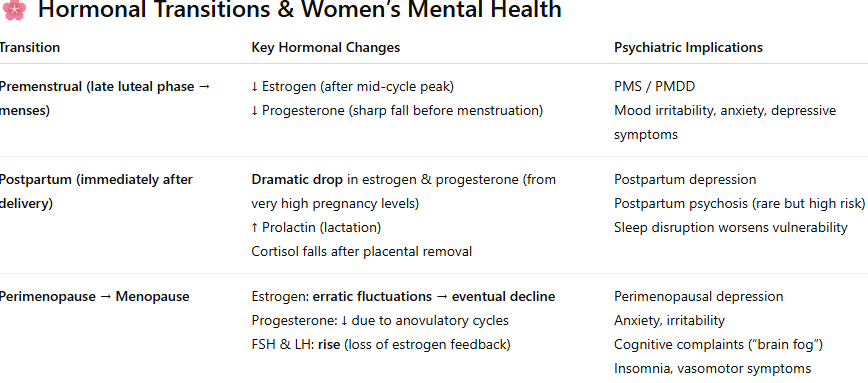
Which risk factor is most associated with the development of a depressive episode during perimenopause?
a) Caucasian race
b) Low social support
c) Alcohol use disorder
d) Prior episodes of depression
e) Older age at menopause onset
Prior episodes of depression
Hormonal transition points (premenstrual, perinatal, perimenopausal) = windows of vulnerability.
400
A psychiatry resident inadvertently enters an order for haloperidol 10 mg instead of 1 mg. The patient receives the medication but develops no apparent adverse effects. The resident recognizes the error before the next dose is administered.
Which three actions are professionally appropriate?
A) Delay disclosure unless the patient develops an adverse effect
B) Notify the supervising physician promptly and ensure that the patient is informed through the appropriate disclosure process
C) Delete the original order to avoid creating confusion in the medical record
D) Tell the patient that the error was entirely the nurse’s responsibility
E) Explain the known facts, potential consequences, monitoring plan, and corrective steps while expressing appropriate concern
F) File a safety report but avoid discussing the error with the patient
G) Report the event through institutional safety channels and participate in efforts to prevent recurrence
Correct answers: B, E, and G
- B) Correct: The resident should promptly involve the supervising physician and participate in transparent disclosure. The absence of evident harm does not eliminate the obligation to disclose.
- E) Correct: Disclosure should include what is known, potential harm, planned monitoring, corrective actions, and a compassionate acknowledgment of the error.
- G) Correct: Institutional reporting supports root-cause analysis and systems-based prevention of similar errors.
Why the other options are incorrect:
- A) Clinically relevant errors should not be concealed merely because no harm has yet been observed.
- C) The medical record should remain accurate and transparent. Corrections must preserve the original entry and follow institutional amendment procedures.
- D) Assigning blame is unprofessional and may provide unsupported information. Disclosure should focus on facts, accountability, and patient safety.
- F) Internal reporting does not replace disclosure to the patient.
500
A 10-year-old has severe temper outbursts four times weekly at home and school. For the past 18 months, the child has also been persistently irritable between outbursts. Symptoms began at age 8, without discrete periods of elevated mood or decreased need for sleep. What is the most likely diagnosis?
A. Oppositional defiant disorder
B. Bipolar I disorder
C. Intermittent explosive disorder
D. Disruptive mood dysregulation disorder
Correct answer: D. Disruptive mood dysregulation disorder
- A. Oppositional defiant disorder: ODD involves argumentative, defiant, or vindictive behavior, but it does not require severe recurrent outbursts with persistent irritability between them. When criteria for both ODD and DMDD are met, only DMDD is diagnosed.
- B. Bipolar I disorder: Bipolar disorder requires a distinct manic episode involving an episodic change in mood and energy. This child has chronic, nonepisodic irritability without elevated mood, grandiosity, or decreased need for sleep.
- C. Intermittent explosive disorder: IED involves impulsive aggressive outbursts, but persistent irritability between outbursts is not characteristic. Patients generally return closer to their baseline mood between episodes.
- D. Disruptive mood dysregulation disorder — Correct: The combination of frequent severe outbursts, persistent interepisode irritability, symptoms lasting more than 12 months, impairment in multiple settings, and onset before age 10 supports DMDD.
500
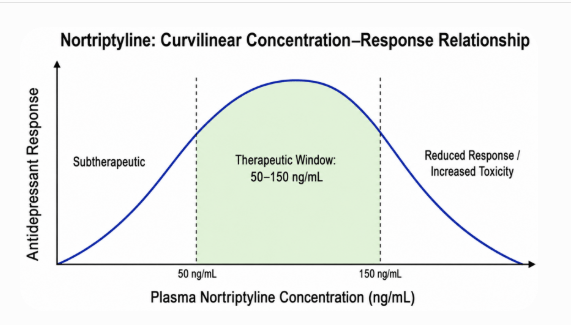
A patient with major depressive disorder has a partial response to fluoxetine. The psychiatrist plans to augment treatment with nortriptyline. Which approach is most appropriate?
A) Begin nortriptyline at the usual dose because fluoxetine induces CYP2D6
B) Begin nortriptyline above the usual dose because fluoxetine induces CYP3A4
C) Begin nortriptyline below the usual dose and monitor its plasma concentration
D) Hold fluoxetine for 48 hours and then begin nortriptyline at the usual dose
Correct answer: C) Begin nortriptyline below the usual dose and monitor its plasma concentration
Rationale: Fluoxetine and norfluoxetine inhibit CYP2D6, decreasing nortriptyline metabolism and potentially producing markedly elevated plasma concentrations. Nortriptyline should therefore be started at a reduced dose, with clinical and plasma-level monitoring.
- A is incorrect: Fluoxetine inhibits rather than induces CYP2D6.
- B is incorrect: Fluoxetine does not induce CYP3A4, and CYP2D6 is the clinically relevant pathway.
- C is correct: Reduced initial dosing and therapeutic drug monitoring limit the risk of nortriptyline toxicity.
- D is incorrect: Fluoxetine and norfluoxetine have long half-lives, so clinically significant CYP2D6 inhibition persists well beyond 48 hours.
500
Which one of the following is not an appropriate part of family therapy?
A. Exploring family members’ beliefs about the meanings of their behaviors
B. Reframing problematic behaviors positively
C. Focusing most of the session on the most dysfunctional member of the family
D. Encouraging family members to interact differently and observe the effects
E. Giving the family members things to think about and work on outside of sessions
C. Focusing most of the session on the most dysfunctional member of the family
Family therapy conceptualizes symptoms within the family system, rather than locating the problem exclusively within one “identified patient.” Focusing primarily on the supposedly most dysfunctional member can reinforce scapegoating and obscure interactional patterns that maintain the family’s difficulties.
500
Xylazine is a veterinary sedative often used to enhance the effect of illicit opioids. What is its mechanism of action?
A) GABA-A agonist
B) Dopamine agonist
C) Serotonin 2a agonist
D) Alpha-2 adrenergic agonist
E) Mu-opioid receptor agonist
Alpha-2 adrenergic agonist (similar to clonidine, dexmedetomidine, guanfacine, tizanidine)
500
A correctional psychiatrist is asked to assume several roles involving a condemned prisoner whose execution has been scheduled. According to professional medical ethics, which three actions do not constitute participation in the execution?
A) Treating the prisoner’s acute anxiety or psychotic suffering while awaiting execution, when treatment is requested and directed toward relief of suffering
B) Prescribing the medications that will be used in the lethal-injection protocol
C) Monitoring the prisoner’s vital signs during the execution
D) Providing diagnostic testimony relevant to the legal assessment of competency for execution while leaving the ultimate determination to the court
E) Treating an incompetent prisoner solely to restore competency so that the execution can proceed, without a commutation order
F) Pronouncing the prisoner dead in the execution chamber
G) Certifying death after another individual has already declared the prisoner dead
Correct answers: A, D, and G
- A) Correct: Psychiatrists may provide ordinary clinical care intended to relieve suffering. The treatment must serve the prisoner’s interests rather than facilitate the execution.
- D) Correct: Providing diagnostic information relevant to a legal competency determination is distinguishable from personally making the legal determination that automatically permits execution.
- G) Correct: A physician may certify death after another person has declared the prisoner dead.
Why the other options are incorrect:
- B) Prescribing, preparing, or administering execution drugs constitutes direct participation.
- C) Monitoring vital signs during an execution assists the execution process and is unethical physician participation.
- E) Treating solely to restore competency for execution is ethically impermissible unless a commutation order is issued before treatment.
- F) Pronouncing death as part of the execution process constitutes participation; this differs from later certifying a death already declared by someone else.
600
An infant watches a toy being hidden beneath a blanket and then searches for it. This behavior demonstrates the development of:
A. Conservation
B. Object constancy
C. Object permanence
D. Theory of mind
What is C. Object permanence?
- A. Conservation: Incorrect. Conservation is the understanding that quantity remains unchanged despite a change in appearance, such as recognizing that the same amount of water remains after being poured into a taller glass. It develops during Piaget’s concrete operational stage.
- B. Object constancy: Incorrect. Object constancy is a psychodynamic concept describing the ability to maintain a stable, emotionally integrated representation of another person despite separation, frustration, or conflicting feelings.
- C. Object permanence: Correct. Object permanence is the cognitive understanding that an object continues to exist when it is no longer visible. Searching for the hidden toy demonstrates this capacity during Piaget’s sensorimotor stage.
- D. Theory of mind: Incorrect. Theory of mind is the ability to recognize that other people have thoughts, beliefs, intentions, and perspectives that may differ from one’s own.
600
A patient stable on clozapine 450 mg/day smokes one pack daily. During hospitalization for pneumonia, the patient abruptly stops smoking and is started on ciprofloxacin. Three days later, marked sedation, confusion, hypersalivation, and myoclonus develop. Which formulation best explains the change?
Nicotine withdrawal and ciprofloxacin both induce CYP1A2, lowering clozapine exposure
Pneumonia increases renal clozapine clearance, causing withdrawal
Smoking cessation removes CYP1A2 induction while ciprofloxacin inhibits CYP1A2, producing a large rise in clozapine exposure
Ciprofloxacin blocks dopamine receptors and creates additive parkinsonism without changing clozapine exposure
Correct response: What is a dual increase in clozapine exposure from smoking cessation and CYP1A2 inhibition?
Rationale. Tobacco smoke induces CYP1A2; abrupt smoking cessation removes that induction. Ciprofloxacin is a strong CYP1A2 inhibitor. Together, these changes can sharply raise clozapine concentrations and produce toxicity. The patient needs urgent assessment, prompt dose interruption or reduction as clinically indicated, a clozapine level when available, and review of safer antimicrobial options.
600
What would you expect from 18-month-old children with secure attachments after their parents leave them alone with you in a room?
A. They would try to bring the parents back into the room
B. They would immediately run to you and sit on your lap
C. They would become more inquisitive
D. They would not notice the parents’ absence
E. They would become aggressive and violent
A. They would try to bring the parents back into the room
At approximately 18 months, securely attached children generally show separation distress when a caregiver leaves and attempt to restore proximity—for example, by following, calling for, or searching for the caregiver. When the caregiver returns, they seek comfort and then resume exploration.
Why the other options are incorrect:
- B) Immediately seeking comfort from an unfamiliar adult is not the characteristic secure-attachment response; the child preferentially seeks the attachment figure.
- C) Securely attached children explore more confidently when the caregiver is present as a secure base. Exploration usually decreases during the caregiver’s absence.
- D) Failure to respond visibly to the parent’s departure is more consistent with an avoidant attachment pattern, although internal distress may still be present.
- E) Severe aggression and violence are not expected responses to ordinary separation in a securely attached toddler.
600
A 46-year-old patient with treatment-resistant major depressive disorder has taken fluoxetine 60 mg daily for 2 years. The psychiatrist plans to discontinue fluoxetine and initiate phenelzine.
Which three statements about this transition are correct?
A) Phenelzine may be started 14 days after fluoxetine is discontinued
B) At least 5 weeks should generally elapse before phenelzine is started
C) Low-dose phenelzine may overlap with fluoxetine during cross-titration
D) If switching from phenelzine to fluoxetine, at least 14 days should elapse after phenelzine is stopped
E) The primary risk of combining these medications is lithium toxicity
F) Norfluoxetine is inactive and eliminated within several days
G) The asymmetric washout periods reflect the long half-lives of fluoxetine and norfluoxetine
Correct answers: B, D, and G
- B) Correct: At least 5 weeks should generally elapse between discontinuing fluoxetine and initiating an MAOI. A longer interval may be appropriate after prolonged treatment or high doses.
- D) Correct: At least 14 days should elapse after discontinuing an MAOI before starting fluoxetine.
- G) Correct: Fluoxetine and its active metabolite, norfluoxetine, have prolonged elimination half-lives, explaining the extended washout before an MAOI.
Why the other options are incorrect:
- A) The usual 14-day antidepressant-to-MAOI washout is insufficient for fluoxetine.
- C) Fluoxetine and phenelzine should not be cross-tapered because the combination can cause life-threatening serotonin syndrome.
- E) The major concern is serotonin syndrome, not lithium toxicity.
- F) Norfluoxetine is pharmacologically active and persists for weeks after fluoxetine is stopped.
600
A 75-year-old man with mild dementia signs a will leaving all of his assets to one child, excluding his others. Which of the following best describes the legal question at stake?
A) Capacity
B) Competence
C) Informed consent
D) Testamentary capacity
Testamentary capacity
Capacity = clinical; competence = legal; testamentary capacity = legal standard for wills
700
According to Melanie Klein, a child who recognizes that the gratifying and frustrating caregiver are the same person has achieved which developmental position?
A. Paranoid-schizoid position
B. Depressive position
C. Rapprochement
D. Object permanence
Correct answer: B. Depressive position
- A. Paranoid-schizoid position: The caregiver is split into separate “good” and “bad” objects rather than experienced as an integrated person.
- B. Depressive position — Correct: The child integrates the caregiver’s gratifying and frustrating qualities, allowing ambivalence, concern, and guilt.
- C. Rapprochement: Mahler’s phase involving conflict between autonomy and renewed closeness with the caregiver.
- D. Object permanence: Piaget’s concept that an object continues to exist when it is not visible.
700
A patient with bipolar I disorder uses an ethinyl estradiol/levonorgestrel oral contraceptive. Several months after starting a mood stabilizer, she develops breakthrough bleeding followed by an unintended pregnancy despite consistent contraceptive use. Which medication most likely caused this interaction?
A) Lithium
B) Valproate
C) Lamotrigine
D) Carbamazepine
Correct answer: D) Carbamazepine
Rationale: Carbamazepine induces hepatic CYP3A4 enzymes, accelerating the metabolism of estrogen and progestin. This can decrease contraceptive hormone concentrations, causing breakthrough bleeding and contraceptive failure. The association is tested in the Ninja PRITE guide, page 182.
- A is incorrect: Lithium is renally eliminated and does not induce hepatic enzymes or reduce contraceptive efficacy.
- B is incorrect: Valproate is not an enzyme inducer and does not typically decrease oral-contraceptive concentrations.
- C is incorrect: Lamotrigine does not meaningfully induce CYP3A4. The more clinically significant interaction occurs in the opposite direction: estrogen-containing contraceptives decrease lamotrigine concentrations.
- D is correct: Carbamazepine can decrease estrogen and progestin concentrations, requiring consideration of an alternative or backup contraceptive method. It is a potent CYP3A4 inducer. Other potent enzyme inducers include phenytoin, phenobarb, primidone, topiramate (>200mg), oxcarbazepine
700
A court-mandated patient says, “Cannabis is not a problem. The judge is the only reason I’m here, and you’re not going to convince me to stop.” Which response is most consistent with motivational interviewing at this point?
A) “Would it be all right if I explained how regular cannabis use can affect functioning?”
B) “You do not see cannabis as a problem, and coming here was not your choice. What, if anything, might make these meetings useful to you?”
C) “On a scale from 0 to 10, how important is it for you to reduce your cannabis use?”
D) “Let’s examine the advantages and disadvantages of continuing to use cannabis.”
Correct answer: B)“You do not see cannabis as a problem, and coming here was not your choice. What, if anything, might make these meetings useful to you?”
Rationale: The patient is expressing both sustain talk and discord with the clinician. The best initial response is to reflect the patient’s perspective, acknowledge the lack of choice, reinforce autonomy, and invite the patient to establish a personally meaningful agenda. This reduces the likelihood of a power struggle and supports engagement.
Why the other options are less appropriate:
- A) Asking permission before providing information is consistent with motivational interviewing, but offering education before addressing the relational discord may reinforce the patient’s expectation of being persuaded.
- C) An importance ruler can elicit change talk, but it presumes that reducing cannabis use is already a mutually accepted target.
- D) A decisional-balance exercise may be useful later, but prematurely focusing on cannabis can strengthen sustain talk when the patient is actively resisting the clinician’s agenda.
700
An 82-year-old man with mild Alzheimer disease and atrial fibrillation refuses anticoagulation. He explains that anticoagulation would reduce his risk of stroke but increase his risk of bleeding. He recalls that his wife died following a gastrointestinal hemorrhage and states that avoiding a similar outcome is more important to him than maximizing stroke prevention. His daughter insists that dementia makes him incapable of refusing treatment.
Which three statements are correct?
A) A cognitive screening score below a specified cutoff establishes incapacity
B) A diagnosis of Alzheimer disease does not by itself establish incapacity
C) His daughter becomes the decision-maker because she disagrees with his choice
D) If he lacks capacity for one decision, he lacks capacity for all medical decisions
E) Decision-making capacity is specific to the decision and may fluctuate over time
F) Refusing the medically recommended treatment demonstrates impaired reasoning
G) He may retain capacity despite making a high-risk decision if he can understand, appreciate, reason, and communicate a choice
Correct answers: B, E, and G
- B) Correct: Dementia increases the likelihood of impaired capacity but does not determine it. Capacity requires an individualized functional assessment.
- E) Correct: Capacity is decision-specific and time-specific. A patient may have capacity for a relatively straightforward decision but not a more complex one, and capacity may fluctuate.
- G) Correct: The relevant abilities are communicating a choice, understanding information, appreciating its personal implications, and reasoning about the alternatives. A decision need not agree with medical advice to be capacitated.
Why the other options are incorrect:
- A) Cognitive screening can inform the assessment but cannot independently determine capacity.
- C) A surrogate participates only after the patient is determined to lack capacity; disagreement does not transfer authority.
- D) Capacity is not an all-or-none global designation.
- F) Refusing recommended treatment is not evidence of incapacity when the decision follows a coherent evaluation consistent with the patient’s values.
700
A forensic psychiatrist reviews the histories of several patients with paraphilic disorders. Which disorder is least likely to result in a legal history directly related to the paraphilic behavior?
A) Exhibitionistic disorder
B) Voyeuristic disorder
C) Frotteuristic disorder
D) Fetishistic disorder
E) Pedophilic disorder
Correct answer: D) Fetishistic disorder
Fetishistic behavior generally involves sexual arousal from nonliving objects or a highly specific focus on nongenital body parts. It can occur privately or consensually and does not inherently involve a nonconsenting person, making legal involvement less likely.
- A) Exhibitionistic behavior involves exposing the genitals to an unsuspecting, nonconsenting person and may lead to criminal charges.
- B) Voyeuristic behavior involves observing an unsuspecting person who is naked, disrobing, or sexually active and violates privacy and consent.
- C) Frotteuristic behavior involves touching or rubbing against a nonconsenting person, frequently in crowded public settings.
- E) Acting on pedophilic urges involves sexual activity with children and carries serious criminal consequences.