Electron/Molecular Geometry
Nomenclature
Hybridization
Weak Intermolecular Forces
Functional Groups
100
What is the electron and molecular geometry of the C atom in CH4?
Electron Geometry: tetrahedral
Molecular Geometry: tetrahedral
100
What family of hydrocarbons is saturated? Unsaturated?
Saturated: Alkanes
Unsaturated: Alkenes & Alkynes
Bonus: What is the difference between saturated vs. unsaturated?
100
Determine the hybridization of each carbon in this molecule:

From left to right:
sp3, sp3,sp3, sp2,sp2
100
List the four key intermolecular forces from weakest to strongest.
1. Longer Dispersion Forces (Van der Waals)
2. Dipole-Dipole Interactions
3. Hydrogen Bonding
4. Ionic Forces (Ion-Dipole)
100
Name the functional group present.
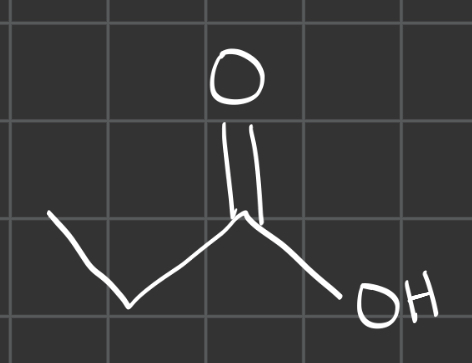
Carboxylic Acid
200
What is the electron & molecular geometry for water (H2O)?
Electron Geometry: tetrahedral
Molecular Geometry: bent
200
Provide the parent root for a continuous carbon chain containing 1 to 10 carbons.
1- meth
2- eth
3- prop
4- but
5- pent
6- hex
7- hept
8- oct
9- non
10- dec
200
What is the hybridization of the central carbon atom in CO2?
sp
Bonus: What is the molecular geometry & why?
200
What intermolecular forces are present in acetone?
London Dispersion
Dipole-Dipole
Hydrogen Bonding
Bonus: Where?
200
What functional groups are present in this molecule?
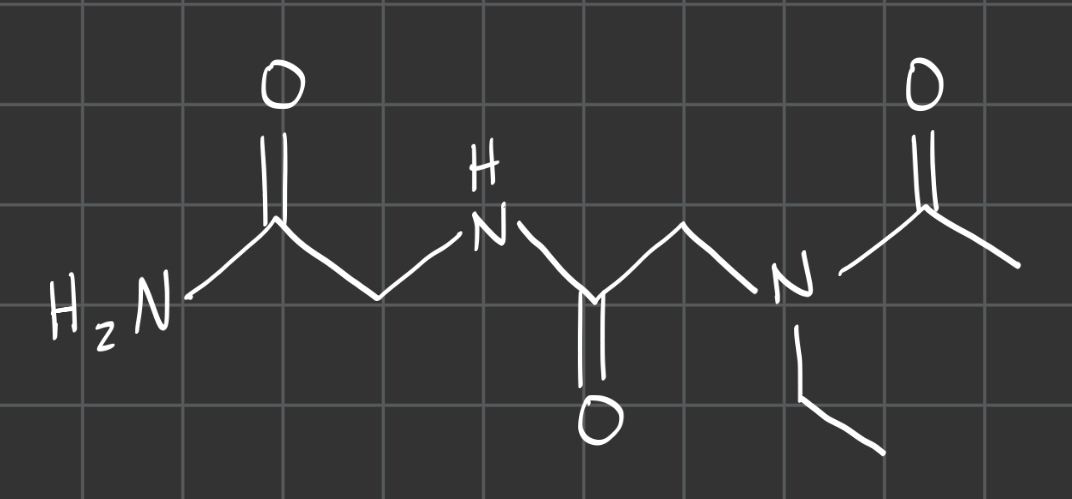
Left: primary amide
Middle: secondary amide
Right: tertiary amide
300
List the bond angles for the provided molecular geometries:
Linear:
Trigonal Planar
Tetrahedral:
Trigonal Pyramidal:
Bent:
Linear: 180 degrees
Trigonal Planar: 120 degrees
Tetrahedral: ~109 (109.5) degrees
Trigonal Pyramidal: ~107 degrees
Bent: ~104 (104.5) degrees
300
Using the provided guidelines draw the structure and name it!
Parent chain = 9 carbons
At the 3rd carbon, there is a single-carbon branch.
at the 5th carbon, there is a three-carbon branch.
3-methyl-5-propylnonane
300
What Is the hybridization of the bold carbons?
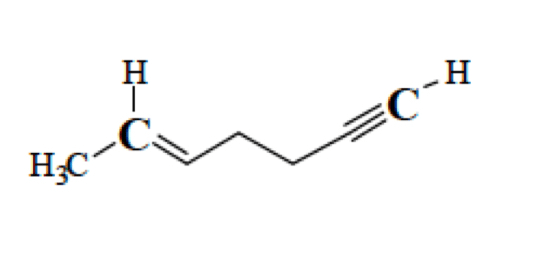
Left carbon: sp2
Right carbon: sp
300
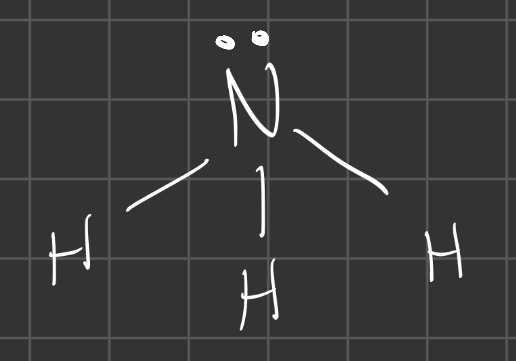
Draw the structure of NH3. Is it polar? Draw the dipoles. What weak intermolecular forces does NH3 have?
Yes, it’s polar.
Linder Dispersion, dipole-dipole, hydrogen bonding
300
Draw the general structure of an aldehyde.
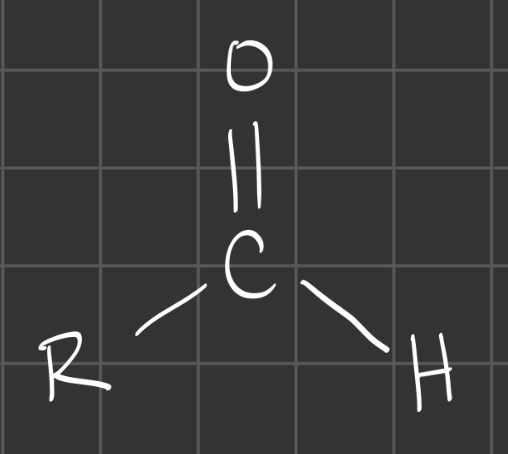
400
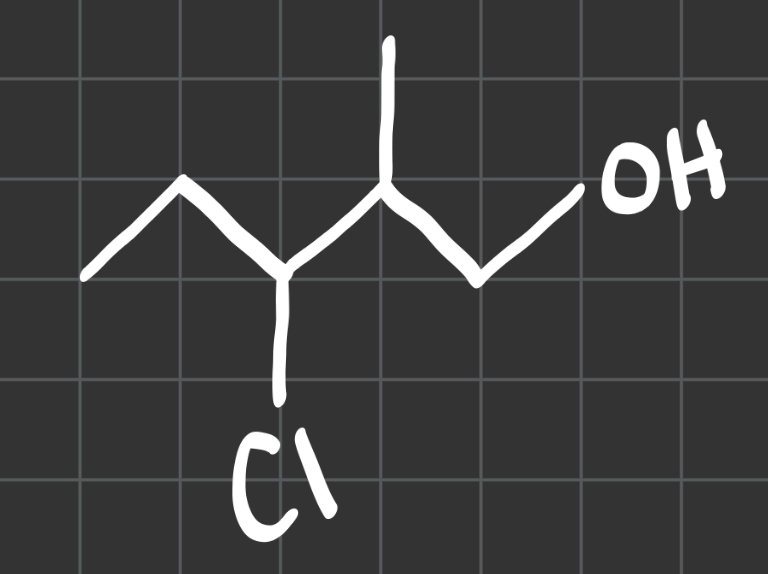
Draw this molecule:
3-chloro-2-methylpentan-1-ol
400
Write out the s-character and p-character for the following hybridizations:
sp
sp2
sp3
sp = 50% s, 50% p
sp2 = 33% s, 66% p
sp3 = 25% s, 75% p
400
Given Acetone, 1-propanol, and butane:
All of these have similar molecular weight. Which of the compounds has the highest boiling point?
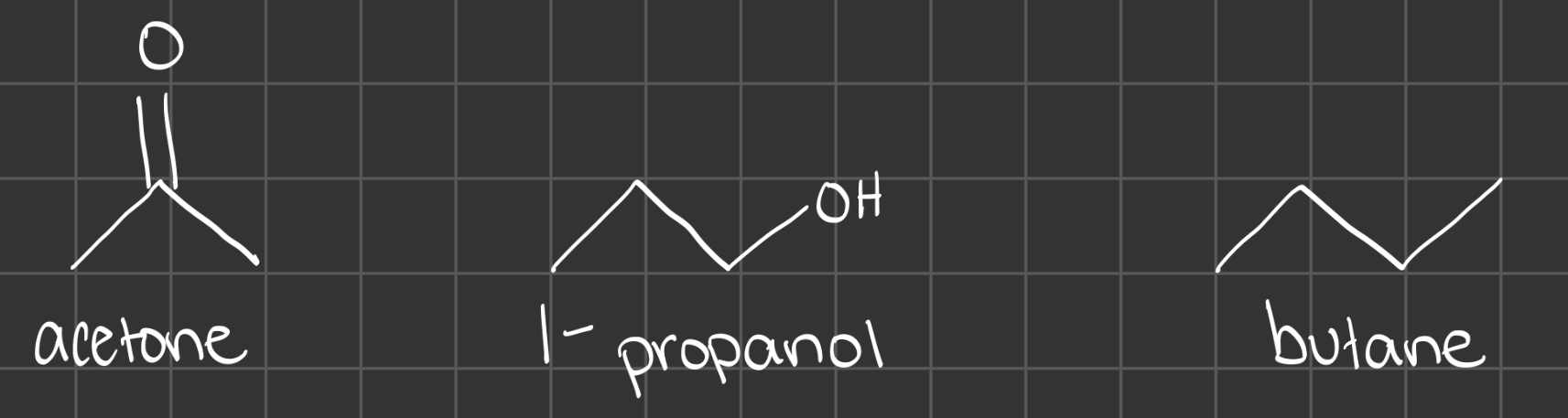
ANSWER: 1-propanol
Butane: non-polar, only London Dispersion Forces present (weakest)
Propanone/Acetone: polar ketone, dipole-dipole forces between the carbonyl
1-propanol: primary alcohol, hydrogen bonding forces
400
Does this molecule have an ester or ketone or carboxylic acid?
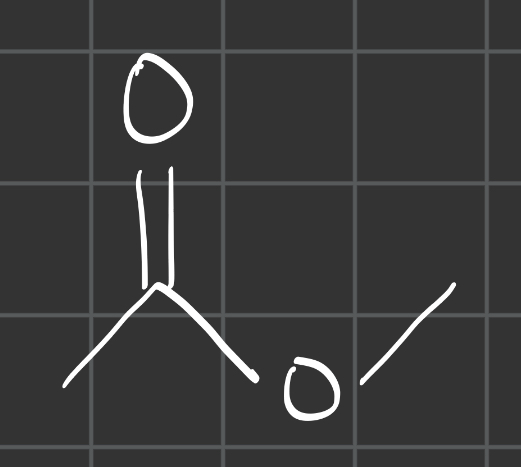
Ester
500
Name this molecule:
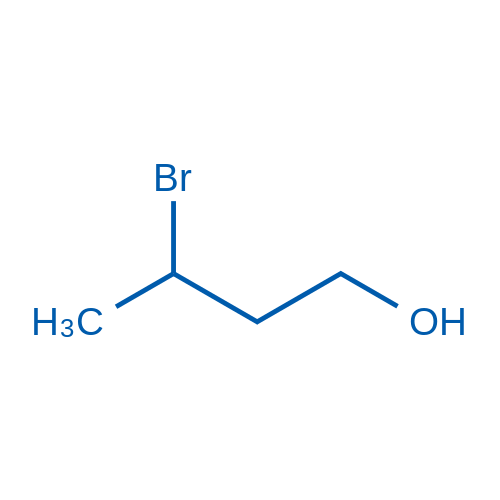
3-Bromobutan-1-ol
500
Acetone and water. What is the hydrogen bond donor? What is the hydrogen bond acceptor?
Water = donor
Acetone = acceptor
Bonus: Draw both structures.
500
Names as many functional groups as you can. The group who names the most wins a snack of choice at the next session!
Refer to sheet.