Geographical features
The Pharaoh
Funerary customs
Religion
Sources
100
The feature that was of most significance to the religion…
The Nile
100
This recognisable landmark was a symbol of the Pharaohs power:
Pyramids
100
The burial practice reserved for the elite and noble
Mummification
100
Three words to describe the Ancient Egyptian religion...
Inequitable, observational, cyclical
100
What are these:
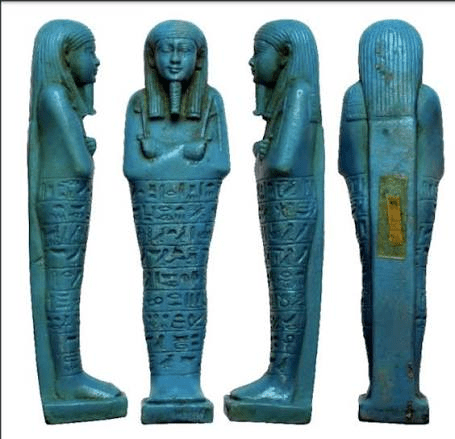
Shabtis
200
The continent Egypt is located in…
Africa
200
The system of government could be seen as…
Autocratic
200
The purpose of these customs was for the deceased to…
Enter the field of reeds
200
The end goal of the Egyptian after death…
The Field of Reeds
200
What are these:
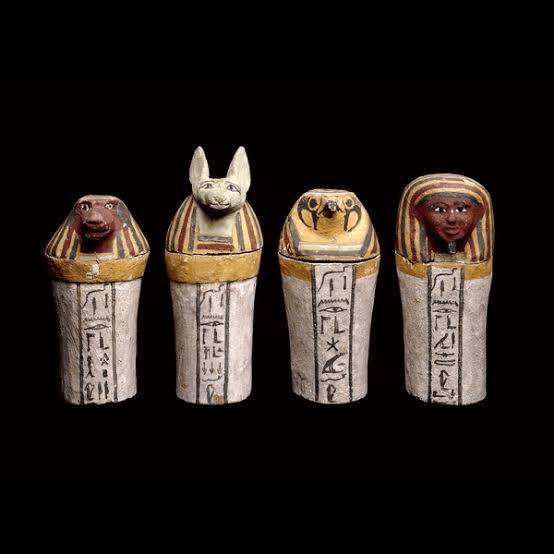
Canopic jars
300
The two parts of Egypt…
Upper Egypt and Lower Egypt
300
The role was to…
Appease the gods, acting as an intermediary between humanity and the gods.
300
This ceremony opened the senses of the deceased…
Opening of the mouth ceremony
300
The most significant ceremony performed by the deceased…
Weighing of the heart ceremony
300
The writings of this Greek historian are questionable in reliability…
Diodorus
400
The four geographic zones of Ancient Egypt…
The Delta, the Western Desert, the Eastern Desert, and the Nile Valley
400
The symbols of the Pharaoh:
Crook and flail.
400
For the poor who couldn’t afford to be mummified, they would be…
Buried in hot sand, accompanied with stone tablets.
400
The most terrifying end for a deceased Egyptian involved being eaten by this god…
Ammit
400
Which historian recorded this writing about the funeral
practices:
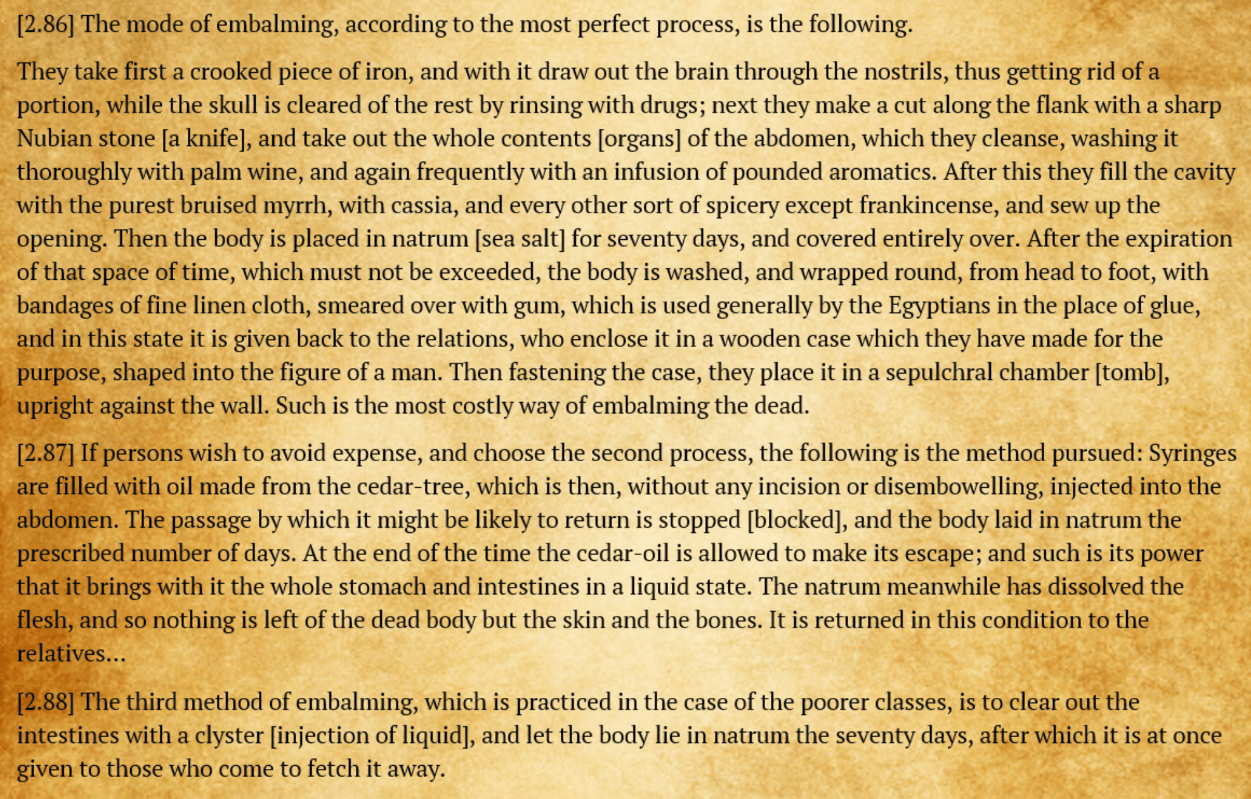
Herodotus
500
The ‘part’ of Egypt that was perfect for cemeteries and preserving bodies due to its dry nature and the fact that the annual Nile flood would not disturb them…
Red land
500
The Pharaoh was seen as a physical manifestation of this god…
Horus
500
The steps of mummification:
Wash the body
Remove brain
Remove organs
Place organs in canopic jars
Submerge the body in natron
Wrap the body
Opening of the mouth
Place in coffin
500
The god that created the world…
The god of air…
The goddess of moisture…
Goddess of order…
God of the underworld…
Goddess of motherhood…
Atum
Shu
Tefnut
Maat
Osiris
Isis
500
The religious texts used in the after life, in order of time period…
Pyramid texts, coffin texts, book of the dead.