A
B
C
D
E
100
This has nucleus.
Prokaryotic cell or a Prokaryote
100
Organelles NOT part of endomembrane system
Peroxisomes, chloroplasts, mitochondria
100
All cells are made of small structures with specific functions called these.
Organelles
100
This type of cell has membrane bound organelles
Eukaryotic cell or Eukaryote
100
This is responsible for controlling what enters and leaves the cell.
Cell membrane
200
Three types of cytoskeleton
Microfilaments (actin/muscle), Microtubules (largest), Intermediate filaments (keratin)
200
This type of cell has a nucleus.
Eukaryotic cell or Eukaryote
200
Where does photosynthesis take place?
Chloroplast (chlorophyll is the pigment in chloroplast.)
200
Organelle responsible for Protein synthesis
Ribosome
200
This organelle uses hydrolytic enzymes to:
-Break down food, recycle defective organelles, and pathogens
-Break down materials to recycle
***Is the pH inside this organelle high or low?
Lysosomes, low pH (lower than 7)
300
This organelle is covered in Ribosomes and transports proteins throughout the cell
Rough ER
300
Proteins made via free ribosomes will end up where?
Cytoplasm
300
Organelles found only in plant cells
Cell wall, Chloroplast, Large Central Vacuole
300
Do plants have mitochondria
Yes
300
Both Prokaryotic and Eukaryotic have in common
Cell Membrane, Ribosomes, Cytoplasm, DNA, Mitochondria
400
DNA shows genetic instructions for ribosomes to make what?
Protein
400
Function of Flagella/Cilia
Cell movement
400
Where are the "cis" and "trans" ends of the golgi oriented?
Cis-towards nucleus
Trans-towards membrane
400
What is this?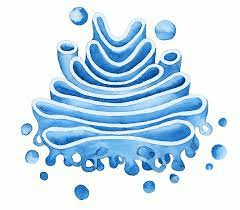
Golgi?
400
Organelle that houses the DNA and is responsible for "controlling" the cell
Nucleus
500
What explains why cells are relatively small (why can't they just keep growing bigger
Need to maintain a good surface area:volume ratio
500
What packages and ships molecules around the cell?
Golgi Apparatus
500
Organelle involved in the oxidation of fatty acids
***H2O2 as a by-product and breaks it down
Peroxisome
500
Briefly explain the endosymbiotic theory
Mitochondria and Chloroplasts were originally individually living prokaryotes. They were engulfed by a larger eukaryotic cell and stayed.
500
What type of cell is this?
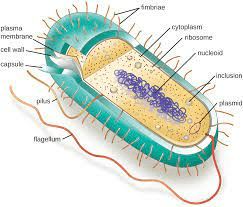
Prokaryote Cell
600
Cytoskeleton Function
Structural support, organization
600
Proteins made via bound ribosomes end up where?
Outside of the cell
600
Catalase function and location
Breaks down hydrogen peroxide, located in peroxisome
600
What is the Cell (plasma) Membrane made out of?
A Phospholipid Bilayer.
600
Two major differences between prokaryotic and eukaryotic cells
1. prokaryotic cells do not have a nucleus and eukaryotic do
2. prokaryotic cells do not have membrane-bound organelles but eukaryotic do
3. prokaryotic cells are much smaller