Pastry
Types of Pastry
Pastry Making
Faults in Pastry Making
Pastry Decorations
100
What is pastry?
Pastry is a dough made from flour, fat and water.
100
What type of pastry is used for sweet and savory pies and tarts. It contains less fat than other types.
Short crust pastry
100
What are the two raising agents used in pastry making?
air (sieving and mixing)
baking powder
100
list one reason why a pastry crust may be tough and hard.
Conditions for preparation of
the pastry were not cool enough.
Too much handling of the pastry which pressed out the air.
Too much flour used in rolling out, or turning the pastry over during rolling, or re-rolling.
Oven too cool
100
Define the term baking blind.
The term BAKING BLIND means baking the pastry shell or single crust without filling. The pastry shell is baked in a hot oven for about 8-10 minutes.
200
What additional ingredients can be added to pastry to make the dough rich?
Egg, cheese or sugar may be added for a richer dough
200
The richest type of pastry is known as?
Rough puff-
200
How much fat to flour is used in short crust pastry?
1 cup flour to ½ cup fat
200
Give one reason why pastry might shrink in the pan after cooking.

The pastry was stretched during preparation and not allowed to relax before baking.
200
What is the difference between a single and a double crust pastry?
A pie made with both a bottom and a top crust. The first crust used for the Double Crust Pie is the bottom crust which is rolled out and placed in the pie plate
A Single Crust Pie is a dessert that does not have a top crust. It only has the bottom crust that lines the pie plate and holds the filling. The bottom crust is placed in the pie plate and the edges are trimmed. The edges are then crimped to provide the crust with a finished look.
300
What are the three main ingredients used when making pastry?
flour, fat, water
300
This is a rich pastry that uses more than half fat to flour. It is used to make sausage rolls.
Flaky
300
What is the raising agent used in short crust pastry?
air (sieving and mixing)
300
The pastry shown in the photo below has a soggy bottom curst, give two reasons why the pastry crust may become soggy.
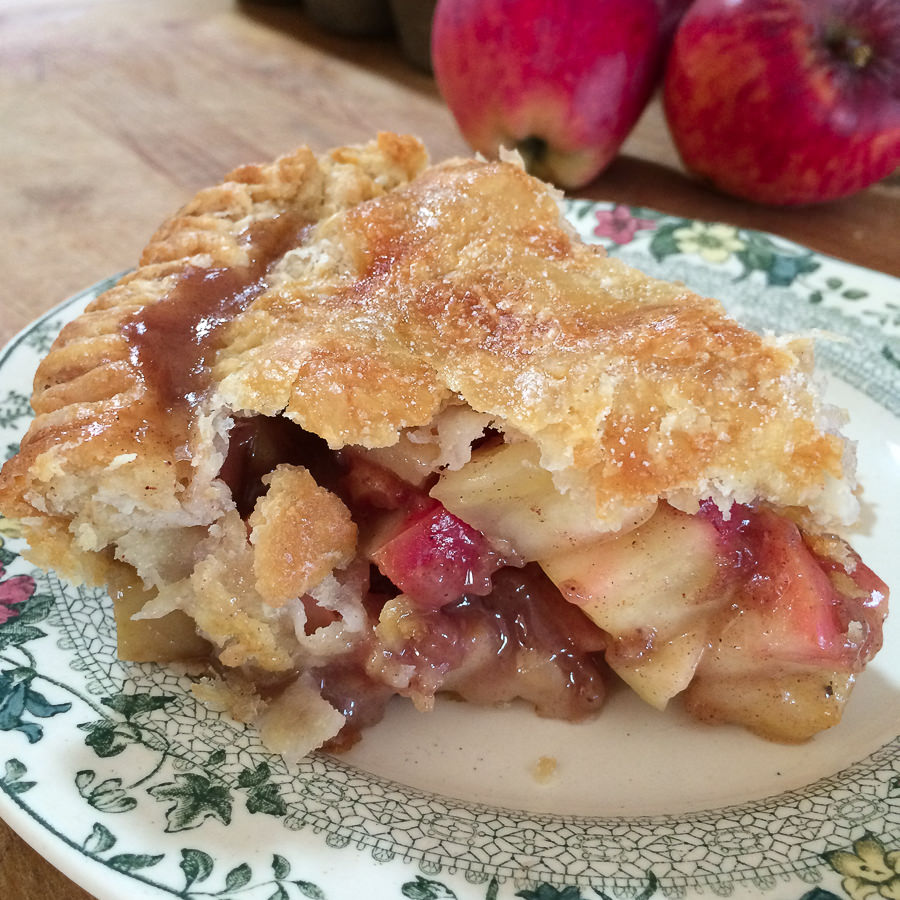
Steam not allowed to escape during cooking (pastry was not slit on the top crust).
Presence of sugar on top of fruit.
300
What should be brushed on the pasty crust before baking to make it shiny?
To obtain a shiny crust, brush lightly with milk or cream before baking
400
What is the function of fat and flour in pastry?
Flour – provides flakiness and affects tenderness.
Fat (butter or shortening)- produces a tasty flavor and texture
400
What type of pastry includes egg and is used for making puffs and eclairs.
Choux
400
What are (4) four characteristics of a high quality short crust pastry?

The top is golden brown in color
The surface may have small blisters
The pastry should show signs of layers or flakes
The pastry should cut readily with a fork or when bitten, should melt in the mouth
The pastry is crisp and not soggy or doughy
The pastry has good flavor (this will depend on the type of fat used)
400
List three reasons why a pastry crust may become blistered.
Uneven rubbing in
Water added too slowly and unevenly
Cooking to high in the oven.
400
What is the name of the pastry design shown in the photo below?

Lattice
500
Why should you used chilled (cold) water when making pastry?
This keeps the pastry dough cool and keeps the fat from melting during mixing.
500
this type of pastry is used to make sweet and savory dishes that are steamed or baked
Suet
500
Using the photo as a guide, what are the steps to making a short crust pastry?
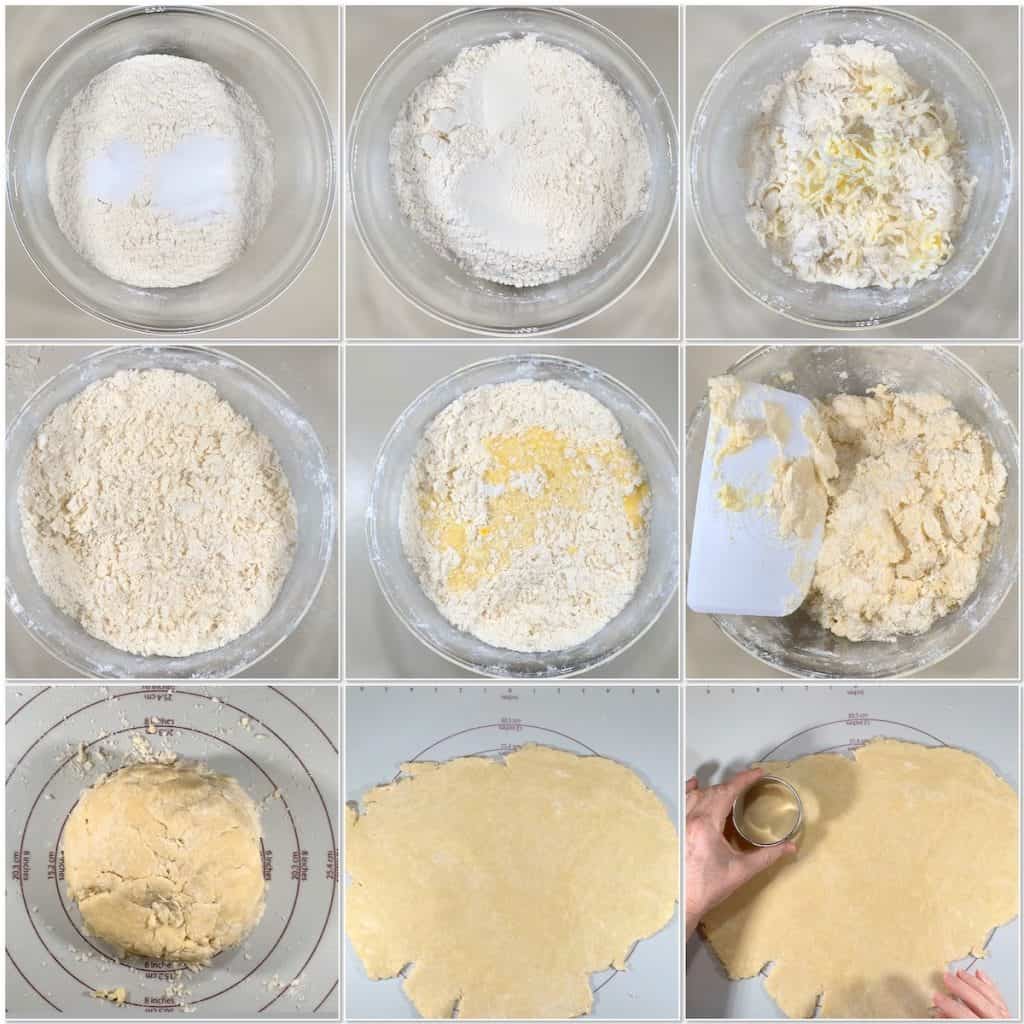
Sieve the flour and salt into a bowl.
Add the fat to the flour and cut into small pieces.
Rub the fat lightly into the flour with the fingertips or a pastry blender until the mixture looks like fine breadcrumbs. (Do not over rub because it will clump together and become sticky and be difficult to roll out later).
Add ice cold water a little at a time and mix it in until a stiff firm dough is formed, use fingertips
Gather dough with your fingers and press gently to form a firm ball.
(The mixture should be just moist enough to hold together. If it is too wet, the pastry will be tough. If it is too dry, the pastry will crumble and fall apart.)
Roll out, using short, light strokes in one direction until the required size is reached. Do not stretch.
Lift the pastry on a rolling pin or fold it into quarters to transfer it from the work top to the pie pan
500
What fault in pastry making occurs when too much fat is used and probably too little water.
Short and crumbly pastry
500
Pastry is not complete unless the edges are decorated. List the four ways that you can decorate the edge of a pastry crust.
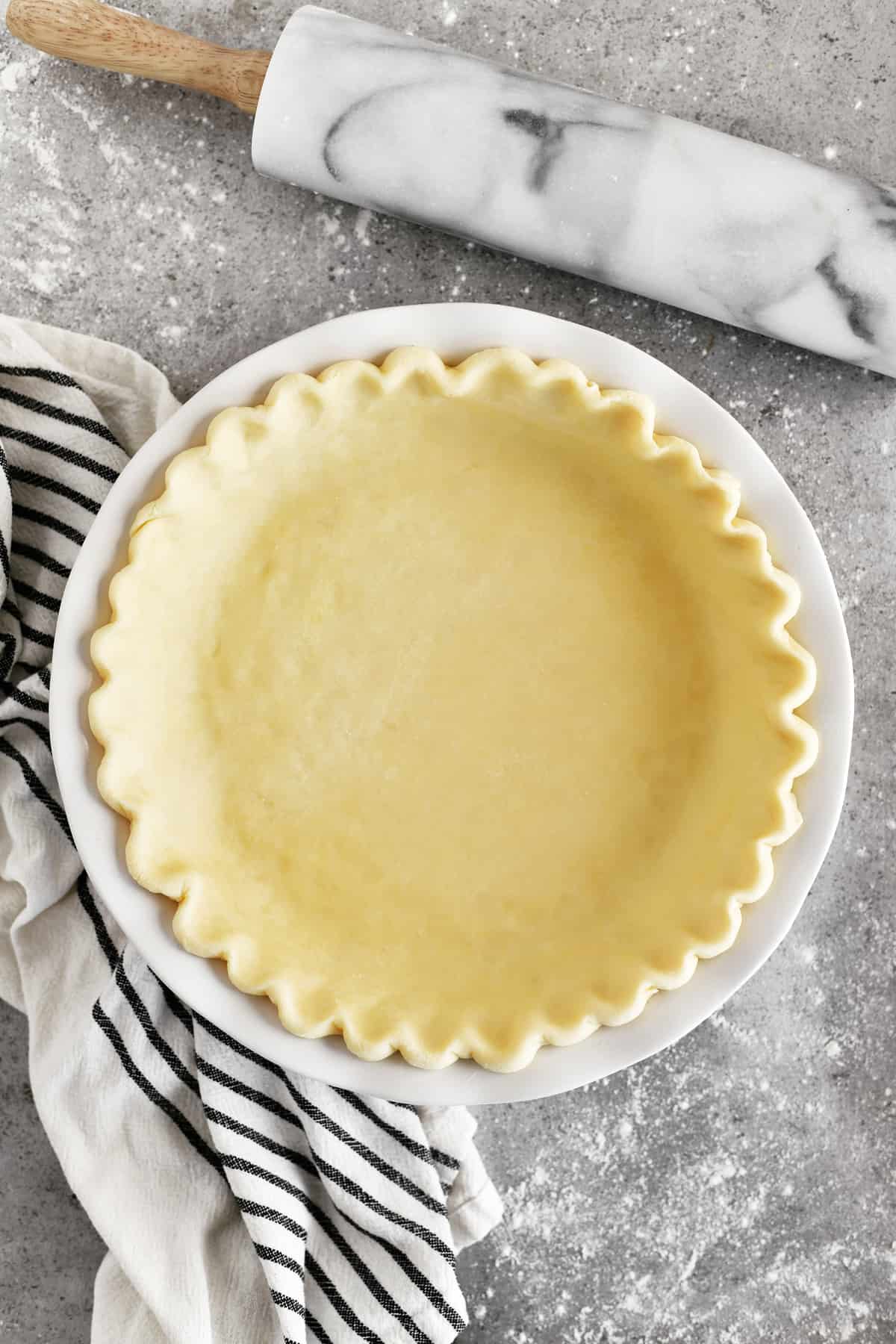
Pinch together with thumb and forefinger
Flute with a fork
Make scallops by cutting the edges with an upside down teaspoon
Place pastry cut outs over smooth pastry edge