Cold Weather Emergencies
Knot Tying
Warm Weather Emergencies
Dehydration
Miscellaneous
Shelter Building
Fire Building
Layering
100
When performing the Hypothermia challenge, the person should be able to walk heal to toe a line ____ feet long.
I will accept answers +/- 5 feet from the correct answer.
30
100
Identify this knot:

Overhand Knot
100
It takes this long to recover from Hyperthermia.
A day or two.
100
Think back to the rule of 3.
How long can I last without water?
3 days
100
Name two things I can do to show someone I am actively listening to them.
Face the speaker.
Minimize distractions.
Don't interrupt.
Ask clarifying questions.
100
Think back to the rule of 3.
How long can I last in a harsh environment without shelter?
Three hours.
100
For fire to exist, I need _____________ , heat, and fuel.
Oxygen
100
I should pack an extra pair of these to keep my feet dry.
Socks.
200
What are two signs or symptoms of hypothermia?
Loss of balance, fatigue, numbness, slurred speech, uncontrollable shivering, poor judgement, easily angered, and dehydration.
200
Identify this knot:
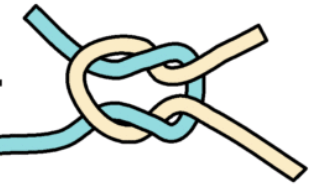
Square Knot
200
What are two signs or symptoms of hyperthermia?
Confusion, dry skin, lack of sweating, rapid breathing, high body temperature, nausea, dizziness, headache, muscle cramps, and weakness.
200
What are two signs or symptoms of dehydration?
Thirst, dark urine, not going to the bathroom, dry mouth, headache, muscle cramps, dry skin, dizziness, feeling tired or weak, rapid heart rate.
200
In Race Against Death you read about Diphtheria which is a bacterial infection of ____________ and __________.
Nose and throat
200
The "W" in W.I.N.D.S. stands for this.
Wind Direction
200
Name two of the three categories of wood you need to make a fire.
Tinder, Kindling, Fuel.
200
The "C" in the C.O.L.D.E.R. acronym stands for this.
Clean.
300
Name two things I can do to treat someone that has hypothermia.
Call 911, get to shelter, remove wet clothes, put the person into a burrito wrap, slowly drink warm fluids, slowly eat warm food, apply loose bandages to frostbitten areas of skin.
300
Identify this knot:
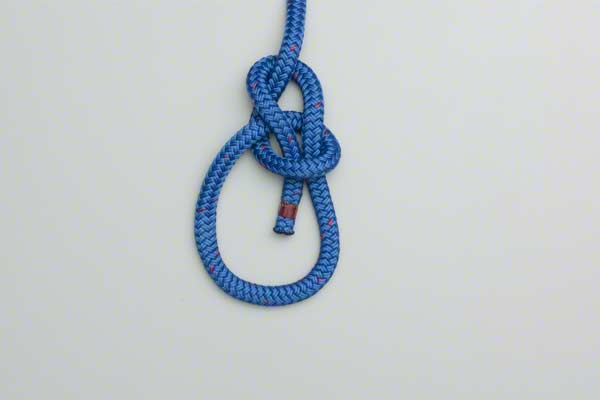
Bowline, or Rescue Knot.
300
Name two things I can do to treat someone that has hyperthermia.
Call 911, move them to a cool place, remove heavy clothing, cool the person with ice packs or cool wet towel on the head, fan the person, if they are awake have them sip small amounts of cool water.
300
Name two things I can do to treat someone who is dehydrated.
Give them fluids (water or sports drinks), have them sit down and rest, adjust their layers to prevent sweating, if they are getting worse call 911.
300
Think back to the STOP acronym.
Identify two of the four letters.
BONUS points if you can name the entire thing.
Stop
Think
Observe
Plan
300
I built my shelter in a place that is secure, there are no dead trees or loose rocks around my shelter. I did my best to avoid building it where animals pass through. What part of W.I.N.D.S. did I follow?
"S" - Safety.
300
Mr. Hughes mentioned that magnesium (the metal that you strike with steel to make sparks) is also found in this.
Hint: Fourth of July
Sparklers.
300
Identify two reasons why layering is important.
Match to the temperature / weather.
To be comfortable.
Prevents loss of water caused by sweating.
To keep cool in hot climates.
To keep warm in cold climates.
400
When helping someone who is experiencing an emergency, this is the number one thing you want to avoid creating.
A second victim.
400
Tie one of these knots with one hand:
Overhand
Square Knot
Correct!
400
Identify 3 things I can do to prevent or avoid hyperthermia.
Stay hydrated.
Take breaks in the shade.
Refuel the body (fluids and food).
Don't overwork yourself in extremely hot conditions.
400
During the presentation, this group said that you shouldn't drink water at night while winter camping.
Give one reason why this is true.
You will have to go to the bathroom.
You will be colder.
Wasted energy.
400
20 miles to the nearest town.
To replicate this distance we discussed in the survival scenario, you would have to complete this many loops around CMS.
80
400
This group identified three types of shelters. Name one of them.
A tent.
A tarp.
A quinzee.

400
Mr. Hughes said he can make fire from this, assuming the sun is out.
Magnifying Glass.
Water.
400
After a camping trip I looked over my gear and identified pieces that need to repaired. What part of the C.O.L.D.E.R. acronym is this?
"E" - Examine.