Element Groups/family
Founder/Years
Properties
vocab
Random
100
What elements are included in group 2A Alkaline-Earth Metals?
A:Beryllium (Be), Magnesium (Mg), Calcium (Ca), Strontium (Sr), Barium (Ba), and Radium (Ra)
B:Helium (He), Neon (Ne), Argon (Ar), Krypton (Kr), Xenon (Xe), Radon (Rn), Oganesson (Og)
C:Fluorine (F), Chlorine (Cl), Bromine (Br), Iodine (I), Astatine (At), Tennessine (Ts).
The Answer is: A
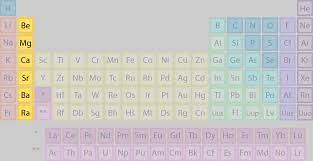
Beryllium (Be), Magnesium (Mg), Calcium (Ca), Strontium (Sr), Barium (Ba), and Radium (Ra)

100
What year was neon discovered?
A: 1809
B: 1874
C: none of these
The answer is: C
none of these
Neon was discovered in 1898 by British chemists W. Ramsay and M. W. Travers

100
What is one property of Transition metals?
A: High densities
B: Colorless
C: Both of them
The answer is: A
High densities

100
True or false: A substance that cannot be broken down into simpler substance is a element?
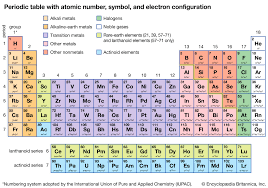
The answer is: True
100
How many protons does Zinc have?
A: 5
B: 30
C: 12
The correct answer is: B
30
Zinc has a number of 30 protons and electrons and 35 neutrons.
200
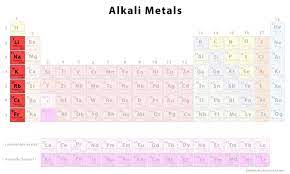
What elements make up Group 1A Alkali Metals?
A:Beryllium (Be), Strontium (Sr), Barium (Ba), Calcium (Ca), Magnesium (Mg), Radium (Ra)
B: Lithium (Li), Sodium (Na), Potassium (K), Rubidium (Rb), Cesium (Cs), and Francium (Fr).
C:(Scandium [Sc], Yttrium [Y], and Lanthanum [La]), Cerium (Ce),
D: scandium (Sc), titanium (Ti), vanadium (V), chromium (Cr), manganese (Mn), iron (Fe), cobalt (Co), nickel (Ni), copper (Cu), and zinc (Zn).
The answer is B
: Lithium (Li), Sodium (Na), Potassium (K), Rubidium (Rb), Cesium (Cs), and Francium (Fr).
200
Jöns Jacob Berzelius discovered which of the following elements below in the year 1824?
A: Silicon
B: Boron
C: Titanium
D Calcium
The answer is: A
Silicon
"In 1824 Jons Jacob Berzelius a swedish chemist discovered Silicon by heating potassium fluorosilicate with potassium."
(https://www.rsc.org/periodic-table/element/14/silicon)
200
What group has the properties of electrical conductivity, high thermal, lustre, ductility, and malleability?
A: Noble gases
B: Alkali Metals
C: Transition Metals
The answer is: B
Alkali Metals
200
What is it called when elements with properties that fall between those of metals and nonmetals/
A: Atomic number
B: Metalloid
C: Atomic Mass
The answer is: B
Metalloid
Simipler definition Is a group of elements that have characteristics of both nommetals and metals.
200
How many energy levels does Francium have?
A: 7
B:2
C: 5
D: 1
The answer is: A
7
300
What group makes up Transition Metals Group 3-12?
A: Cobalt (Co), Nickel (Ni), Iron (Fe), Rhodium (Rh), Gold (Au), Silver (Ag), Cooper (Cu), Scandium (Sc), Titanium (Ti), Vanadium (V), Manganese (Mn), Zinc (Zn), Mercury (Hg).
B: Titanium (Ti), Zirconium (Zr), Hafnium (Hf), rutherfordium (Rf)
C: Oxygen (O), Sulfur (S), Selenium (Se), Tellurium (Te), Polonium (Po), Livermorium (Lv).
D: none of these are apart of group 3-12
The correct answer: A
Cobalt, Nickel, Iron, Rhodium, Gold, Silver, Cooper, Scandium, Titanium, Vanadium, Manganese, Zinc, Mercury.
300
Who made the periodic table and what year?
A: Marie Curie and Pierre Curie/ 1898
B: Pierre Janssen and Joseph Norman Lockyer/1868
C: Dmitri Mendeleev/1869
The is answer: C
Dmitri Mendeleev/1869
In 1869 when Mendeleev was making the framework of the periodic table he would leave gaps for if their was to be new elements being discovered. He would arrange the elements with what there atomic weight was and if their atomic weight did match up or fit with the group he thought they would go with he would go and rearrange them until they went with the right groups and matched them up with similar properties. Dmitri Mendeleev was a russian chemist born on January 27th 1834 in a small Siberian Town and had received a master's degree 1856.
Source used and more info below: (https://www.britannica.com/biography/Dmitri-Mendeleev)
300
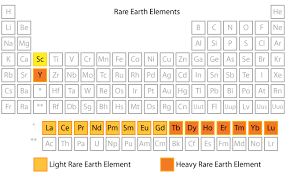
What is the properties of Rare earth metals?
A: Has 2 valences electrons, are solids, colorless, reactive
B: Are solids, have a Metallic Luster, appear to be metals, brittle, easily broken, have the ability to conduct electricity not as well as metals.
C: odorless, colorless, nonflammable, and monotonic
D: have a high luster, tarnish readily in air, high electrical conductivity, and unusual fluorescent.
The answer is: D
have a high luster, tarnish readily in air, high electrical conductivity, and unusual fluorescent.
300
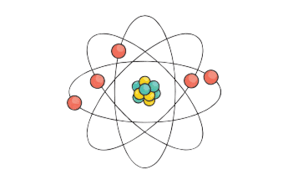
What is the smallest particle of an element?
A: Proton
B: Atom
C: Hydrogen
D: none of these
The answer is: B
Atom
300
What is Sodium symbols?
A: Symbol Mg, Atomic number 12, Atomic mass 24.305
B: Symbol Br, Atomic number 35 , Atomic mass 79.904 u
C: Symbol Na, Atomic number 11, Atomic Mass 22.989769 u
D: Symbol AI, Atomic number 13, Atomic Mass 26.981
The answer is: C
Symbol Na, Atomic number 11, Atomic Mass 22.989769 u
400
What elements make up the group halogens?
A: Silver, gold, cooper, tin, lead
B: Boron, silicon, germanium, arsenic, antimony, tellurium, bismuth, polonium, astatine
C: Radium, Helium, Hydrogen, Neon, Sodium
D: Bromine (Br), Fluorine (F), Astatine (At), Tennessine (Ts), Iodine (I), Chlorine
The correct answer is: D
Bromine (Br), Fluorine (F), Astatine (At), Tennessine (Ts), Iodine (I), Chlorine
400
Which 2 people discovered Radium?
A: Marie Curie and Hans Christian Ørsted
B: William Ramsay and Morris Travers
C: None of these
D: Marie Curie and Pierre Curie
The answer is: D
Marie Curie and Pierre Curie
Fun fact: Marie was the first women to discover a element.
400
What are the properties of Noble Gases?
A: odorless, colorless, nonflammable, monotonic with low chemical reactivity
C: flammability, toxicity, acidity, reactivity, and heat of combustion.
B: color, density, hardness, and melting and boiling points.
D: All of these
The answer is: A
odorless, colorless, nonflammable, monotonic with low chemical reactivity

400
What gives the atom a positive charge of electricity?
A: Electron
B: Neutron
C: Proton
D: All of these
The answer is: C
Proton
( I put D because usually when there is one that says all of these, people usually choose it cause they think it will be right which it is not right of course.)
400
How many elements are known on the periodic table?
Write it down.
The correct is: 118
500
What elements of Noble Gases are included in Group 18?
A:Carbonium (C), Silicium (Si), Germanium (Ge), Tin (Sn), Lead (Pb).
B: Manganese (Mn), Technetium (Tc), Rhenium (Re) Bohrium (Bh)
C: Chromium (Cr), Molybdenum (Mo), Tungsten (W), Seaborgium (Sg)
D: Helium (He), Neon (Ne), Tungsten (W), Seaborgium (Sg), Manganese (Mn)
E: Helium (He), Neon (Ne), Argon (Ar), Krypton (Kr), Xenon (Xe), Radon (Rn), Oganesson (Og)
The answer is: E
Helium (He), Neon (Ne), Argon (Ar), Krypton (Kr), Xenon (Xe), Radon (Rn), Oganesson (Og)
(I was trying to see if you actually read the questions that's why I put D its a trick)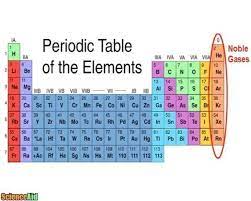
500
What elements have Humphry Davy discovered?
A: Sodium and Potassium
B: Boron and Barium
C: Magnesium and Strontium
D: Calcium
E: None of these
F: All of these
The answer is: F
All of these
Humphry a british chemist discovered Sodium and Potassium in 1807 a year later he discovered Calcium, Boron, Magnesium, Barium, and Strontium in the expand of year he found 7 elements in the year of 1808.
500
What are the properties of Alkaline-Earth Metals?
A: Molecules are homonuclear diatomic, seven valence electrons missing one electron form negative ions and are highly reactive, and gain an electron by reacting with atoms of other elements.
B: two valence electrons, low ionization energy, low electron affinity, low electronegativity, good conductors of electricity, oxidation state of +2, highly reactive and often form divalent cations
C: colorless, odorless, flammable
D: low electron affinity, low electronegativity, good conductors of electricity, seven valence electrons missing one electron, toxic, and flammable
The answer is: B
two valence electrons, low ionization energy, low electron affinity, low electronegativity, good conductors of electricity, oxidation state of +2, highly reactive and often form divalent cations
:max_bytes(150000):strip_icc()/alkalineearth-56a12cd75f9b58b7d0bcca7e.png&usqp=CAU)
500
Which of the following below is the outermost shell to a atom 1: and then what helps stablise a atoms nucleus 2: ?
A: Electron
B: Neutron
C: Proton
D: Valence Electron
E: Both D and B
F: Both C and A
The answer is: E
Both D and B
500
What is the formula of Bohr Model? Write it down:
The correct answer is: 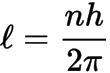 or E ( n ) = − 1 n 2 ⋅ 13.6 eV ???
 =angular momentum
 =principal quantum number
 =Planck's constant
 =pi
=pi
(idk)