Periodic Squares/Atoms
Valence Electrons
Metals, Nonmetals, Metalloids
Groups/Periods
Vocabulary
100
Unique for each element
the # of protons
100
The first Energy Level (Electron Shell) can hold this many electrons.
2
100
This is where metals are found on periodic table
the left side
100
A row across on the periodic table
Period
100
The Atomic Number tells us the number of these.
Protons and Electrons (when neutral)
200
The number of Protons in an atom of Iron (Fe).
26
200
Every Energy Level (Electron Shell) after the first one can hold this many electrons.
8
200
This is where metalloids are found on periodic table
the staircase, between metals and nonmetals
200
A column up and down on the periodic table.
a group/family
200
Atomic Mass is equal to this
What is protons + neutrons?
300
An atom of Magnesium has 12 protons, 12 neutrons, and 12 electrons. This is that Atom's Atomic Mass.
24
300
Hydrogen has this many Valence Electrons
1
300
Most metals at room temperature are this
Solid
300
Elements in a group have the same number of this.
Valence Electrons
300
An atom with a positive or negative charge due to gaining or losing electrons
What is an Ion?
400
The number of Neutrons.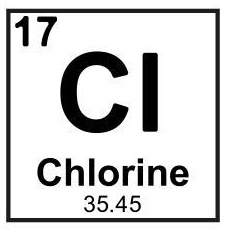
18
400
The number of Valence Electrons Aluminum (Al) has.
3
400
The elements are poor conductors of heat and electricity, dull and brittle
nonmetals
400
Elements in a period have the same number of this, but different properties
Energy Levels (Electron Shells)
400
Good conductors of heat and electricity. Found on the left side of the periodic table.
What are metals?
500
Increases left to right on periodic table. How the periodic table is organized
Atomic Number
500
When an atom gains or loses a Valence Electron.
an Ion
500
These elements share properties of both metals and nonmetals
Metalloids
500
The modern periodic table is organized according to this.
increasing atomic number
500
Found in the outermost/highest Energy Level (Electron Shell).
Valence Electrons
600
An atom of Argon has 18 protons, 21 neutrons, and 18 electrons. This is that atom's Atomic Mass.
39
600
Valence Electrons determine these.
Chemical and Physical Properties
600
Brittle, dull, mostly gas, poor conductors.
(properties of) Nonmetals?
600
Elements in a Group/Family have similar these.
Physical and Chemical Properties
600
Two atoms of the same element with a different number of neutrons in the nucleus
What are Isotopes?
700
The only element to have 80 protons in it's nucleus
Mercury
700
An atom with a completely full outer most energy level is this.
unreactive
700
Used in computer chips.
Metalloids (Silicon)
700
Of the four elements listed, which two would have the most similar properties
- Chlorine (Cl)
- Nitrogen (N)
- Lithium (Li)
- Fluorine (F)
Chlorine (Cl) and Fluorine (F)
700
What an atom becomes when it loses an electron.
Positive Ion
800
Average mass of isotopes of an element
atomic mass
800
What an atom becomes when it gains a valence electron.
a Negative Ion
800
Another name for a Metalloid.
What is semiconductor?
800
Of the four elements listed, which two would have the most similar properties
- Magnesium (Mg)
- Sodium (Na)
- Calcium (Ca)
- Sulfur (S)
Magnesium and Calcium?
800
Do not follow most trends on the periodic table.
Transition Metals