States of Matter
Density & Specific Heat Capacity
Phase Changes
Phase Diagrams
You Show Know This Low Key
100
Identify the different states of matter
Solid, Liquid, Gas
100
How do we calculate energy (J)?
multiple the mass, specific heat capacity, and change in temperature of a substance in a calorimeter.
100
A physical change in a substance that converts from its liquid state to its gaseous state.
Evaporation
100
What 2 variables determine a substance's state of matter?
Temperature and pressure
100
What is the boiling point of water
100 degrees celcius
200
Compare the particles in a solid and gas substance. How are they similar? How are they different?
Similar = there's some level of movement between particles in both states of matter
Different = the polar bonds in solids are much stronger than in gases and vice versa.
200
What is the unit of measurement for specific heat capacity?
J/g x oC
200
What's the difference between volatile and nonvolatile liquids?
Volatile = liquids that easily evaporate
Nonvolatile = liquids that do not easily evaporate
200
Which part of the graph represents the gas state?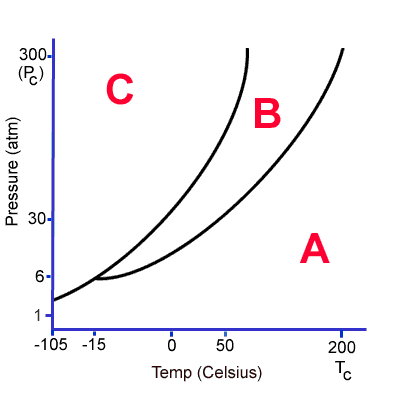
A
200
what is the freezing point of water?
0 degrees Celsius
if you said 32'F (eww gross) minus 100 points
300

Give an example of an amorphous solid.
Glass, plastic, rubber
300
A block of aluminum occupies a volume of 15.0 mL and a mass of 40.5 g. What is its density?
2.7 g/mL
300
When the thermal energy is enough for molecules within the interior of a liquid to break free into the gas phase.
Boiling point
300
At what approximate temperature and pressure does the triple point for this substance exist?
Temp. = -15 oC
Pressure = 6 atm
300
How do you convert from Celsius to Kelvin?
Add 273 to the Celsius temperature
400
What is matter?
Anything that takes up space and has mass.
400
Find the mass of 250.0 mL of benzene with a density of 0.8765 g/mL.
219.13 g
400
Why do ice cubes left in the freezer for too long become smaller?
Because the ice is going through the process of sublimation, turning directly into water vapor.
400
What does the triple point of a substance mean?
Where all three phases for a substance can occur simultaneously/at the same time.
400
how do you convert between grams of oxygen to moles of oxygen?
You divide the grams of oxygen by its molar mass (~16)
500
Identify the shape, volume, and compressibility properties of each state of matter.
Solid: shape and volume is definite and is incompressible
Liquid: shape is indefinite, volume is definite, and is incompressible
Gas: shape and volume is indefinite and is compressible
500
How many joules of heat are required to raise the temperature of 550 g of water from 12 oC to 18 oC? Water's specific heat capacity is 4.18 J/g x oC.
13,794 J
500
When water condenses, it can create steam or clouds. Condensation is an ________ process. How do we know?
Exothermic. It releases heat
500
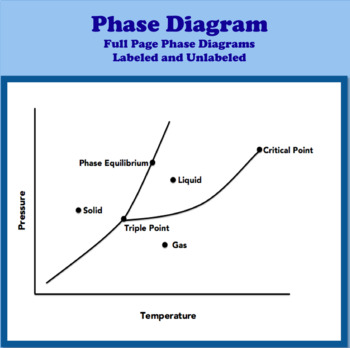
What does the line between solid and gas represent?
Where sublimation is occurring.
500
How do you convert between Joules of energy to Kilojoules?
You multiple the value in Joules by 1000
You multiple the value in Joules by 10^3
You move the decimal point of the value in joules 3 spaces to the right