Place It & Frame It
Follow the Lines
Balance & Repeat
Sharp or Blurry?
Change Your View
100
You want a whole-person picture, but the top of the person's head is cut off. What would you change before taking it again?
Leave more room around the person by widening the view or changing the camera position.
100
Your subject is a person. Would a path leading toward the person or away toward an empty corner help viewers find them faster? Give a reason.
The path toward the person, because it guides the viewer's eyes to the subject.
100
Two sides have the same objects, but one side looks much bigger because it is closer to the camera. Does matching object count alone prove symmetry? Why?
No. The visible shapes, sizes and arrangement must also look similar around a middle line.
100
You need one flower to stand out from a busy background. Would a sharp flower with a blurry background or everything sharp help more? Explain.
A sharp flower with a blurry background can separate the flower from distractions.
100
You want a small plant to look tall against the sky. Would you take the picture from low down looking up or from above looking down? Why?
Low down looking up can show the plant rising above the camera against the sky.
200
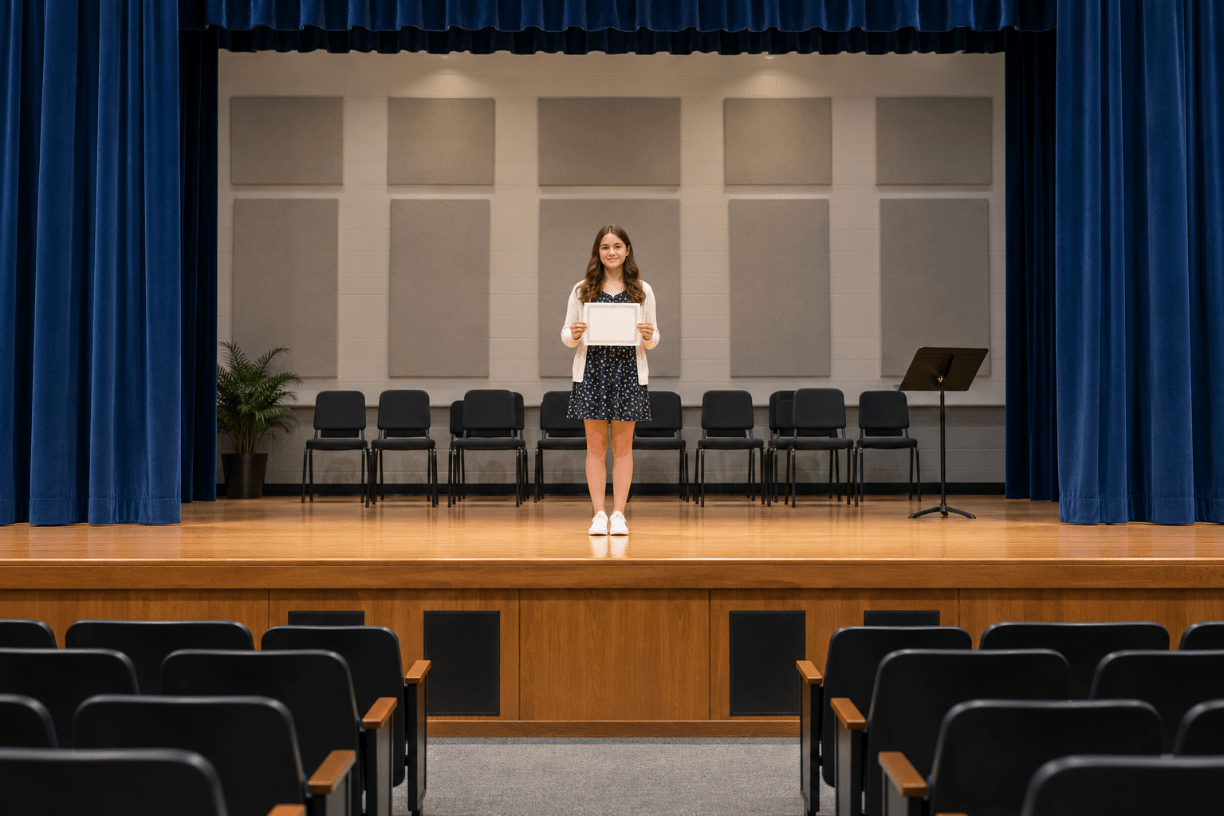
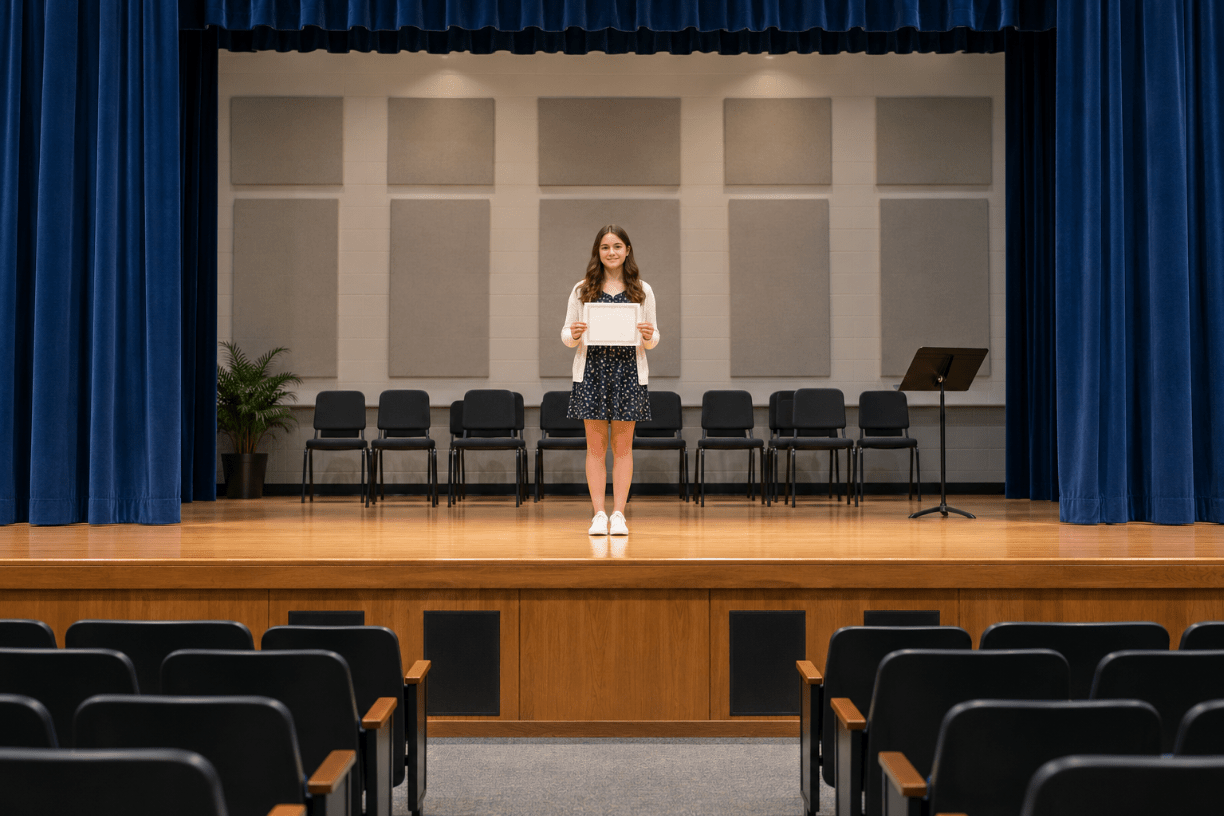
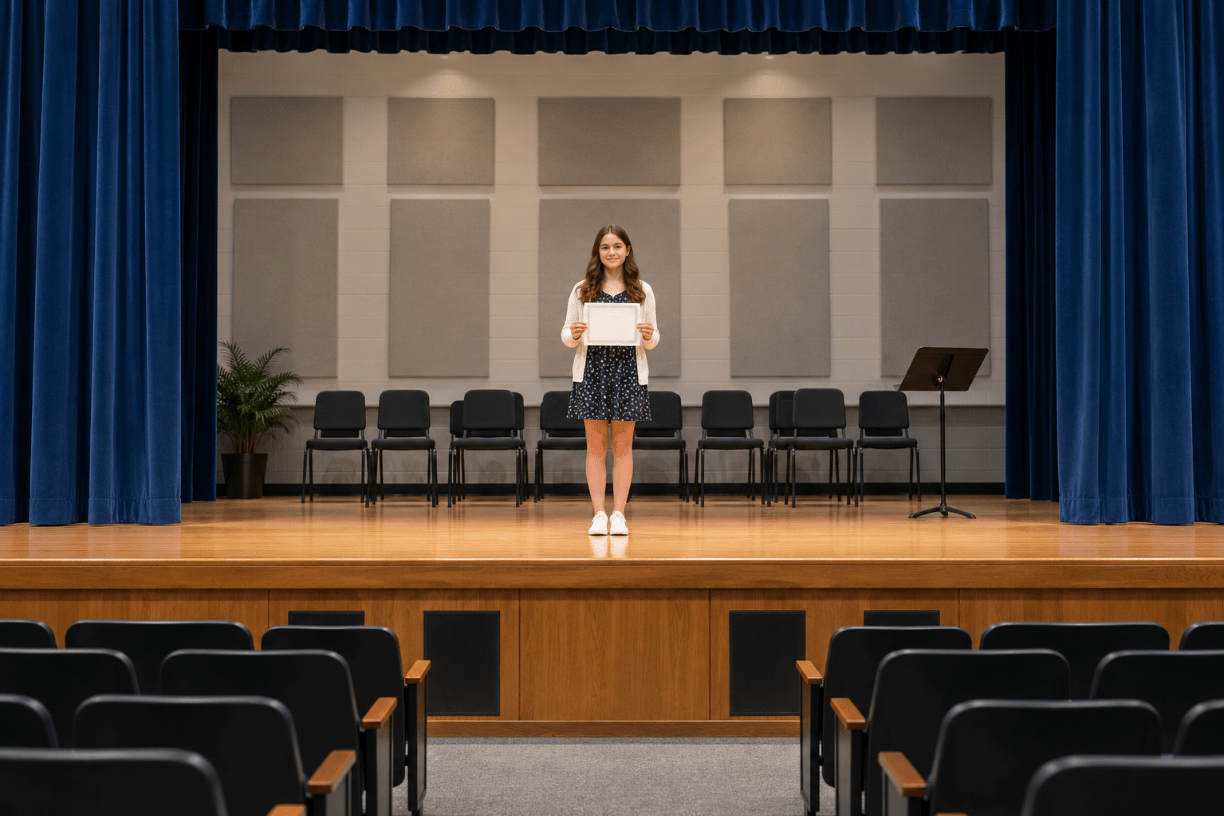
You want the curtains to frame the student. Would you keep this wider view or show only the student? Name what must stay visible.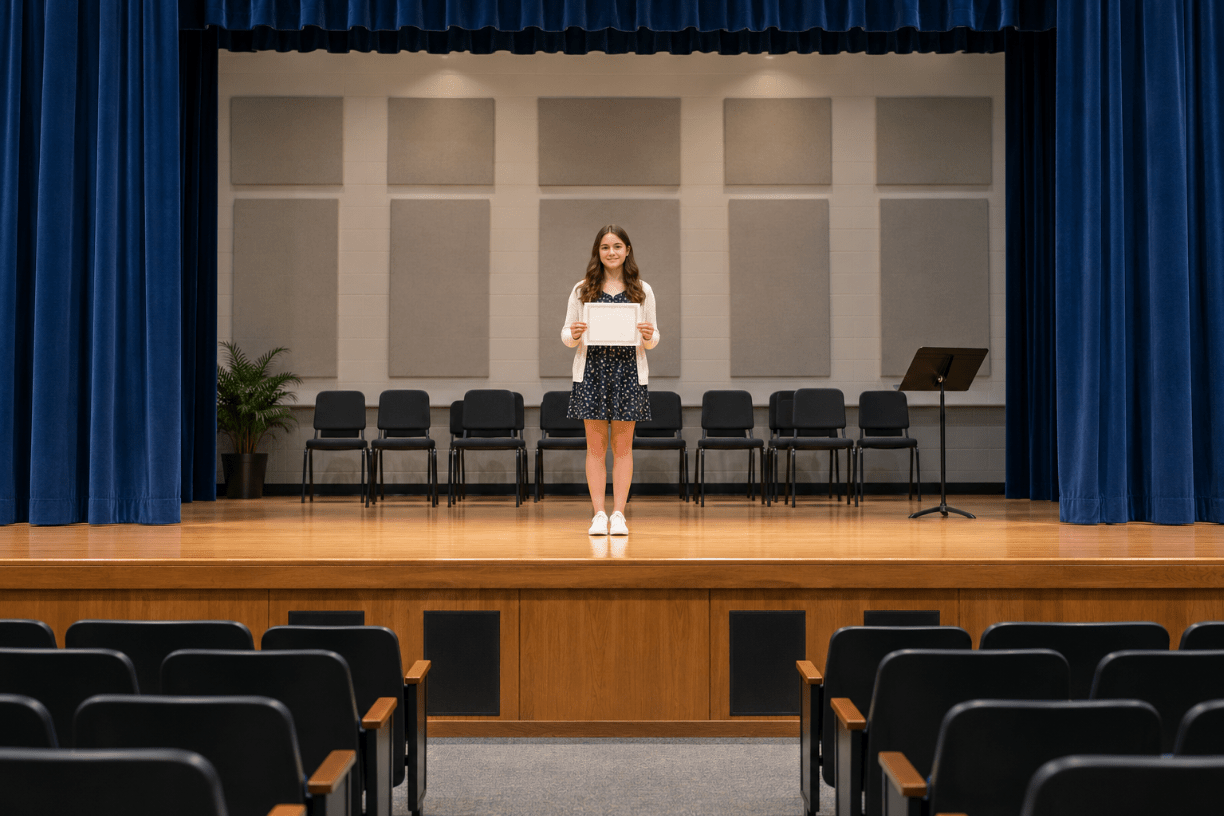
Keep the wider view with the student and curtains around them.
200
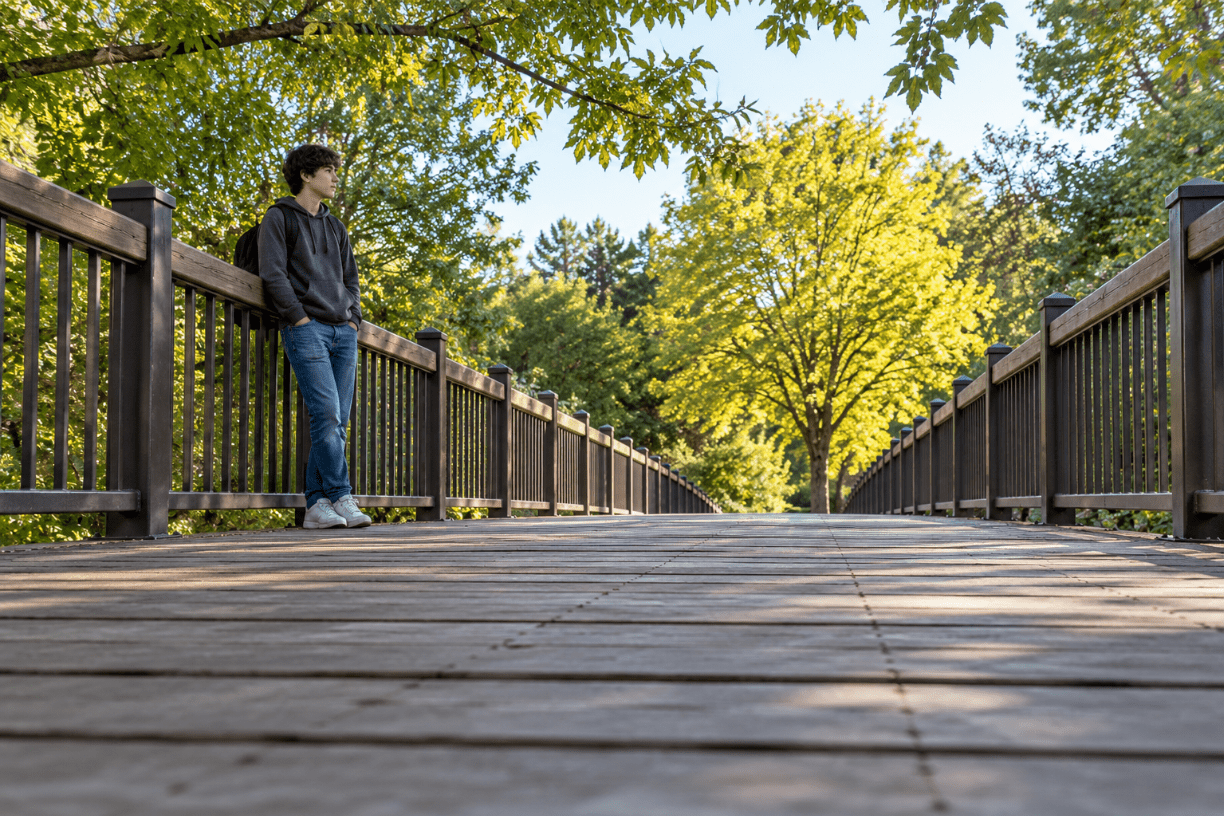
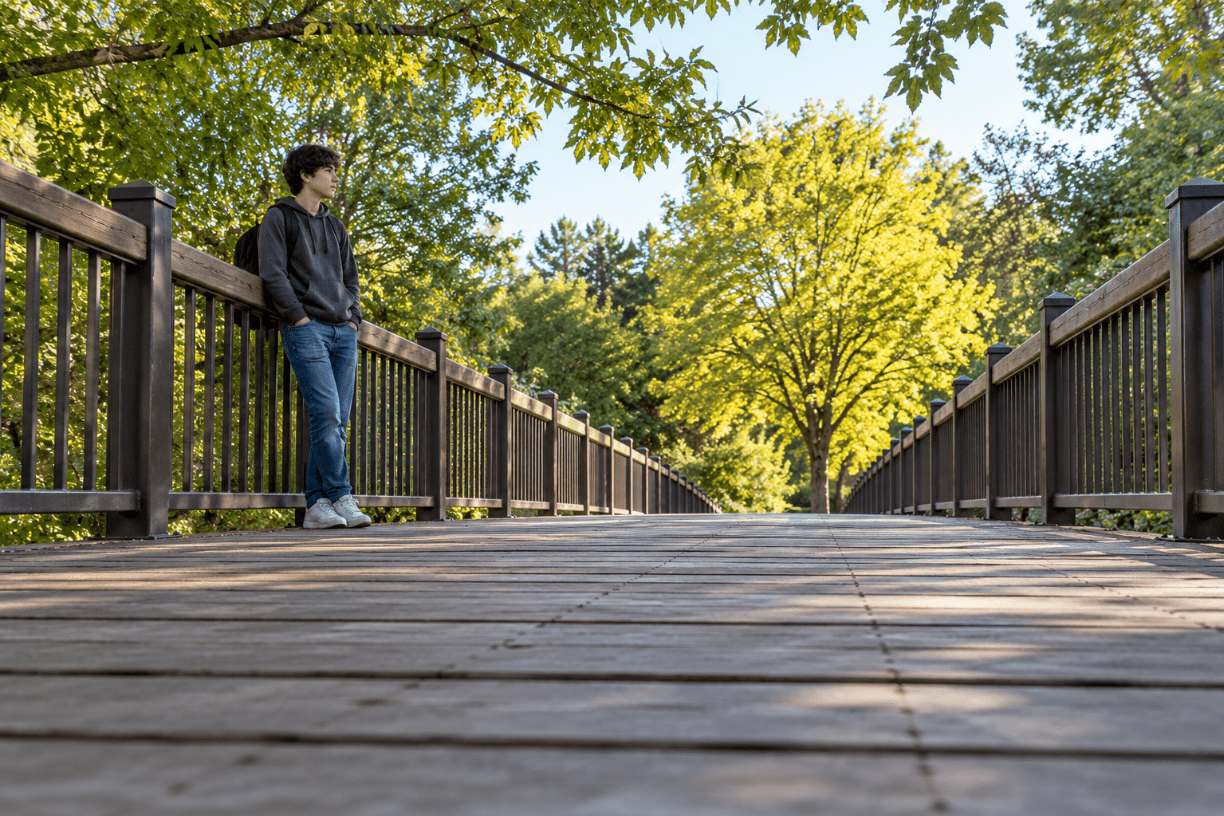
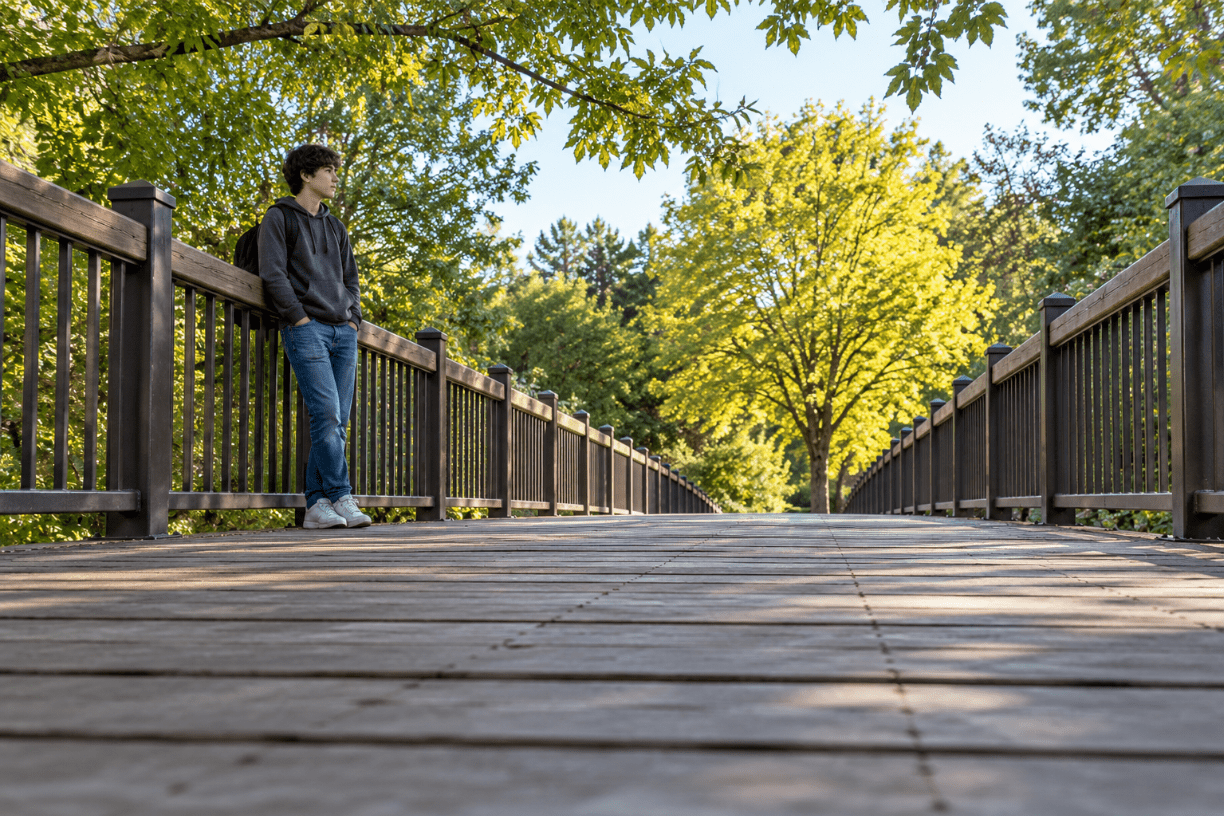
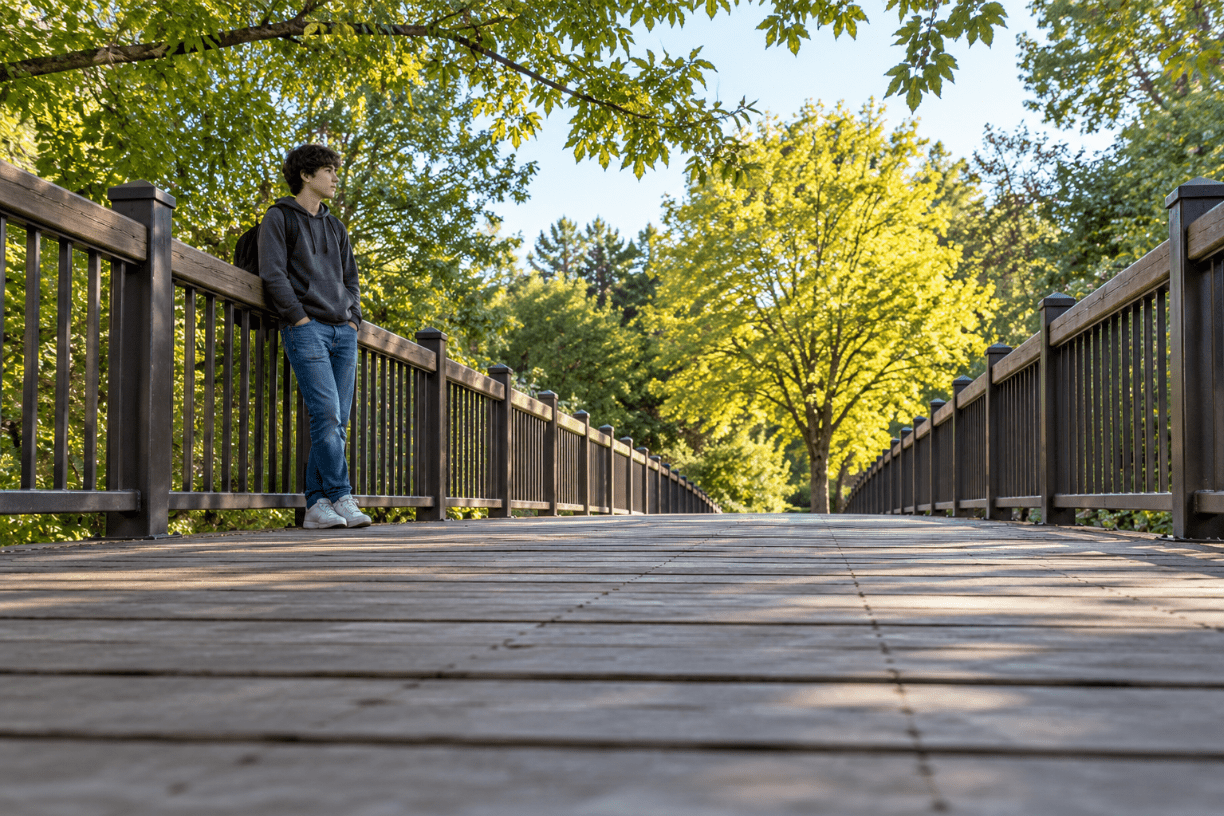
Look at the bridge rails. Do they guide your eyes toward the student or toward the far end of the bridge? Point out the evidence.
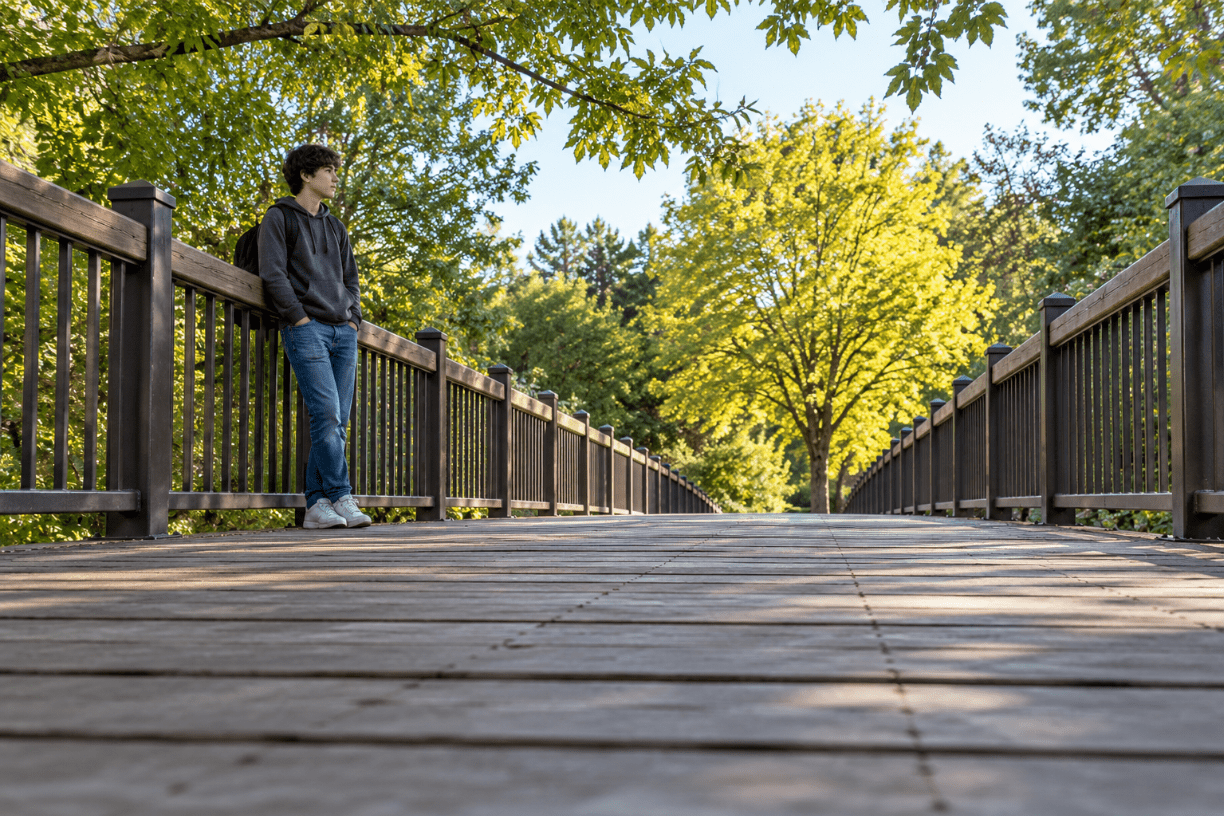
Toward the far end and tree. The rails narrow together in that direction; the student stands off to the left.
200
Name ONE feature that looks similar on both sides of the stage and ONE detail that does not match.
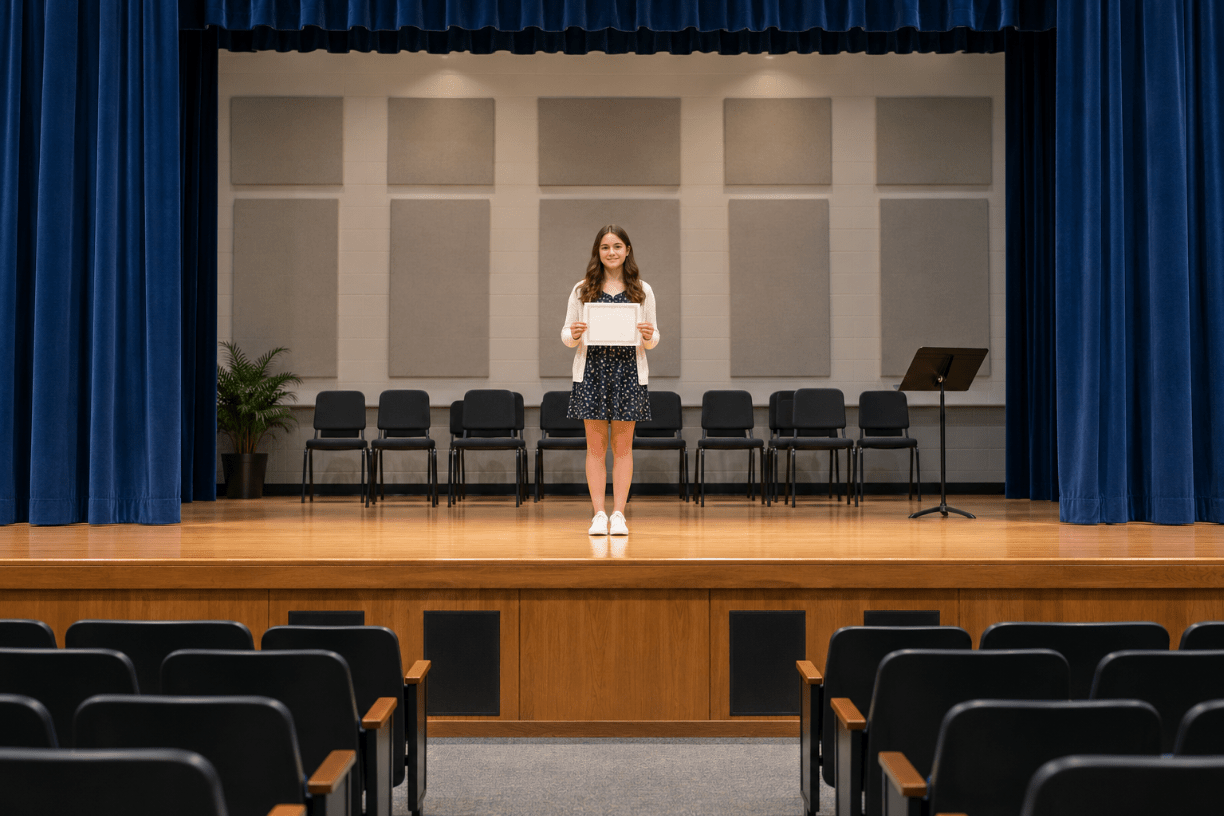
The curtains or matching wall panels look similar on both sides. The music stand on the right or plant on the left does not have a matching partner.
200
Does this picture work better for showing the trophy clearly or showing the players' faces clearly? Use TWO details from the picture.

The trophy: it is large and sharp, while the players behind it are blurred.

200
Does the bridge picture suggest a camera close to the deck or high above the student? Name TWO details that support your choice.
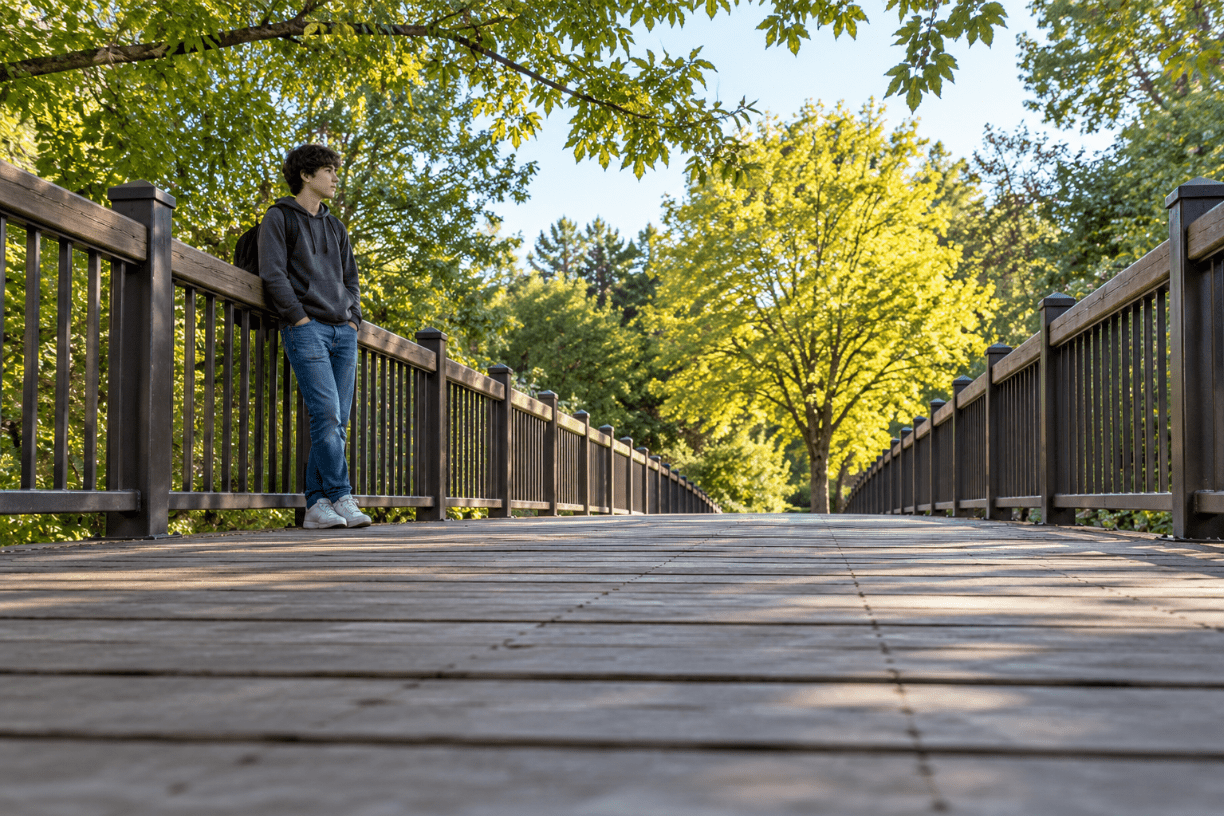
Close to the deck: the nearest planks fill the foreground, and we look upward toward the standing student and rails.
300
A poster needs a person on the LEFT and clear space on the RIGHT for a title. Where could you place the person on a thirds grid, and why?
Near the left vertical third line, leaving open space on the right for the title.
300
One photographer uses a curved path. Another uses a straight fence. Is one always a better leading line? Explain.
No. Either can work if it guides attention through the picture or toward the intended subject.
300
A row of identical chairs is photographed from the side. The chairs repeat, but the two sides of the picture do not match. What can you say about pattern and symmetry?
It shows a repeated pattern, but that does not guarantee overall symmetry.
300
One picture needs a blurry background behind a runner. Another must show the runner AND the whole group clearly. Should both use the same depth of field? Explain.
Not necessarily. Shallow depth can isolate the runner; deeper depth can keep the runner and people at other distances sharp.
300
You take a picture from high above a table. You then trim away the table edges. Has it become an eye-level picture? Explain.
No. Less of the scene is shown, but the original camera was still above it.
400
You want a doorway to frame a person, but its edge hides half their face. Would trimming the picture fix the hidden face? What could you change before taking it again?
No. Change the camera position or the person's position so the face is visible while the doorway still frames them.
400
A railing points toward an empty doorway, but the person you want to show is off to one side. Can simply cropping the picture move the person into the doorway? What could you do instead?
No. Move the person or change the camera position before taking another picture so the line leads toward the subject.
400
You want a trophy display to look balanced. Picture A shows the middle trophy and both matching cabinets. Picture B cuts off the left cabinet. Which better fits the goal? What would you change in the other?
A fits the balanced goal better. Widen or adjust B to include a similar amount of both cabinets.
400
You enlarge the blurry player in a picture until they fill the screen. Why might the picture still fail as a clear portrait, and what could you do instead?
Making the player bigger does not restore sharp detail. Choose a sharper picture or take another with the player in focus.
400
One photo should show how people are arranged in a circle. Another should make one person look tall. What different viewpoint would you choose for each, and why?
A higher view looking down can show the circle's layout. A low view looking up can make the person appear tall.
500
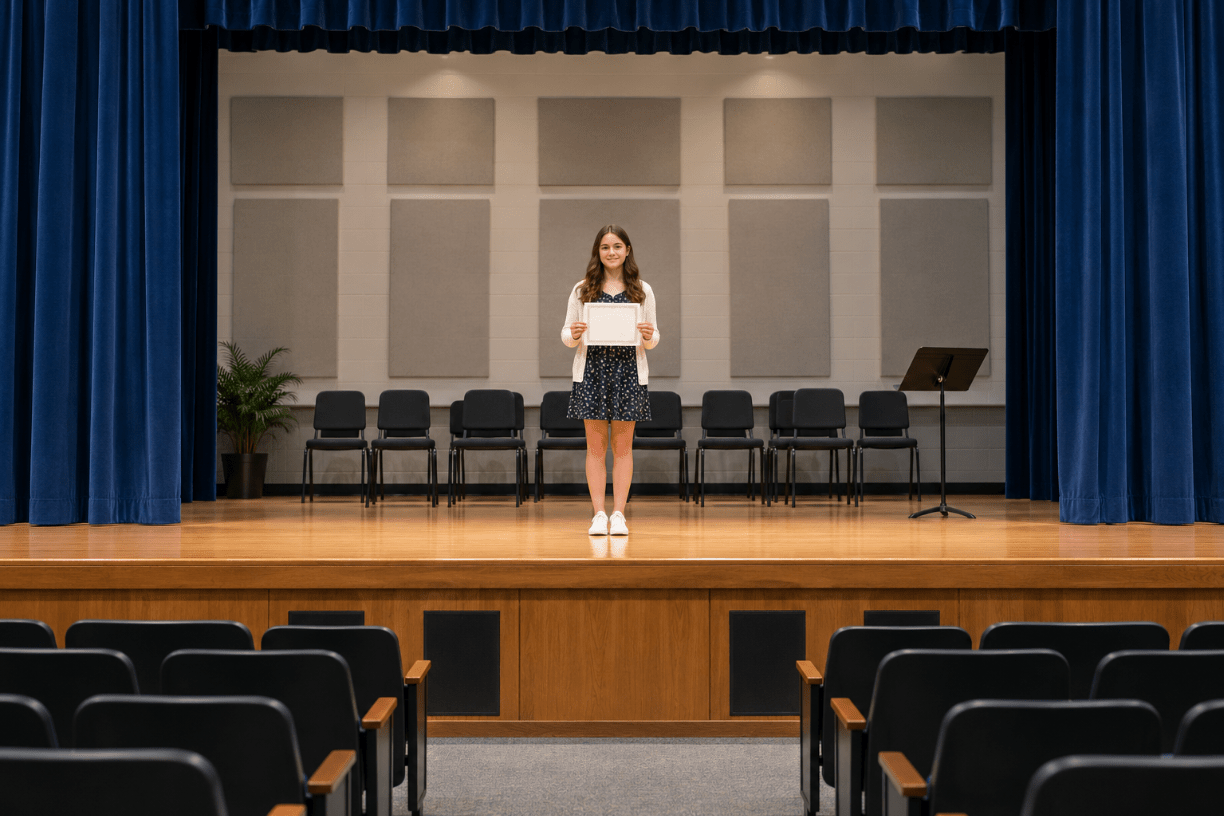
Plan TWO versions of this picture: one about the student's certificate and one about the school stage. What would you keep in each, and what would the closer version leave out?
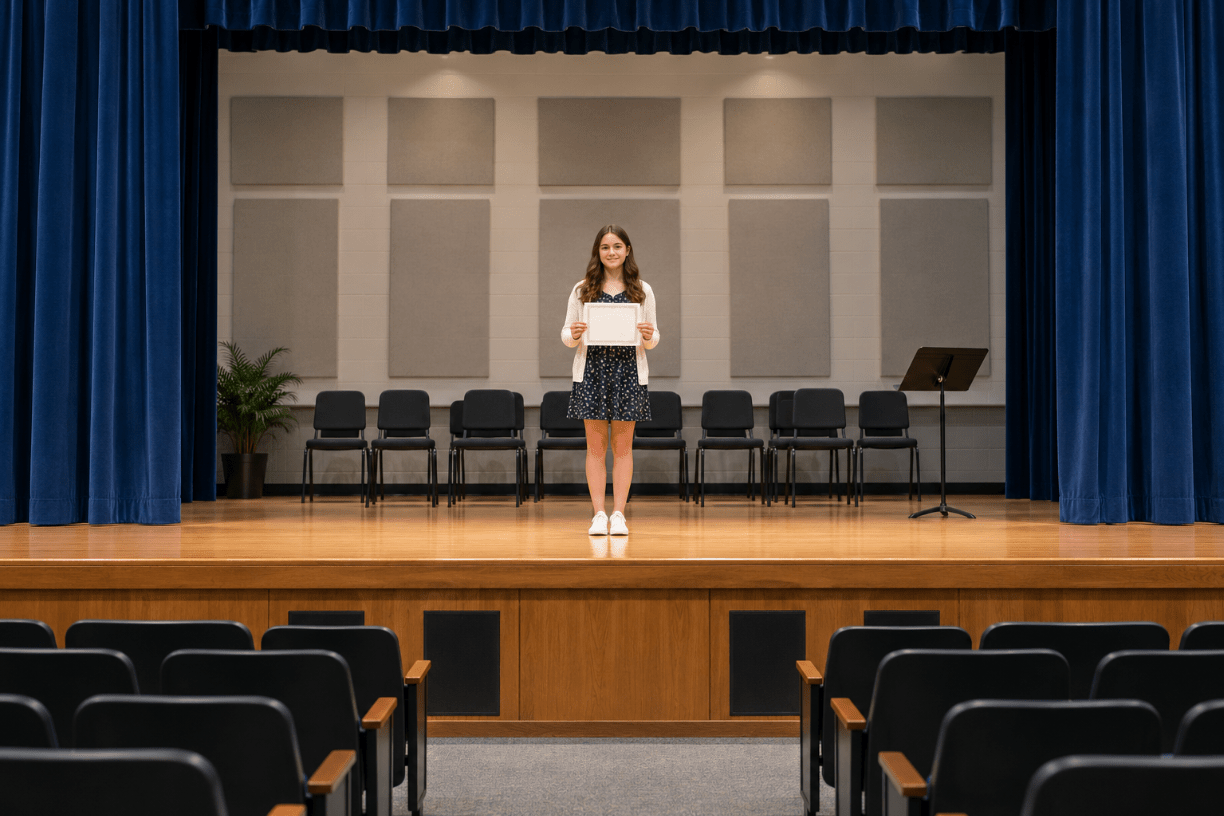
For the certificate, show the student and certificate more closely. For the stage, keep the curtains, stage and student. The closer version loses much of the setting and framing.
500
You want the rails to lead toward the student in your NEXT picture. What ONE change would you make before taking it? What TWO things must the new picture show to prove it worked?
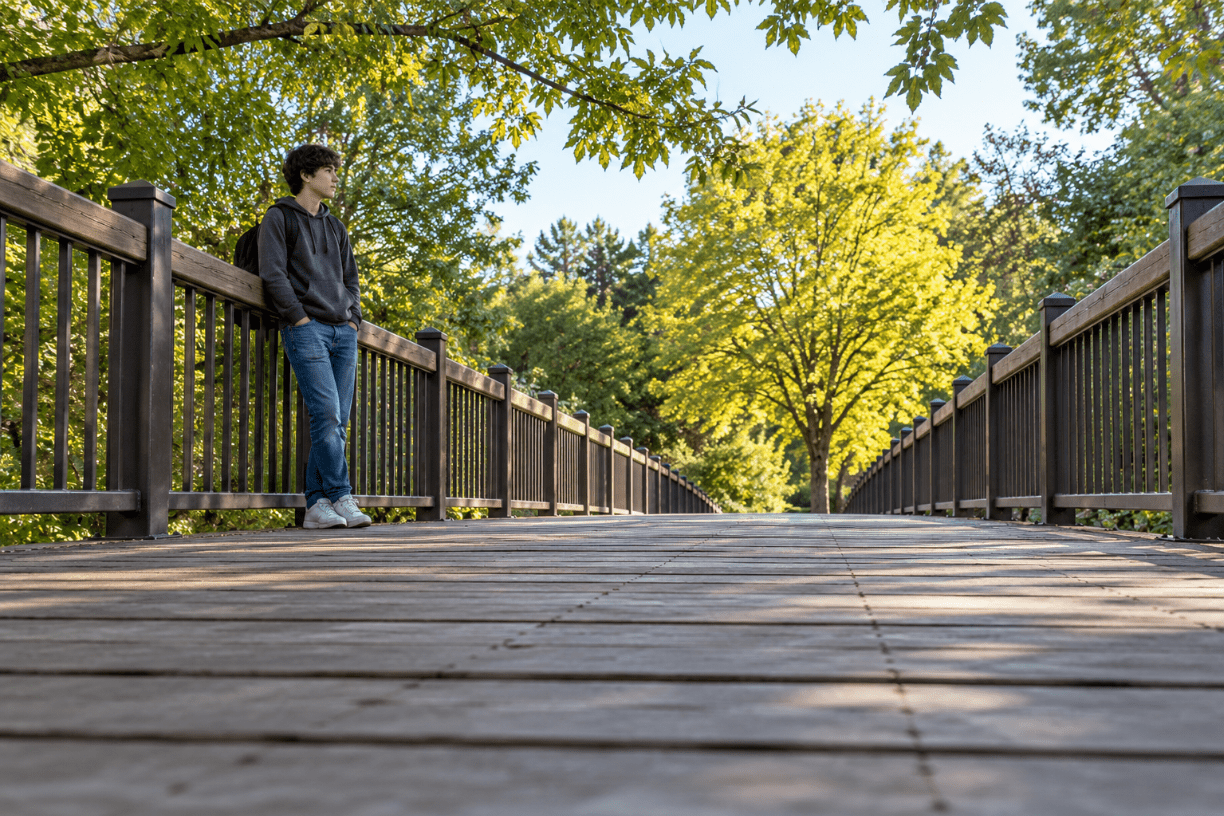
Have the student stand near the far end where the rails lead, or choose another camera position that aligns them. Keep the guiding rails and the student visible together.
500
A student says, "We must move the person to a thirds line because centered pictures are always wrong." Would you change this stage picture just for that reason? Use TWO visible details to explain.
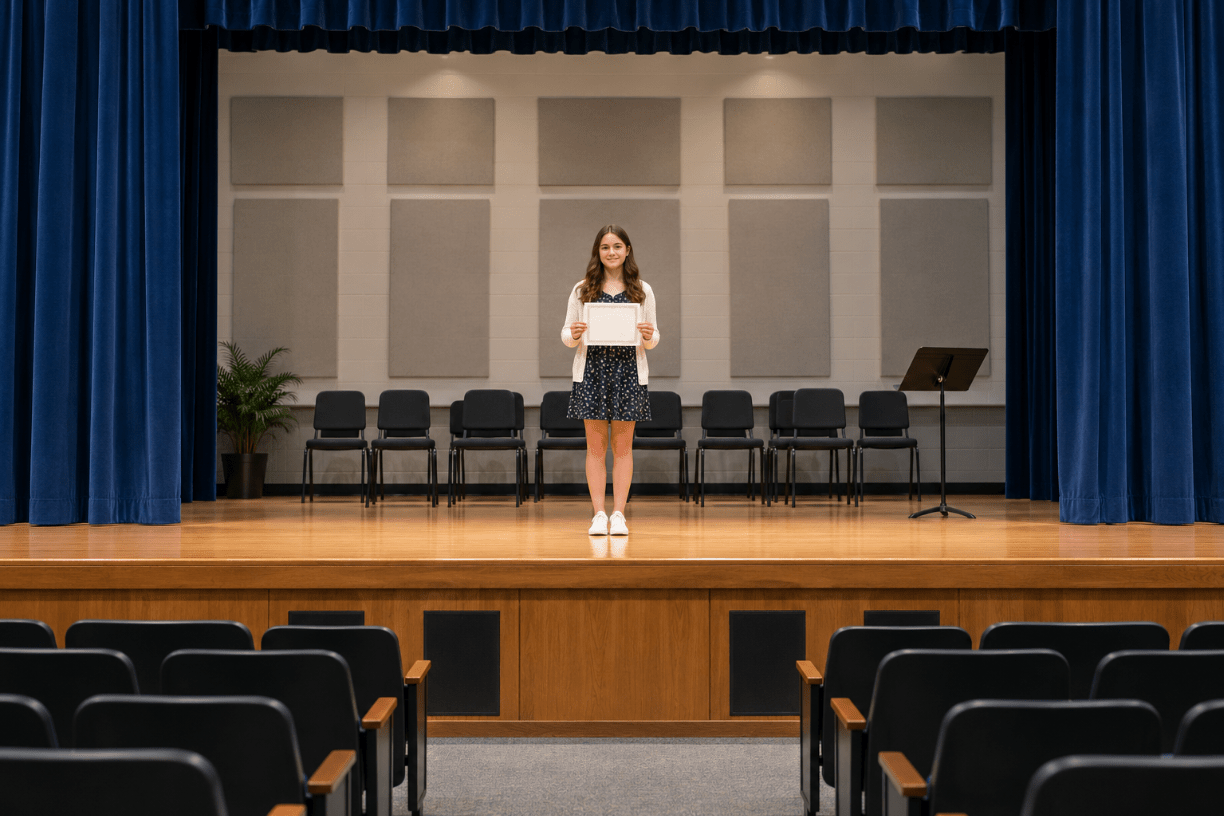
Not necessarily. The centered person fits between matching curtains and a roughly balanced stage/wall arrangement. Centering can support that purpose even though small details differ.
500
You need a new picture where BOTH the trophy and all four players are sharp. What would you change about depth of field AND the way you include them in the picture?

Use a deeper depth of field and arrange the view to keep the whole trophy and all four players visible. Bringing them closer to the same distance can also help.

500
Plan TWO new bridge pictures: one shows the bridge's layout; the other makes the student appear tall. What camera view would you choose for each? Explain one thing each view would make easier to see.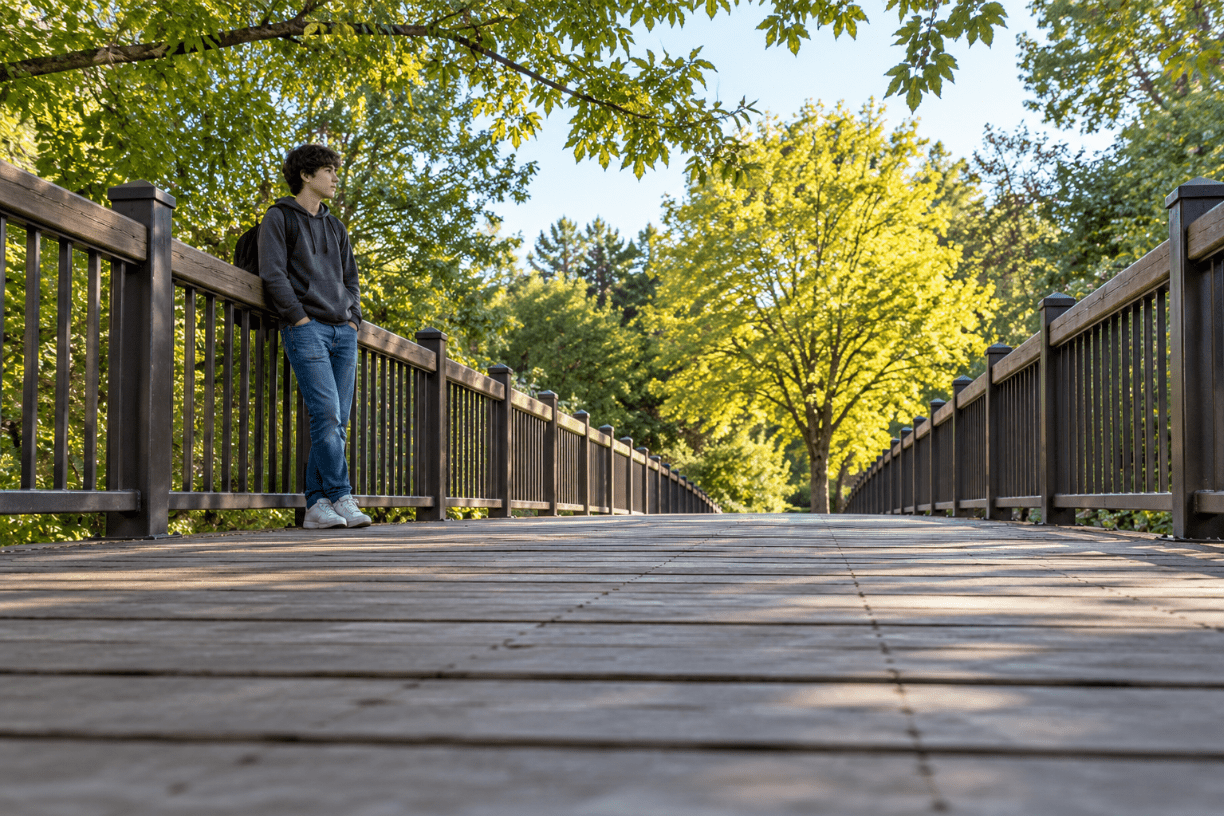
A higher view looking down can reveal the bridge layout and positions. A low view looking up at the student emphasizes their height against the surroundings.