What was the Dx, Mylie Cyrus?
For Medicinal purposes only
Get up, get up, C'mon get down with the syndrome
Mixed Tape
I'm kinda psychic; I have a 5th sense...It's like I have CP or something
100
What is the best position for a child with a myelomeningocele?
Place the baby in a side-lying position to avoid pressure on the back lesion.
Nurse prone. Continue monitoring whilst nursed in prone position. Follow any further instructions as per the post-operative orders
100
Medical term for club foot
Talipes Equinovarus
100
T/F It is the leading chromosomal cause of Intellectual Disability
True
100
The organs affected by Cystic Fibrosis (7)
sinuses; lungs; skin; liver; pancreas; intestines; reproductive
100
What is athetosis?
Athetosis is defined as slow, writhing, and continuous worm-like movement of the limbs or trunk.
https://www.facebook.com/DoctorAmtkaushal/videos/athetosis/435309311712617/
200
T/F Myleomeningocele is a cyst that contains CSF and meninges
F - it also contains the spinal cord
200
what is a chiari malformation and what can it cause?
A Chiari malformation, previously called an Arnold-Chiari malformation, is where the lower part of the brain pushes down into the spinal canal; it can cause hydrocephalus.
200
It is a genetic imbalance resulting in the presence of an extra chromosome on the 21st chromosome; if the chromosome fails to split completely it is known as _________, if the chromosome attaches to another it is known as _________________.
nondisjunction; translocation
200
what is hydrocephalus and what happens when it occurs?
Hydrocephalus is a buildup of cerebrospinal fluid (CSF) in the spaces deep inside your brain (ventricles). As a result of the excess fluid, the ventricles widen and put pressure on the brain tissue. Affects children and adults and can cause severe disability or death.
Buildup can be a result of:
- Blocked flow of CSF in the brain
- Increased production of CSF
- Reduced absorption of CSF
200
How it is determined the severity of the diagnosis
Severity is determined according to the Gross Motor Function Classification System
300
Where does motor and sensory paralysis occur?
Usually Lumbar region, below the level of the lesion
300
T/F a sensory impairment always corresponds to the motor level of paralysis
F - it may SKIP areas; just b/c part of the dermatome is intact does not mean the entire dermatome is intact
300
Problems with motor skills is linked to the lack of ________________ control and ______________ joints; weightbearing is obtained by ___________.
postural; hyper; joint locking
300
Describe the Duchenne (MD) gait?
Duchenne gait is characterized by trunk lean towards the affected stance limb with the pelvis stable or elevated on the swinging limb side during single limb stance phase. Clinically it is a well-known compensation mechanism to unload hip abductors in the presence of hip abductor weakness.
300
Incidence rate
Cerebral palsy (CP) is the most common motor disability in childhood. Recent population-based studies from around the world report prevalence estimates of CP ranging from 1 to nearly 4 per 1,000 live births or per 1,000 children. The prevalence of CP is higher for children born preterm or at low birthweight.
400
What is the difference between Spina Bifida and MMC?
Myelomeningocele is the most severe form of spina bifida.
Spina bifida is a type of neural tube defect. The neural tube starts to form in early pregnancy and closes about 4 weeks after conception. In spina bifida, part of the neural tube does not develop or close properly, leading to defects in the spinal cord and bones of the spine (vertebrae) - causing a gap in the spine .
400
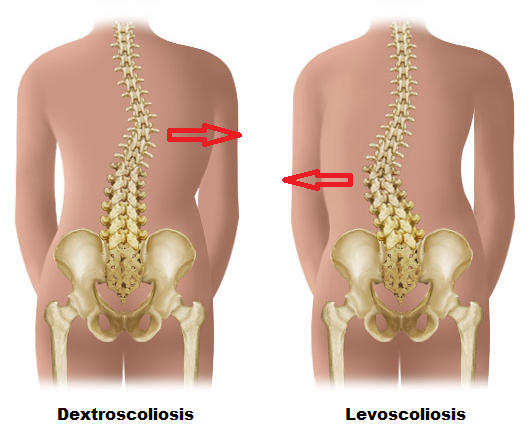
The name for a right and left scoliosis
Dextro & levo scoliosis
400
Name 5 clinical features
Hypotonicity
Joint hypermobility
Upwardly slanging epicanthal folds
Flat nasal bridge & fascial profile
Sometimes a protruding tongue
Delayed development
Impaired motor control
Possible congenital heart defect between wall of atria or ventricules
Pes planus (flatfoot)
Thoracolumbar scoliosis
Patellar dislocation
Atlantoaxial instability (aai)
400
This disorder is characterized by intellectual disability and delayed development, microcephaly, low birth weight, hypotonia in infancy. Infants with this condition often have a high-pitched cry that sounds like that of a cat.
Cri-Du-Chat Syndrome (Cat Cry Syndrome)
400
Name a prenatal, perinatal, and postnatal cause
Prenatal: maternal infection, placenta disruption, Rh factor, diabetes, toxemia
Perinatal: anoxia, asphyxia, hemiplegia (stroke)
Postnatal: brain damage due to MVA, shaken baby syndrome, lead, near-drowning
500
What are the 3 stages of Intervention and goals of treatment?
Stage 1 - birth to ambulation; prevent 2nd complications, promote age-app sensorimotor development; prepare for ambulation; family ed
Stage 2- ambulatory phase (toddler into school yrs); ambulation & indp mobility; continue w flexibility, strength & endurance; selfcare/ADL
Stage 3- transition (school -- adolescence - adult); mobility for home school and community, improve flex/str/end, indp in ADLs, participation in recreational activities
500
What are the 3 types of seizures and their differences?
1) focal onset - can start in one area or group of cells in one side of the brain;
- Focal onset aware seizures: When a person is awake and aware during a seizure, it’s called a focal aware seizure. This used to be called a simple partial seizure.
- Focal onset impaired awareness: When a person is confused or their awareness is affected in some way during a focal seizure, it’s called a focal impaired awareness seizure. This used to be called a complex partial seizure.
- A focal seizure can also spread to both sides of the brain and become tonic-clonic (focal to bilateral tonic-clonic). People with this seizure type usually have an aura before the tonic-clonic seizure.
2) generalized onset - These seizures affect both sides of the brain or groups of cells on both sides of the brain at the same time. This term was used before and still includes seizure types like generalized tonic-clonic, absence, or atonic to name a few.
3) unknown onset - When the beginning of a seizure is not known, it’s now called an unknown onset seizure. A seizure could also be called an unknown onset if it’s not witnessed or seen by anyone, for example when seizures happen at night or in a person who lives alone.
- As more information is learned, an unknown onset seizure may later be diagnosed as a focal or generalized seizure.
500
Name 3 clinical symptoms indicating Atlantoaxial Instability
Hyperreflexia, Clonus, Babinski's sign, Torticollis, Increased loss of strength, Sensory change, Loss of B/B control, decrease in motor skills
500
Children with Prader-Willi Syndrome become obsessed with food and exhibit this term for excessive eating.
hyperplagia
500
What are typical problems/interventions seen in Stages 1,2,3,4?
Typical problems at Stage 1: Lack of head control, Inability to track visually, Dislike of prone position, Fussiness, Asymmetric postures due to tonic reflexes, Tone, Feeding/breathing difficulties
Interventions at Stage 2: Promote postural reactions to improve head and trunk control, Transitional movements, Stretching, Strengthening, Endurance exercises, Self-care skills at home and at school
Interventions at Stage 3: Focus is to safeguard all previous gains-->5 F’s Function, Family, Fun, Fitness, Friends