Transcription:
DNA → RNA
DNA → RNA
This process converts DNA into RNA.
What is transcription?

1. Three bases on mRNA make up one of these.
2. This codon always starts translation in the lecture.
What is a codon?
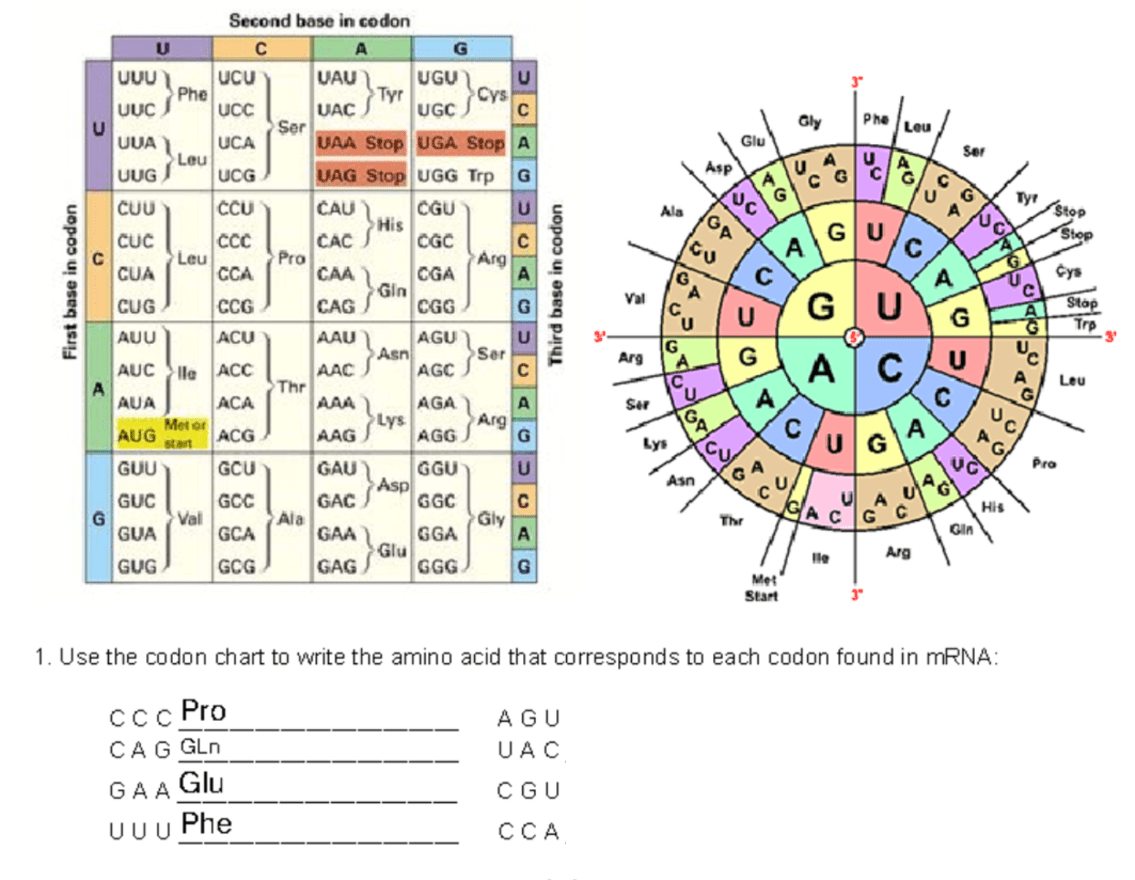
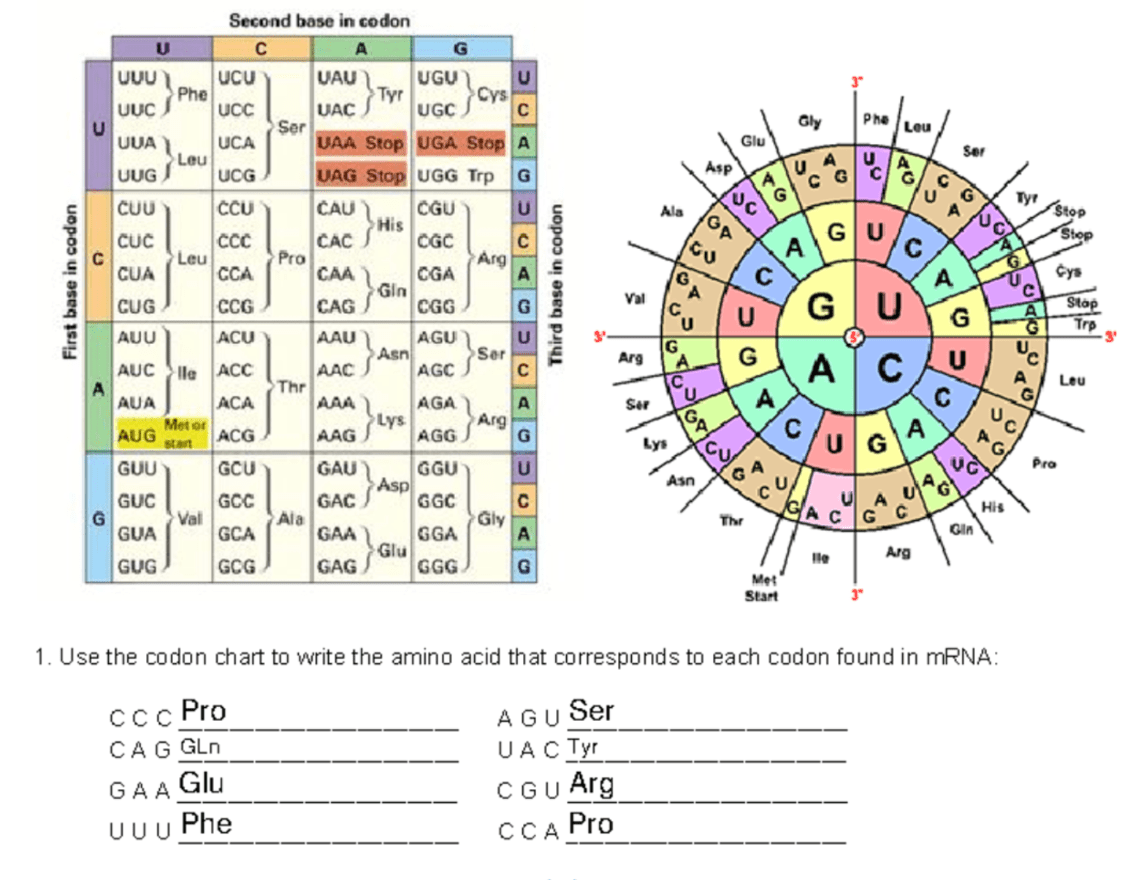
2. What is AUG?
This factor begins translation by recognizing the 5′ end and bringing the ribosomal subunits together.
What is the initiation factor?
What does the R group of an amino acid represent? How many?
The variable portion of the amino acid; there are 20 different possibilities.
Simple diffusion moves substances in this direction relative to their concentration gradient.
What is high → low?
1. RNA polymerase I produces this RNA associated with ribosomes.
2. RNA polymerase II produces this RNA that carries the code for a protein.
3. RNA polymerase III produces this RNA that transports amino acids.
1. What is rRNA?
2. What is mRNA?
3. What is tRNA?
RNA polymerases:
I → rRNA → ribosomes
II → mRNA → protein code
III → tRNA → transfers amino acids
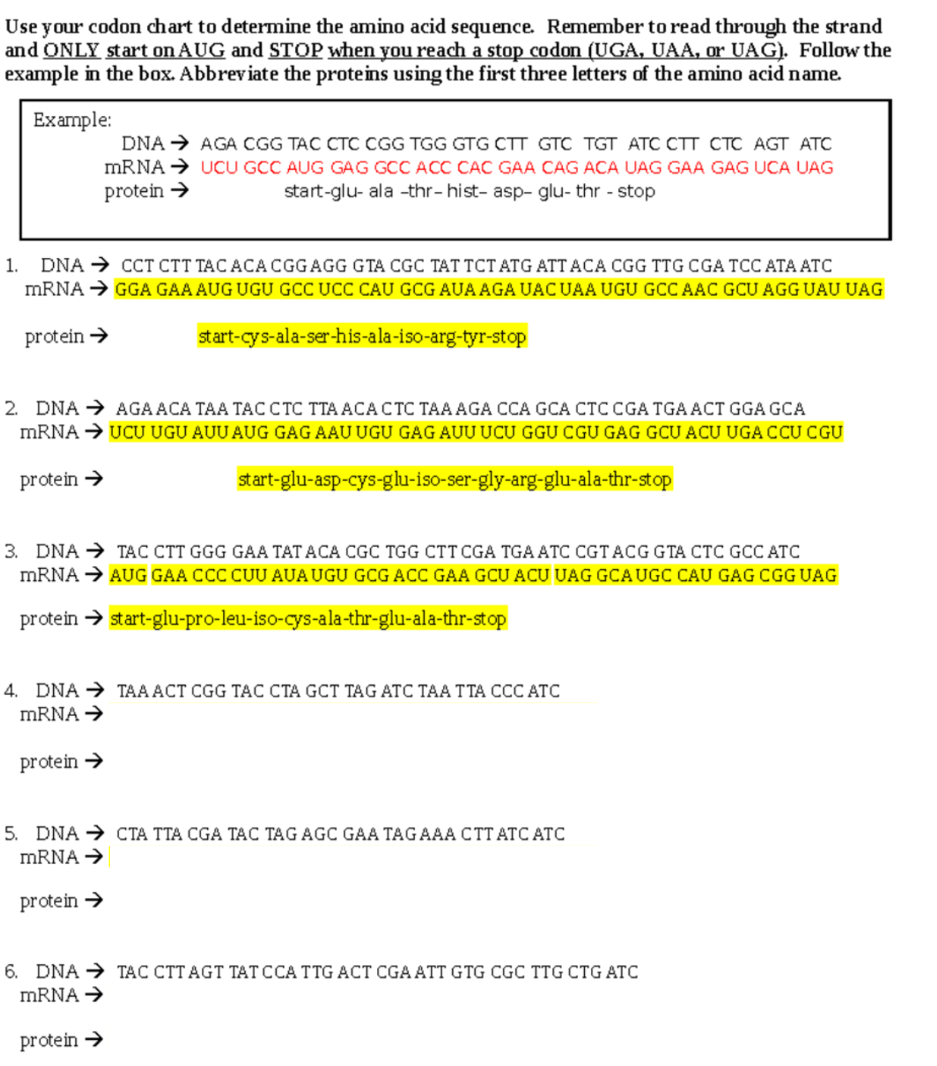
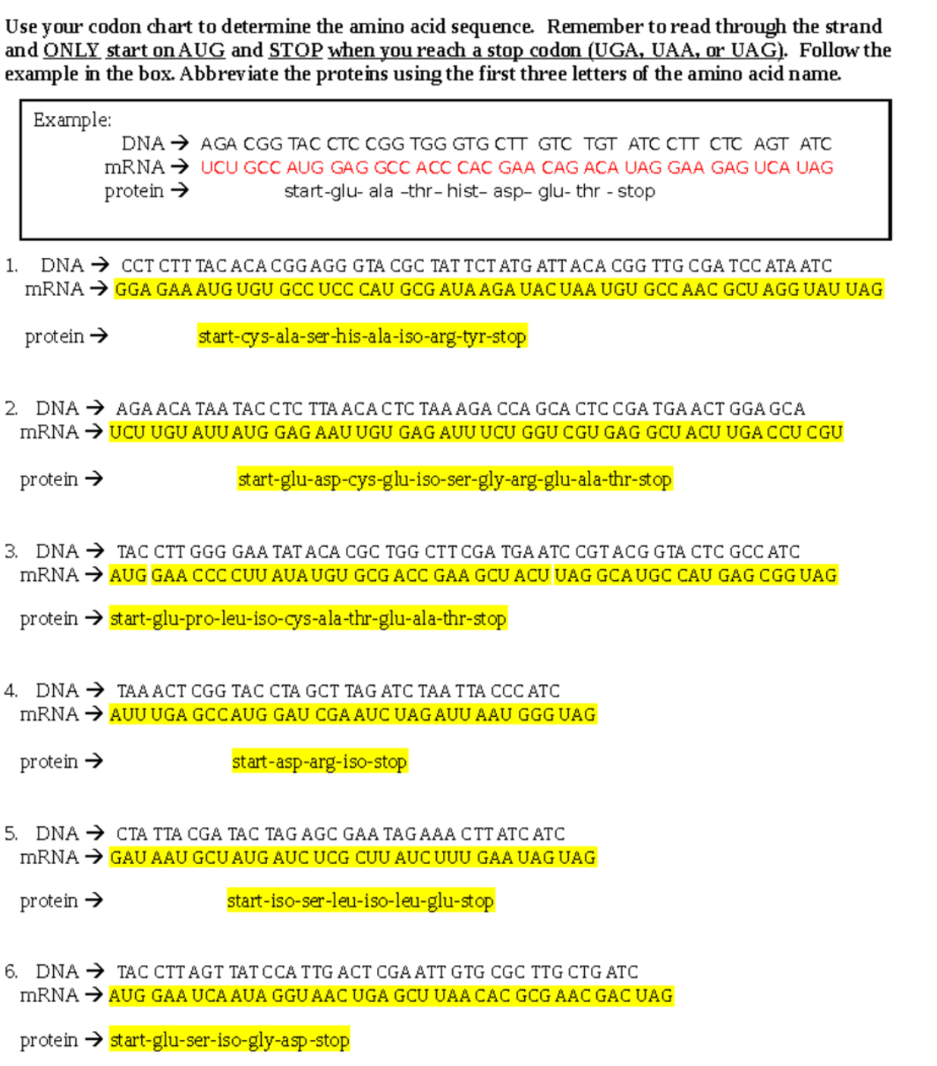
1. This codon always starts translation in the lecture. (Bonus: Name the amino acid)
2. The three stop codons
1. AUG & Methionine/Met
2. UAA, UAG, and UGA
This factor is a GTPase that helps bring the matching tRNA into the A site.
What is the elongation factor?
2. On which end is a growing protein built according to lecture?
1. What is the N-terminus and C-terminus?
2. The C-terminus.

Per Google:
N-terminus
The N-terminus also referred to as the amino-terminus, NH₂-terminus, or N-terminal end, initiates the polypeptide chain. It is characterized by a free amine group (-NH₂) and represents the initial amino acid in the sequence.
C-terminus
The C-terminus, also known as the carboxyl-terminus, COOH-terminus, or C-terminal end, concludes the polypeptide chain. It is distinguished by a free carboxyl group (-COOH) and marks the final amino acid in the sequence.
The fatty-acid interior of the phospholipid bilayer has these two properties.
What are hydrophobic and nonpolar?
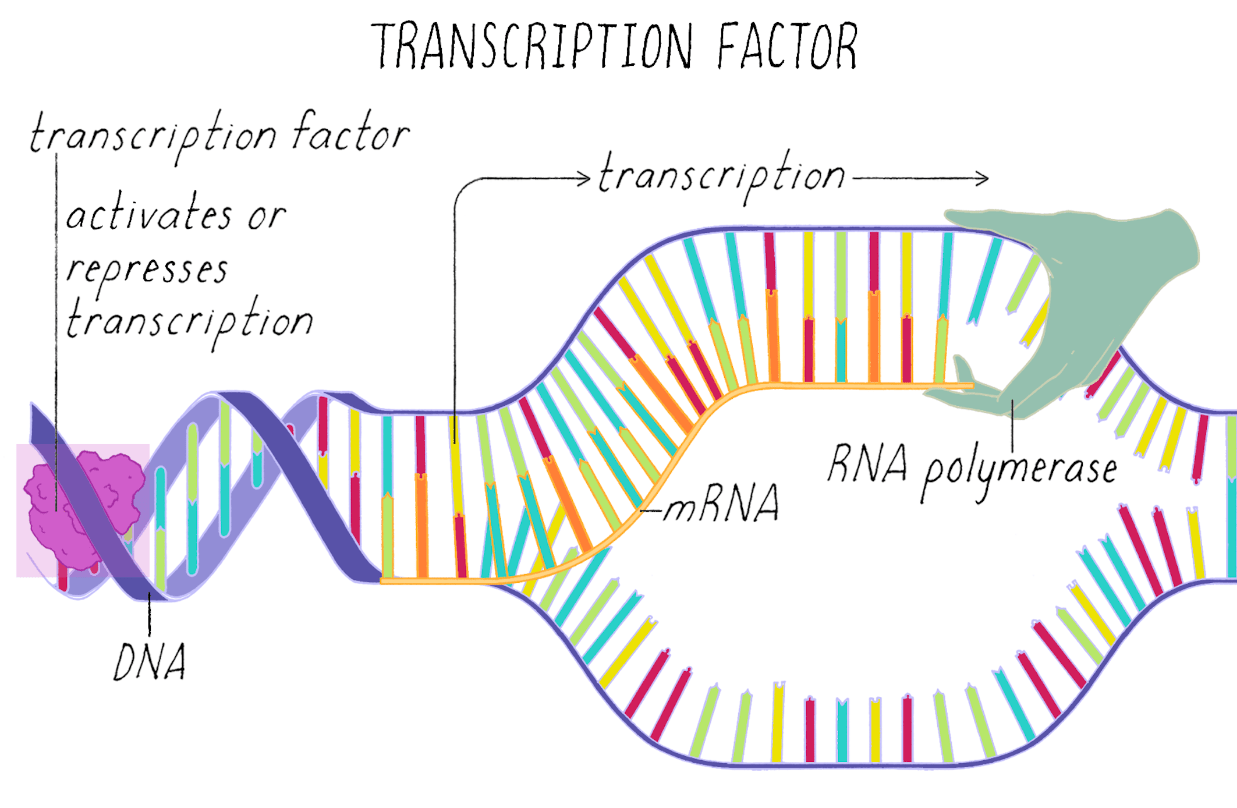
A specialized protein that binds to specific regions of DNA to control the rate at which genetic information is copied into RNA.
(Hint: The professor compared these gene-identifying molecules to “Post-it notes” placed on specific genes)
What is a transcription factor?
1. Three complementary bases on tRNA are called this.
2. Bonus: The complementary (*insert Part 1 answer*) to AUG is this three-base sequence.
1. What is an anticodon?
2. What is UAC?
This activity forms the peptide bond between amino acids during translation.
What is peptidyl transferase?
What functional groups are found in an amino acid?
An amine group, a carboxyl group, a hydrogen, and a variable R group.

1. Increasing gradient, surface area, or lipid solubility has this effect on diffusion
2. Increasing molecular weight or diffusion distance has this effect on diffusion.
1. What is increasing diffusion?
2. What is decreasing diffusion?
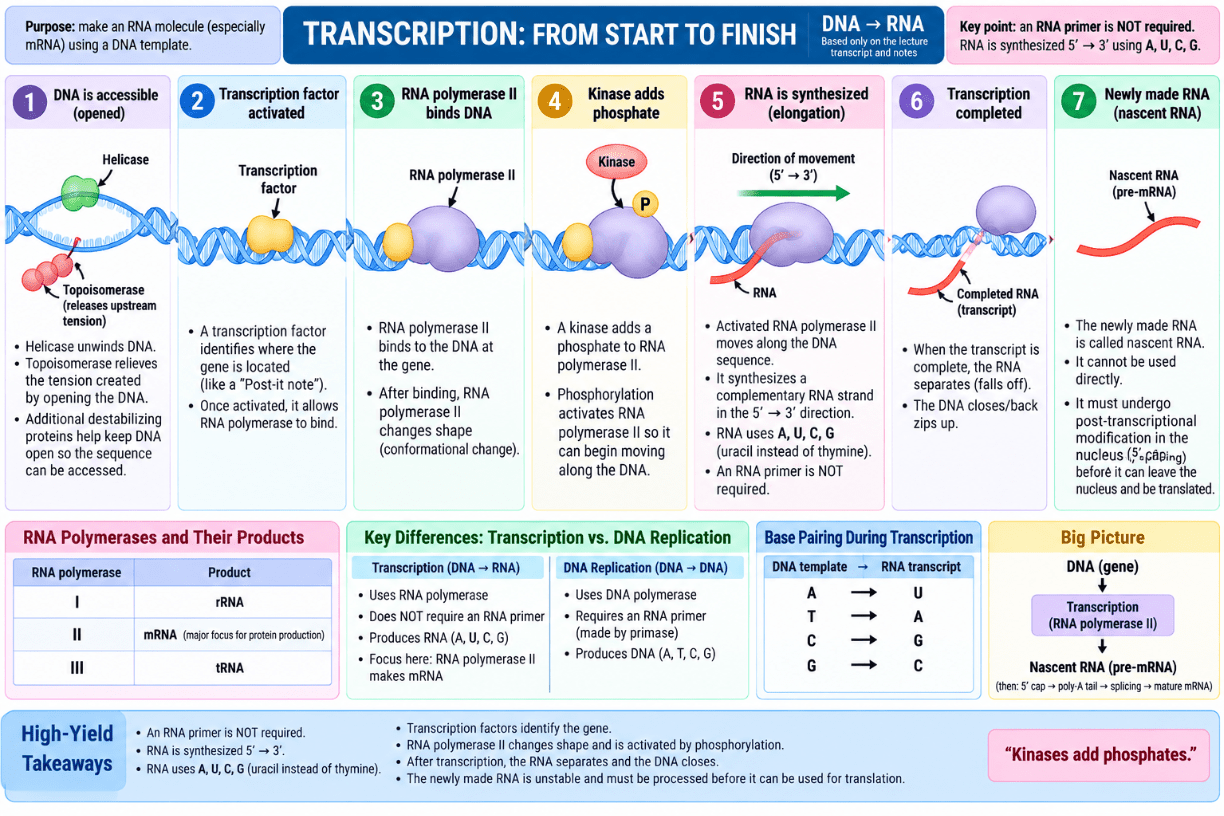
After RNA polymerase II binds DNA and changes shape, this type of enzyme adds a phosphate to help activate it.
What is a kinase?
The professor emphasizes the rule “kinases add phosphates.” After RNA polymerase II binds DNA and undergoes a conformational change, a kinase adds a phosphate to RNA polymerase II, after which it begins moving along the sequence and matching nucleotides.
Transcription factor activated → RNA polymerase II binds DNA → conformational change → kinase adds phosphate → RNA polymerase II moves along DNA and synthesizes RNA.
1. This modification is added to the 5′ end of mRNA and contains methylated guanine.
2. This modification adds many adenines to the 3′ end of mRNA and helps delay degradation.
1. What is the 5′ cap?
2.What is the poly-A tail?
This movement shifts the growing peptide from the A site toward the P site and opens the A site for the next codon.
What is translocation?
The bond connecting amino acids in a protein is this type of bond.
What is a peptide bond?
1. One mole of NaCl produces approximately this many osmoles in the lecture example.
2. One mole of CaCl₂ produces approximately this many osmoles.
1. What is 2 osmoles?
2. What is 3 osmoles?
This older term mentioned in lecture means “newly made” RNA.
What is nascent RNA?
The professor specifically states that “nascent” is an older term students may encounter for a newly synthesized RNA molecule.
After transcription:
RNA separates → DNA zips back up → newly made/nascent mRNA undergoes processing before it can leave the nucleus and be translated.
This enzyme attaches the appropriate amino acid to its tRNA.
Hint: the Uber delivering amino acid
What is aminoacyl-tRNA synthetase?
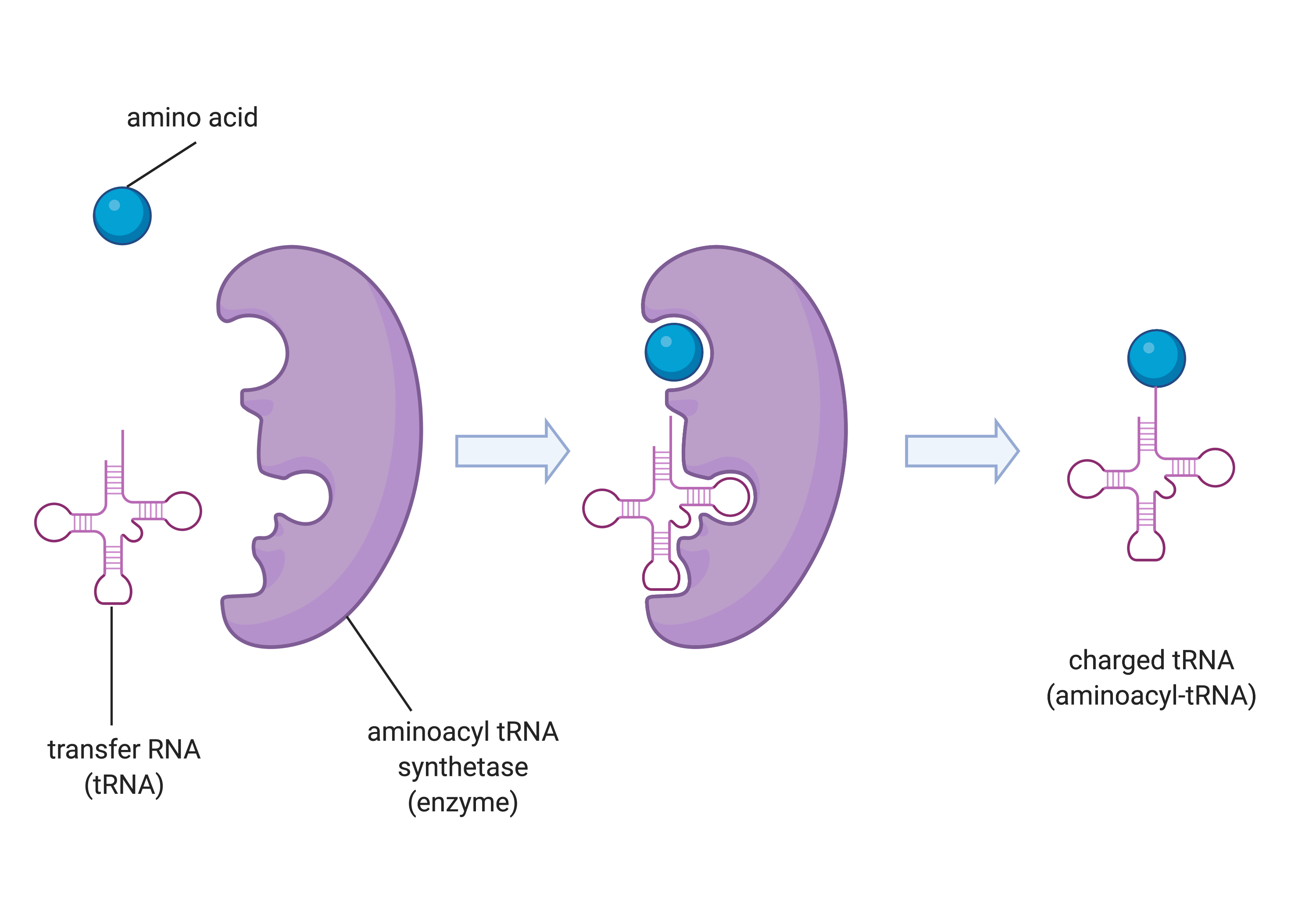
- aminoacyl-tRNA synthetase attaches the appropriate amino acid to the appropriate tRNA
Google Explanation of Uber Analogy explained:
🚙 The Uber Driver (Aminoacyl-tRNA Synthetase)
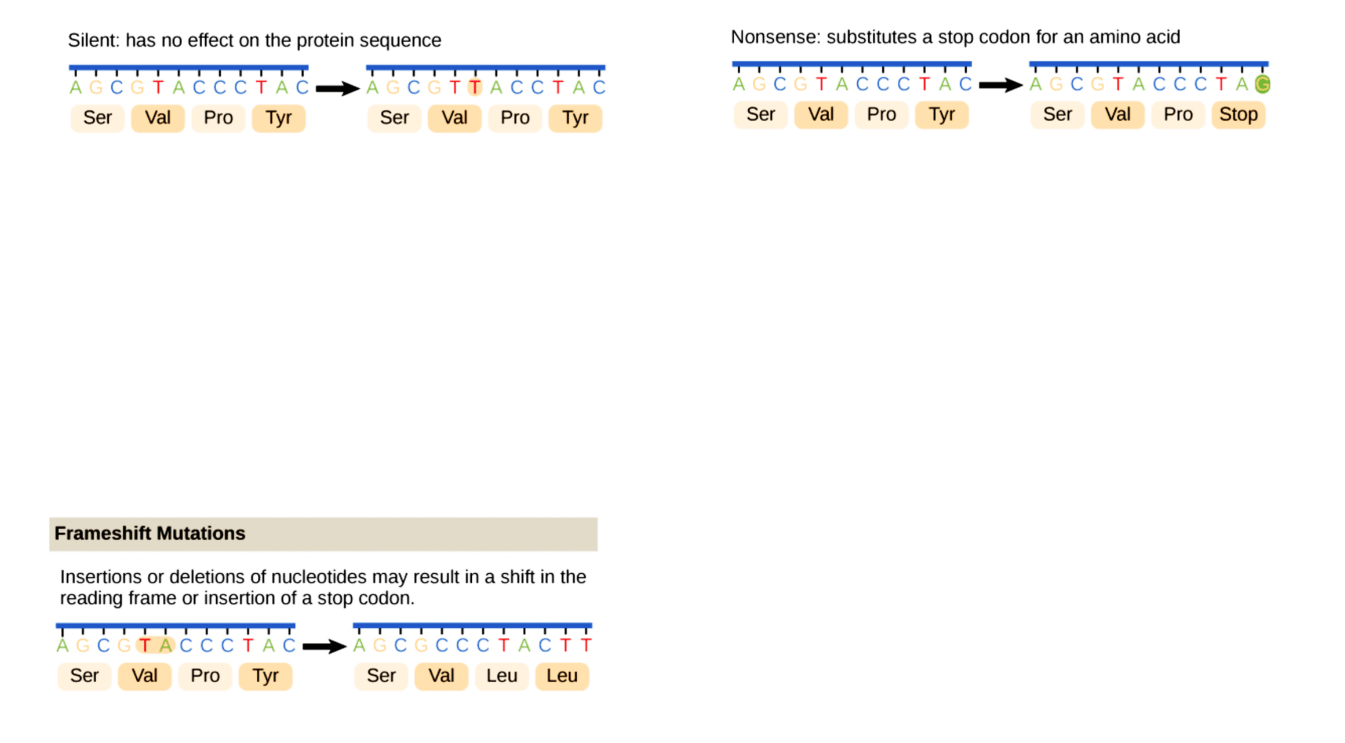
1. A nucleotide change that still produces the same amino acid is this type of mutation
2. A mutation that introduces a premature stop codon is this type
3. Removing or adding a nucleotide can shift how every downstream three-base group is read, producing this type of mutation.
1. What is a silent mutation?
2. What is a nonsense mutation?
3. What is a frameshift mutation?
1. A growing protein destined for secretion or membrane insertion contains this sequence that directs it toward the rough ER.
2. This recognition protein/complex binds the signal and directs the ribosome to the rough ER.
1. What is a signal sequence?
2. What is the signal recognition protein/particle?
Unlike simple diffusion, protein-mediated transport eventually reaches this maximum rate and plateaus.
What is Vmax?