Human Impacts
Macromolecules
Cells
Plants/Flowers
Quarter 1 Throwback
100
What is a disadvantage of using cloning as a form of biotechnology?
A decrease in genetic diversity (biodiversity)
100
The nucleus contains genetic information in the form of DNA and RNA. These are examples of which macromolecule?
Nucleic Acid
100
Name the 3 parts of the cell theory
1. All living things are made of cells
2. Cells are the basic unit of life
3. Cells come from pre-existing cells
100
The root hairs absorb both water and nutrients. The nutrients are transported with the water from the roots to the leaves. Which property of water makes this possible?
A. Versatility as a solvent
B. Expansion upon freezing
C. Active transport using ATP
D. Ability to moderate temperature
A. Versatility as a solvent
100
Which microscope was used to produce this image?
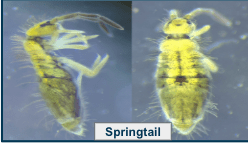
Dissecting: Color, 3D, can see specimen with naked eye
200
Microplastics are small pieces of plastic that measure 5mm or less in size that can be harmful to ocean and aquatic life. Which statement best describes why environmental monitoring of microplastics needs to be performed?
A. To evaluate the levels of other pollutants in the water
B. To determine the ways microplastics can impact an ecosystem
C. To ensure all plastics are banned before they impact public health
D. To compare the water quality of this ecosystem to another ecosystem
B. To determine the ways microplastics can impact an ecosystem
200
Identify the monomer of the macromolecule with the following functions
1. Provide structure to plant cell walls
2. Provide short term energy
Monosaccharide
200
Describe the difference between a eukaryote and a prokaryote
Eukaryotes have a nucleus and membrane bound organelles
200
What reactant(s) are used in anaerobic cellular respiration?
Glucose
200
Which of the following processes is part of the carbon cycle?
A. Decomposers put carbon into the soil by breaking down organic material.
B. Factories remove carbon from the atmosphere by burning materials.
C. Plants put carbon back into the atmosphere through the process of photosynthesis.
D. Animals remove carbon from the atmosphere through the process of respiration
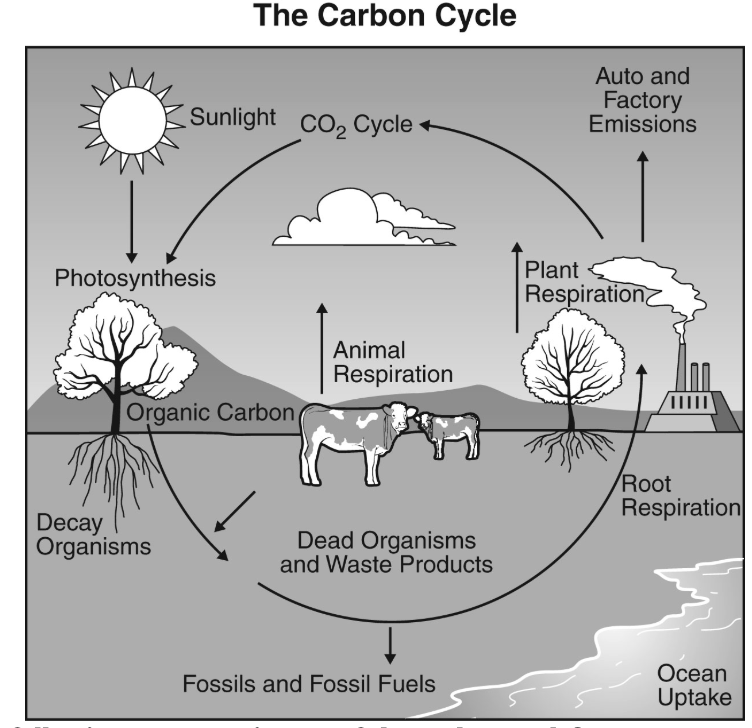
A. Decomposers put carbon into the soil by breaking down organic material.
300
How does biomagnification affect an ecosystem?
As toxins move up the food chain, they can harm each level. This can lead to a decrease in populations and eventually biodiversity loss.
300
Identify the function(s) of the macromolecule illustrated below
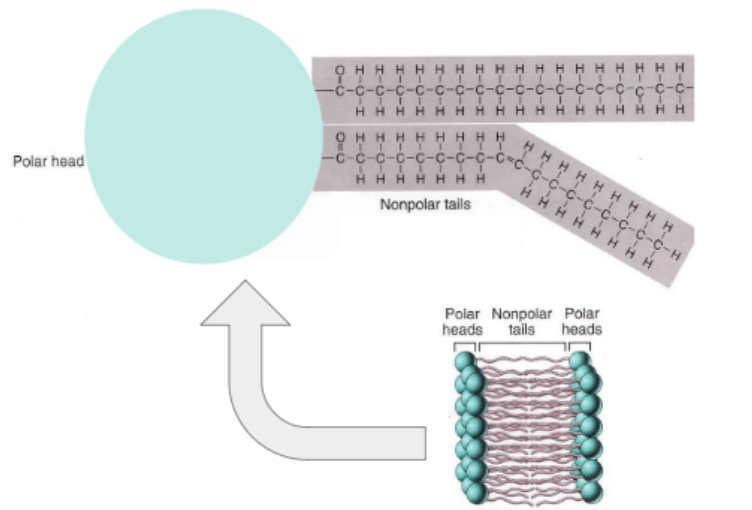
1. Long-term energy
2. Compose cell membranes
300
This organelle is necessary for all types: It is responsible for synthesizing proteins
Ribosome
300
What are the products of photosynthesis?
Glucose and Oxygen
300
How is energy transferred between the mouse and the hawk?
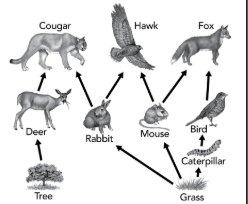
Energy decreases as it transfers from the mouse to the hawk
400
Local environmentalists have noticed that a bird population has decreased in a local forest. They think that pollution from the nearby chemical plant is to blame. After pressure from the community, the factories put filters over their smokestacks to trap pollution before it is released into the air. Why would city officials need to monitor the bird population after the factories solved the issue?
To make sure the pollution from the chemical plant was causing the harm to the bird popoulation
400
Nitrogen is an element that helps which macromolecule function in the transport of molecules across the cell membrane?
Proteins
400
This organelle is located closely to the ER and is responsible for modifying and transporting proteins to different parts of the cell/body
Golgi apparatus
400
Exhaling produces which gas needed to conduct photosynthesis?
Carbon dioxide
400
Which of the following is an environmental cost of using renewable resources?
A. Low greenhouse gas emissions.low greenhouse gas emissions. - no response given
B. Resources are replaceable by healthy ecosystems
C. Lower energy output than nonrenewable resources
D. Takes up an ecological footprint that destroys habitats
D. Takes up an ecological footprint that destroys habitats
500
A community is considering a proposal to build a new housing development that would convert a large area of native forest into residential lots. The proposal includes a plan to plant non-native ornamental trees and shrubs throughout the development. What would be the long-term environmental impact of this project on the local ecosystem? (Think of the impact of non-native species)
The replacement of native species with non-native plants and the loss of forest habitat will lead to a decrease in biodiversity and a disruption of local food webs
500
Lipase is an enzyme found in the human digestive tract that breaks down lipids into glycerol. Which of the following would tell you that Lipase is functioning optimally?
A. The most amount of glycerol in the body
B. The most amount of lipids in the body
C. An equal concentration of lipids and glycerol
D. The most amount if lipase in the body
A. The most amount of glycerol in the body
500
What is required for energy to be released from a molecule of ATP?
The bond between the first 2 phosphate groups must be broken
500
A scientist placed a sample of yeast, a heterotrophic single-celled eukaryote, in a closed test tube containing a solution of glucose. How will the composition of the air in the test tube change as the yeast interacts with the glucose?
A. The oxygen level will increase.
B. The carbon dioxide level will increase.
C. The carbon dioxide level will decrease.
D. The level of carbon dioxide and oxygen will remain the same.
B. The carbon dioxide level will increase.
500
Blood plasma, which is over 90% water serves as the primary medium for transporting essential substances like glucose, amino acids, salts, and oxygen throughout the human body.This crucial function of blood is made possible by which specific property of water?
Versatility as a solvent