Rubbers/Elastomers
Thermoplastics
Characterization Techniques
Processing Equipment
Schaeffler Products
100
The chemical reaction that crosslinks soft elastomers and/or monomers to produce more durable rubber.
Vulcanization
100
Thermoplastics, in contrast to thermosets, are notable for what material property.
Reprocessibility (being able to be melted again and reused in new parts)
100
This describes the temperature at which any a polymer transitions from a rigid to a soft/flexible state.
Glass Transition Temperature (Tg)
100
This type of equipment is used to encapsulate busbars and metal laminates that make up bobbins.
Injection Molding / Over Molding
100
This type of thermoset polymer material is liquid at room temperature prior to processing and has been used to insulate hybrid stator modules.
Potting
200
Who discovered and patented rubber vulcanization in 1839.
Charles Goodyear
200
The common name for polyamide thermoplastic.
Nylon
200
This equipment is used to determine how easily a thermoplastic can be extruded; the units of measurement are reported as g/10 min.
Melt Flow Index (MFI)
200
Thie type of polymer extrusion equipment uses two screws for increased mixing of components.
Twin-screw Extruder
200
The preferred thermoplastic coating for magnet wires in EV-motors that operate at 800 V.
PEEK
300
Modern day automotive tires utilize these types of synthetic rubber.
Butadiene and styrene butadiene rubber
300
The two main types of polymer synthesis methods for producing thermoplastic polymer chains.
Step-growth and Chain-growth
300
This measurement is used to describe the ability of rubbers and elastomers to return to their original shape after high temperature clamping. Often used to characterize O-rings and gaskets.
Compression Set
300
Rather than using a water bath, thermoplastic film extrusions are cooled using this type of cooling equipment.
Chilled rollers
300
The two main types of thermoplastics Schaeffler uses for structural reinforcement and encapsulation in EV-motors.
PPS and PA
400
Mesoamerican cultures such as the Aztec were the first to make rubber balls utilizing this natural polymer that comes from trees.
Latex
400
The name for this commonly used thermoplastic.
Nylon 66 or Polyamide (PA) 66
400
The morphology of polymers can be mapped using this analysis technique that measures differences in modulus.
Atomic Force Microscopy (AFM)
400
This type of extrusion die is used for insulating wires in thermoplastic and producing multi-layer hose and tubing.

Crosshead die
400
Rubber edge gasket material currently used for E-motor housing seals that can create hazardous byproduct during curing of proper precautions are not taken.
FKM
500
This high-performance rubber material can be used as an alternative to fluorocarbon rubber (FKM) in certain applications.
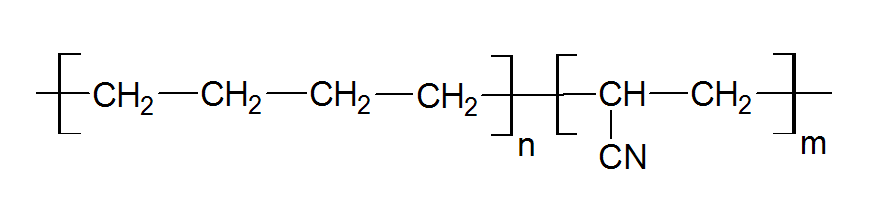
HNBR - Hydrogenated Nitrile Butadiene Rubber
500
See through thermoplastic panels can be described as having what type of structural morphology.
Amorphous or low crystallinity
500
This describes the region of the DMA modulus curve used to calculate crosslinking density.
Rubbery Plateau
500
Goodyear and Bridgestone use this cleaning technology to remove residual rubber from their tire molds by vaporizing it.
Laser Ablation
500
The rule of thumb requirement for dielectic breakdown strength of magnet wire insulation coatings given motor operating voltage.
10 x nominal operating voltage (order of magnitude higher)