Rational/Remainder Theorem
End Behavior
Relative Max/Min
Even/Odd Functions
Zeros
100
What is the end behavior of the function shown in the graph?
as x moves towards positive infinity, f(x) moves towards positive infinity & as x moves towards negative infinity, f(x) moves towards negative infinity
100
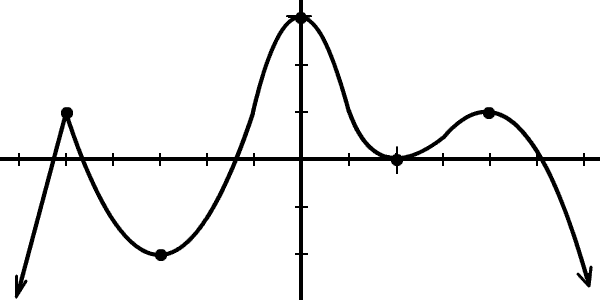
What is the relative min of this graph?
A) -2 C)2
B) 3 D) 4
A) -2
100
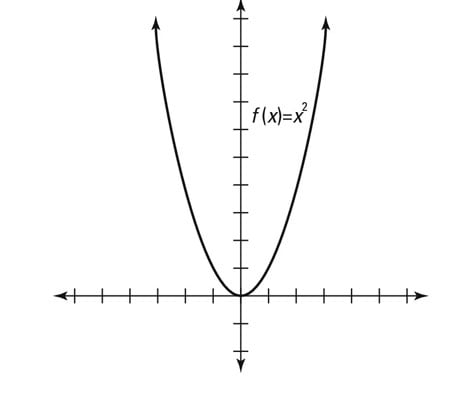
A)Even B)Odd
C)Neither C)All of the above
A)Even
100
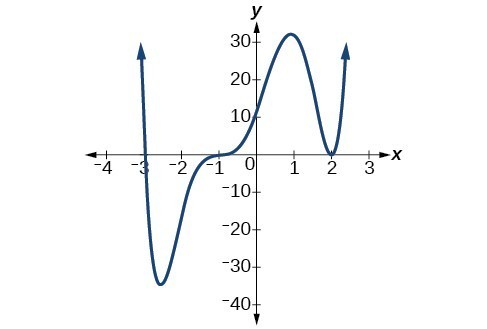
Which zero has a multiplicity of 3?
Negative 1
300
What would be a possible root for the following polynomial 4x4+3x2-6x+15
A) 5/4 C) 6/12
B) 4/5 D) 2/3
A) 5/4
300
What is the end behavior of the function shown in the graph?
as x moves towards positive infinity, f(X) moves towards positive infinity & as x moves towards negative infinity, f(x) moves towards positive infinity
300
What is the Absolute Max of the graph?
A) 1 C) 3
B) 4 D) 2
C) 3
300
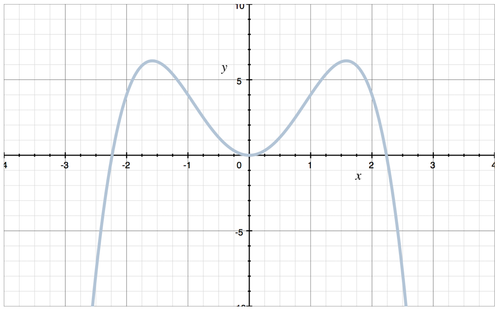
A)Even B)Odd
C)Neither D)All of the above
B)Odd
300
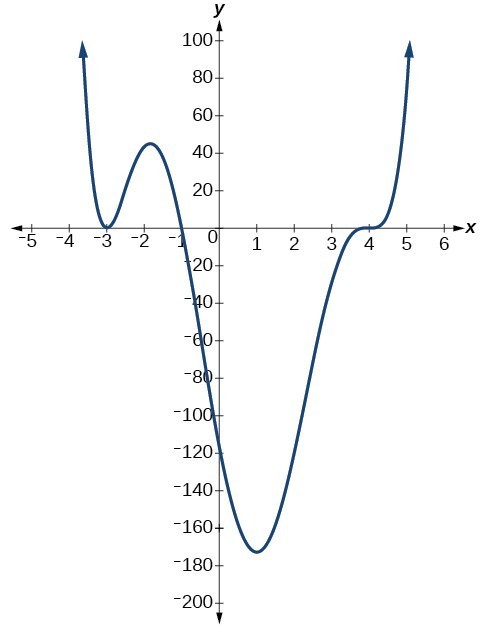
True or False : Every zero on the graph has a multiplicity
False: -1 has no multiplicity
500
Is -1 a zero of the polynomial function
f(x)=2x3+x2-2x-1
Yes, -1 is a zero of the given function
500
Which of these functions had the end behavior described?
as x moves towards negative infinity, f(x) moves to towards positive infinity and as x moves towards positive infinity, f(x) moves to positive infinity
(a) f(x) =2x6 + 3x2 (b) f(x) = -3x4 + 5x3
(a) f(x) =2x6 + 3x2
500

What is the Absolute Max of the graph?
A) -4 C) -2
B) There is no absolute max D) -3
B) There is no absolute max
500
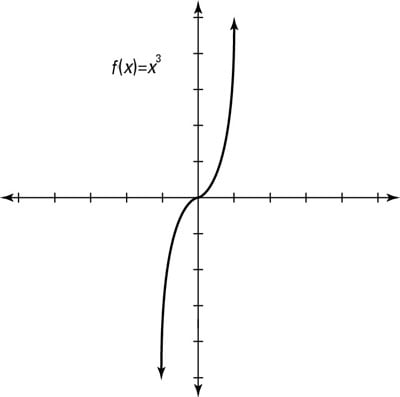
A)Neither B)Even
C)Odd D)All of the above
A)Neither
500
How many zeros have multiplicities on the graph shown above?
2 Zeros