Noticing
Interpreting
Responding
Reflecting
Other
100
s/s of preterm labor
Regular contractions, cervical dilation, and effacement after week 20 and before week 37 of pregnancy.
100
Priority problem for a preterm infant experiencing respiratory distress syndrome (RDS)
Impaired gas exchange r/t immature pulmonary vasculature, inadequate surfactant production, or immature lung tissue.
100
poractant alfa (Curosurf) initial dosage
2.5 mL/kg
100
Used to soothe and calm and facilitate readiness to bottle feed
Non-nutritive sucking on a pacifier.
improves transcutaneous oxygenation saturation, decreases body movements, improves sleep, increases weight gain
100
Important to track the development of a preterm newborn
Post conception age
200
s/s of feeding intolerance
increasing gastric residuals
abdominal distention with visible bowel loops
guaiac positive stools (occult blood in stools)
vomiting
diarrhea
water-loss stools
200
Priority problem for dehydrated preterm infant
Deficient fluid volume r/t high insensible water losses and the inability of kidneys to concentrate urine.
s/s of dehydration: sunken or depressed fontanel, weight loss, absent or poor skin turgor, dry mucous membranes, decreased urine output (less than 1mL/kg/hr, increased specific gravity greater than 1.015)
200
Expected nursing action r/t the immaturity of the renal system and how this affects the preterm neonate's ability to excrete drugs
Expect longer intervals between drug administration. e.g. q24h instead of q12h.
200
Important piece of client/parent education
Keep parents informed about and engaged in the care of their preterm newborn.
200
Medication administered when preterm delivery cannot be prevented to accelerate fetal lung maturation/stimulate the production of surfactant to decrease the severity and incidence of RDS.
Glucocorticoids such as betamethasone or dexamethasone.
Effective when used during weeks 24-34 of gestation. Beyond week 34, fetal lungs are sufficiently mature that no benefit is gained by giving these drugs. A single course consists of either (1) dexamethasone, 6 mg IM every 12 hours for four doses, or (2) betamethasone, two 12-mg IM doses, injected 24 hours apart. To be effective, the last glucocorticoid dose should be administered at least 24 hours before delivery, but no more than 7 days before.
300
s/s of fluid retention
urine output less than 1 mL/kg/hr
edema
excessive weight gain
compare urine output with fluid intake *weight change is one of the most sensitive indicators of fluid balance
300
Priority problem for Retinopathy or Prematurity (ROP)
Risk for Injury: Risk factors: prolonged mechanical ventilation, ROP secondary to 100% oxygen environment
300
Worsening respiratory status (increased oxygen needs or increased ventilatory settings), acidosis, hypotension. Often treated with indomethacin
Patent ductus arteriosus (PDA)
300
Common diagnostic procedures for preterm infants
Chest x-ray
Head ultrasounds
Echocardiography
Eye exams
lab tests: CBC, UA, PT and aPTT, serum glucose, calcium, bilirubin, ABGs
300
Risk factors for preterm labor and birth
Maternal gestational hypertension.
multiple pregnancies that are closely spaced
adolescent pregnancy
lack of prenatal care
maternal substance use and smoking
previous history of preterm delivery
abnormalities of the uterus cervical incompetence
placenta previa
preterm premature rupture of membranes
400
s/s of bacterial sepsis in the preterm infant
source e.g. invasive line (central line or ET tube)
metabolic acidosis
sudden onset apnea
tachypnea
sudden onset bradycardia
tachycardia
temperature instability (high or low temp)
lethargy
irritability
cyanosis
feeding intolerance
glucose instability
400
Priority problem for prematurity infant neurological physiology
Disorganized Infant behavior r/t prematurity, immature neurological system
Ineffective breathing pattern r/t immature central nervous system.
400
Priority assessments for overhydrated preterm infant
Monitor urine output greater than 3 mL/kg/hr.
Monitor urine specific gravity less than 1.001.
Monitor for edema.
Monitor for increased weight gain; measure daily weight at the same time of day.
Monitor for crackles in the lungs.
Monitor for low urine output (less than 1mL/kg/hr) with intake greater than output.
400
Goals of caring for the premature newborn
Meeting the newborn's growth and development needs.
Anticipating and managing associated complications such as RDS and sepsis.
400
Drugs used to suppress preterm labor.
Tocolytics (uterine relaxants)
500
Which neonate is developmentally positioned the best?
A. 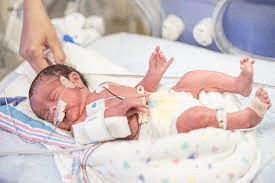
B. 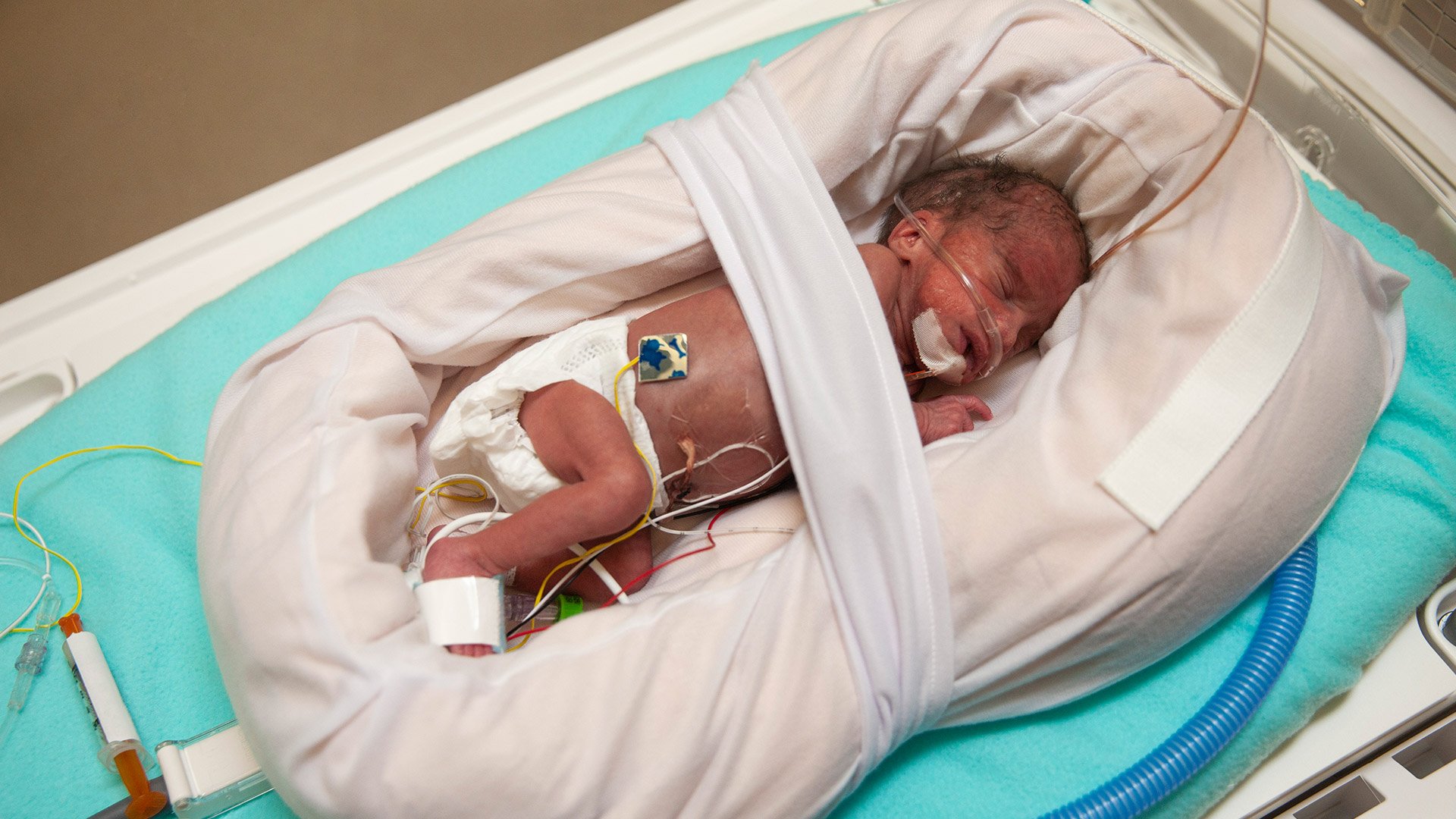
C.
D. 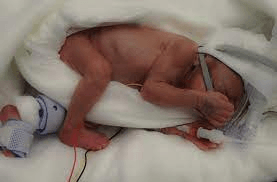
B. Hand is close to the face for self-soothing, hips are aligned and flexed.
500
Main priority in treating preterm newborns
Supporting cardiac and respiratory systems as needed. Typically cared for in NICU setting. Meticulous care and observation in NICU until the newborn can receive oral feedings, maintain body temperature, weight increases.
500
Poractant alfa (Curosurf) repeat dosage
1.25 mL/kg half the initial dose—12 hours apart for up to two doses
500
position that facilitates lung expansion in the preterm neonate
prone
500
Oral intake measurement necessary for growth of the preterm newborn
95-130 kcal/kg/day
600
s/s of respiratory distress in the preterm infant
retractions
expiratory grunting
apneic episodes
presence of rales or rhonchi on auscultation
diminished air entry
low SpO2
600
A complication in very early preterm newborns with symptoms of decreased hemoglobin, metabolic acidosis, waxy color, hypotension
Intraventricular hemorrhage
600
Nursing care of the preterm infant
resuscitative measures if needed
monitor vital signs
assess nutrition and ability to consume and digest nutrients (assess gag and suck/swallow reflex)
monitor I&O and daily weight
monitor for bleeding
maintain thermoregulation
respiratory supportive measures
administer parenteral or enteral nutrition and fluids
minimize stimulation, cluster nursing care, touch smoothly and lightly, dim lighting, noise levels reduced, bundle cares
perform skin assessments daily and minimize the risk of skin breakdown
encourage the skin to skin contact (Kangaroo care) to reduce preterm infant stress-improves oxygenation, enhance temperature regulation, decline episodes of apnea and bradycardia, positive interaction promotes attachment and bonding, increases growth parameters, early discharge
protect against infection: hand hygiene, do not share equipment, monitor for s/s of infection
observe for findings of dehydration or overhydration
prepare for discharge/home care
administer vaccines
developmental positioning (promote self-soothing and self consoling), provide objects for infant to grasp
teach parents how to soothe infants (stroking, rocking, cuddling, quiet singing, talking to baby, face to face interaction)
music therapy, massage and gentle touch
600
The degree of complications or potential for complications in the preterm newborn is dependent upon:
gestational age
600
normal temperature for a preterm neonate
36.6-38.0 Celsius
97.9-100.4 Fahrenheit