Structure
Genetics
Metabolism
Diversity
Ecology
100
This polymer, made of modified sugars cross-linked by short polypeptides, is found in most bacterial cell walls
Peptidoglycan
100
This is a heritable change in an organism's DNA sequence.
Mutation
100
Organisms that use light as their energy source are classified as this
Phototrophs
100
These are the two domains of life that contain prokaryotes
Bacteria and Archaea
100
This ecological relationship describes two species living in close contact with each other
Symbiosis
200
These are the three most common shapes of prokaryotes
Cocci (spherical), bacilli (rod-shaped), and spiral
200
This process involves combining DNA from two different sources.
Genetic Recombination
200
Organisms that use inorganic carbon, such as CO₂, as their carbon source are called this.
Autotrophs
200
This term describes organisms that thrive in extreme environments, such as extremely hot or salty conditions
Extremophiles
200
These prokaryotes break down dead organisms and waste products, returning nutrients to the environment
Decomposers (Chemoheterotrophic prokaryotes)
300
Bacteria with a thick peptidoglycan layer that retain crystal violet during Gram staining can be classified as?
Gram-positive bacteria
300
This form of gene transfer involves gene movement between members of different species
Horizontal Gene Transfer
300
These organisms require oxygen for respiration and cannot grow without it
Obligate aerobes
300
This group releases methane as a by-product of their unique ways of obtaining energy
Archaea (Methanogens)
300
These bacteria produce toxins that are secreted and released from the cell, such as the toxin responsible for cholera
Exotoxins
400
These sticky outer structures protect some prokaryotes from dehydration and help them attach to surfaces and evade host immune systems.
Capsules
400
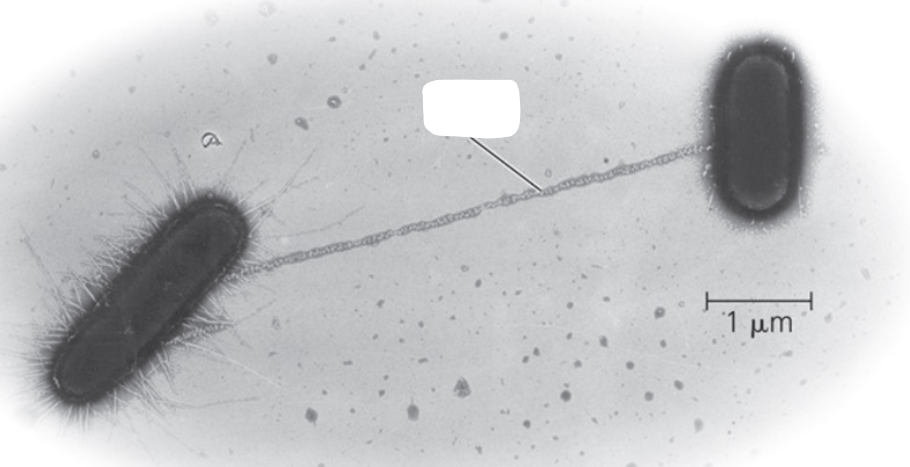
This hair-like appendage contacts the recipient cell and brings it into contact with the donor
cell
Pilus
400
This process converts atmospheric nitrogen (N₂) into ammonia, making nitrogen available for biological use
Nitrogen Fixation
400
This term describes an evolutionary group that includes a common ancestor and all of its descendants
Monophyletic Group
400
This process allows bacteria to acquire genes from other organisms, including genes for antibiotic resistance and increased virulence.
Horizontal Gene Transfer
500
When nutrients become scarce, certain bacteria produce these thick-coated, dormant, highly resistant structures that can survive extreme conditions.
Endospores
500
Name the three mechanisms of genetic recombination in prokaryotes.
Transformation, transduction, and conjugation
500
These surface-coating communities of prokaryotes contain a protective matrix of polysaccharides and proteins, with channels for nutrient delivery and waste removal
Biofilms
500
These gram-negative photoautotrophs are the only prokaryotes with plant-like, oxygen-generating photosynthesis
Cyanobacteria
500
What are the three types of symbiosis?
Mutualism, Commensalism, and Parasitism