Principles of Antibiotic Use
Medical Microbio
Susceptibility Testing
Med Chem - AMR
Med Chem - Mode of action and Penicillins
100
What special population may exhibit the symptom of hypothermia, as opposed to a fever, due to sepsis?
Elderly
100
What color will a gram negative bacteria appear as?
fuschia/magenta/pink
will also accept no color, though technically the whole process requires the use of safranin stain for gram negative species to show up against white background
100
What are the two broad categories of susceptibility testing?
Phenotypic and genotypic testing
100
What is the difference between an intrinsic resistance and an acquired resistance?
Intrinsic resistance - inherent feature of a bacterial species which makes it insusceptible to a specific antibiotic. Ex. penicillin for mycoplasma species that have no cell wall
Acquired resistance - Developed through alterations of genetics and biochemical mechanisms of a specific species that confer resistance. mutation based.
100
How does a mode of action differ from a mechanism of action?
A mode of action refers to the broad action or biochemical function of an antibiotic. Ex.cell wall inhibitors
A mechanism of action is the specific method by which an antibiotic achieves its mode of action. Ex. beta-lactams inhibit transpeptidase action by irreversibly binding the enzyme, ultimately inhibiting the formation of bacterial cell walls.
200
What is an example of a non-infectious cause of fever?
Cancer, Auto-immune/collagen vascular disease, drugs
200
What makes a gram positive bacteria gram positive?
presence of peptidoglycan cell wall
200
List 2 examples of phenotypic susceptibility testing.
broth dilution (micro and macro), agar diffusion, agar gradient diffusion, and morphokinetic analysis
200
What are the three mechanisms of horizontal gene transfer?
Conjugation, Transformation, and Transduction
200
Name 2 strategies for species selectivity for antibiotics.
1. Mode of action involves a function or structure that is absent in humans (e.g. cell wall synthesis inhibitors)
2. Mechanism of action involves a biochemical target absent in humans (e.g. penicillins target transpeptidase – which humans don’t have)
3. Transporters required for activity are missing in humans (e.g. tetracycline use an uptake mechanism in bacteria but missing in humans)
4. The biochemical targets have different sequences and differing affinity (e.g. Rifampin targets RNA polymerase, binds bacterial enzyme 1000x better than human)
300
What is a "left shift"?
increased presence of neutrophils or presence of bands.
300
Define common naming conventions for bacteria
Strepto-
Cocc-
Bacill-
Staphylo-
Strepto - chains
staphylo - clusters
Cocc - spherical
bacill - rod
300
Describe the process of broth dilution.
increasing dilutions of antibiotic are inoculated with a single species of bacteria. This test is quantitative and allows for the determination of an MIC (minimum inhibitory concentration).
300
What is the pathway that initiates hypermutation?
sublethal antibiotics --> stress response --> formation of reactive oxygen species --> DNA damage --> SOS response --> error prone DNA polymerases --> de novo mutations
300
What are the five modes of actions of antibiotics?
1. Interference with cell wall synthesis or integrity
2. Inhibition of protein synthesis
3. Inhibition of nucleic acid synthesis
4. Membrane damaging agents
5. Inhibition of folate biosynthesis
400
What are the three spanish words that are helpful to remember the signs of inflammation? translate to english
rubor - redness, calor - warmth, dolor - pain
400
After culturing a single species, why might the hospital microbiology lab culture that same species on blood agar?
+200 points for naming a common species that demonstrates Beta-hemolysis
+200 additional points if you can name the correct antibiotic for treating the bacterial infection that demonstrates beta-hemolysis
Hemolysis testing. Does the bacteria exhibit alpha, beta, or gamma hemolysis characteristics.
Strep A
Penicillin
400
Given the following broth microdilution plate, choose the best drug for the treatment of this infection. 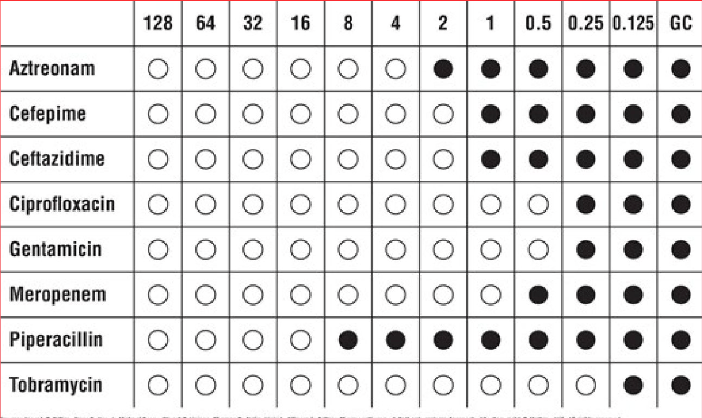
TRICK QUESTION!!! you can not choose the best drug from a microdilution MIC test. The best drug is based on the bacteria, location of infection, patient factors, and breakpoints. Just because a drug has a low MIC, does not make it the best choice.
400
What is intra-class cross resistance and how does it work?
Antimicrobials with similar structures and similar targets, despite minor chemical adjustments, are defended against in bacteria.
400
Is is folate synthesis pathway a good mode of action for antibiotics?
Humans do not endogenously synthesize folate, we get folate from our diet. Only bacteria synthesize their own folate, making this pathway selective for bacteria.
500
Name 3 signs or symptoms of an infection
• Fever or hypothermia (high or low temp)
• Leukocytosis or leukopenia (high or low WBC)
• Relevant laboratory tests or imaging
• Clinical symptoms: pain and inflammation
• Predisposing Factors
500
What is MALDI-TOF, how does it work?
Vaporizes and ionizes bacterial samples using a laser. Then, accelerates the ions through a tube with a detector at the end. The charge and size of the vaporized bacterial particles determines the elution time of the particles, creating a unique fingerprint to each bacterial species based on time of flight.
500
What is a breakpoint?
It is the threshold MIC value or zone diameter at which a given species of bacteria is considered susceptible to a given antibiotic.
500
How does transduction work?
Bacteriophage attack and inject a prophage into the bacteria, where it inserts itself into the genome of the bacteria. in the prophage genetic material, lies a gene which confers resistance to the bacteria. This prophage can lie dormant in the bacterial DNA for several generations, until it converts to the lytic cycle and leaves the bacteria.
500
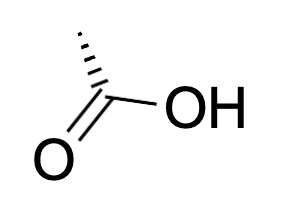
What are the two most important features of penicillins?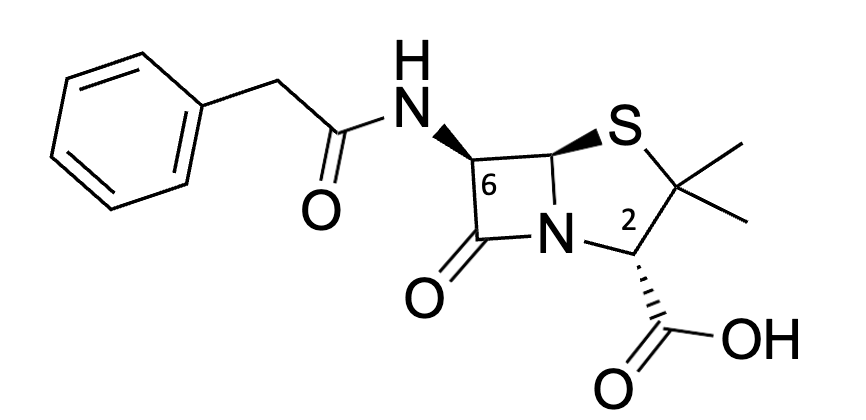
beta-lactam ring and carboxylic acid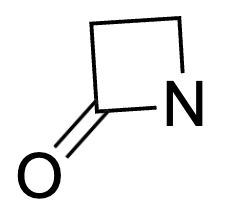
600
how do viral infections typically present in a patient?
non-specific aches, fever, cough
600
A patient is admitted with an abscess of leg and blood cultures reported by the lab as gram-positive cocci in clusters. It is catalase and coagulase +. What is the most likely species?
Staphylococcus aureus
600
Give the MIC value for Tobramycin.
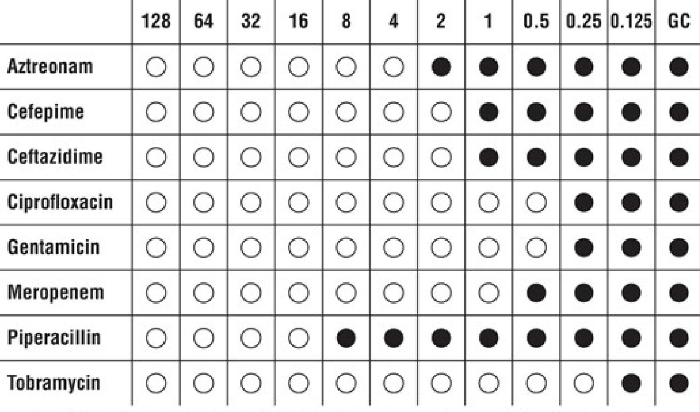
0.25
600
WHat are the 4 major ways bacteria can gain antimicrobial resistance?
Changes in permeability, Change the target protein, block or overproduce the target protein, alter the antibiotic before it can impact the bacteria.
600
What does the transpeptidase enzyme do?
hydrolyzes the peptide bond between D-Ala-D-Ala and condenses the bond between glycine and alanine of adjacent glycopeptide polymers.
700
Name some pathogens you might see in a patient with hospital acquired pneumonia?
Staphylococcus aureus and Pseudomonas aeruginosa
700
What are the three main multidrug resistant organisms we need to know?
Staphylococcus aureus, Vancomycin resistant Enterococcus faecium, and Pseudomonas aeruginosa.
700
What is an example of genotypic testing? What is genotypic testing best for?
MALDI-TOF or PCR. Genotypic testing is best suited for determining resistance, as opposed to susceptibility. This can help to eliminate certain antibiotics from treatment.
+200 points if you can say what the acronym for MALDI-TOF stand for.
700
What is inter-class cross resistance and how does it work?
Bacteria develop methods for resisting multiple drug classes despite their significant chemical/structural differences. This is because the mechanism of resistance confers broad antimicrobial resistance. A good example of this is efflux pumps which can target several types of antibiotics.
700
What is the specific mechanism of action of penicillin?
Mimics D-Ala-D-Ala and binds to the same pocket
Nucleophillic attack of Ser on penicillin (similar to base hydrolysis mechanism)
Instead of the D-Ala leaving group, the molecule is stuck as the ester
Inhibition of transpeptidase weakens the cell wall
800
What will always be the best predictor for resistance in a patient?
recent past cultures
800
What is Maconkey agar, and what does it tell us? For what kinds of bacteria will the agar turn pink?
Double your points if you can name 2 species of gram negative lactose fermenting bacteria.
Maconkey agar is a lactose fermentation test for gram negative bacteria. A gram negative lactose fermenter will turn the agar pink.
• Escherichia coli (E. coli)
• Klebsiella spp. (K. pneumo and others)
• Enterobacter cloacae (E. cloacae)
• Citrobacter koseri (C. koseri)
800
Patient Case
Your patient JR arrives to the urgent care clinic presenting with a red rash on the left side of his face. It is swollen and warm to the touch with some light oozing. He has a temperature of 101.5.
You, being the good antimicrobial steward that you are, decide to take a swab from the red rash for culturing. After taking the swab, you decide to send JR home with a clindamycin topical ointment to cover your bases and treat the rash while the culture grows for the next 48 hours.
You arrive back in the microbiology lab and check your findings.
You find a MacConkey agar which grew absolutely nothing. You also check the blood agar and find several colonies which are surrounded by a clear background on the plate.
You decide to look at the species under a microscope and find several spherical bacteria in chain-like structures.
What bacterial species do you suspect? Was the clindamycin ointment the correct choice for this species? Why or why not?
The species was likely Streptococcus A skin infection.
This species is generally very susceptible to beta-lactam antibiotics like amoxicillin/penicillin. The clindamycin was likely a safe choice, but not the best choice due to the serious possibility for the development of clostridioides difficile from its use.
800
What are some auxillary mechanisms of action of penicillins?
Penicillin binding protein targets which have functions in cell wall formation and activation of autolysin enzymes which tip the balance in favor of cell wall degradation.
900
What are 3 chemical strategies to evade antibiotic resistance and increase effectiveness of penicillin drugs?
- Addition of bulky ortho substitutions at the C6 phenyl group
- Combination formulations with beta lactamase inhibitors
- increase acid stability to increase absorption
1000
What feature of ticarcillin makes it more problematic than piperacillin?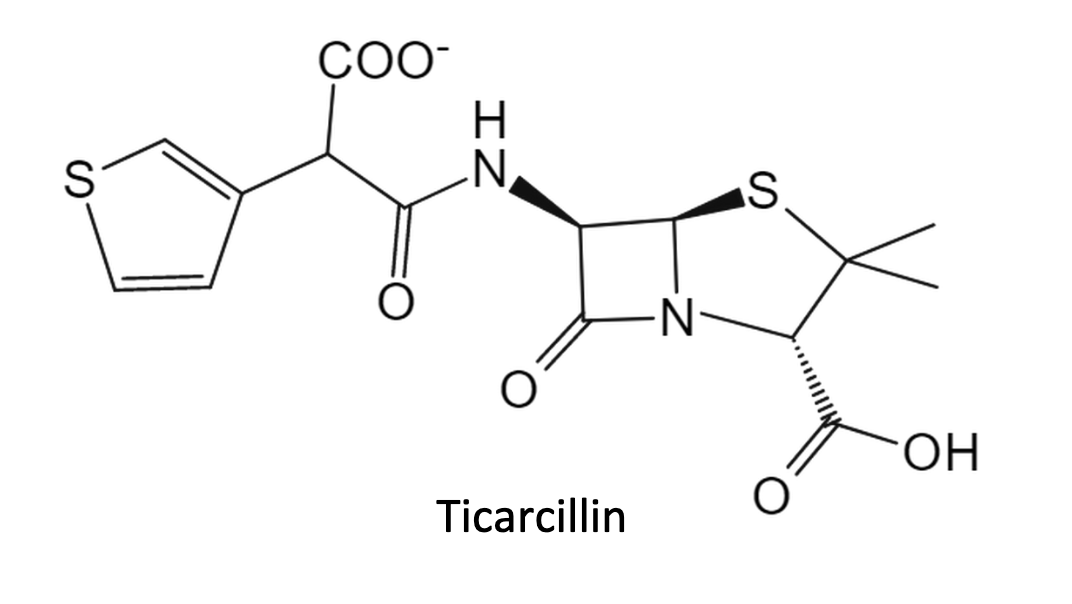
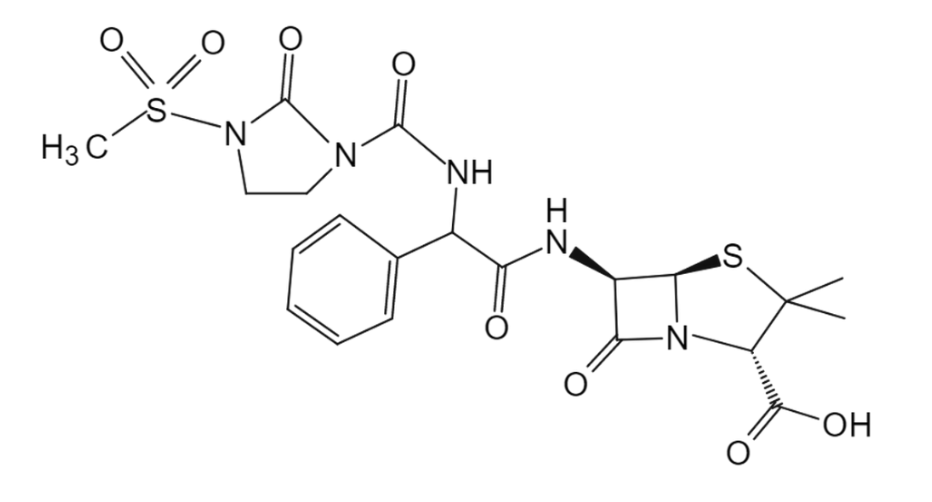
Presence of carboxylic acid on ticarcillin requires additional charge balancing with Na+ ion, leading to greater kidney stress, while piperacillin does not have that issue.