Clouds
Weather vs Climate
Extreme Weather
Science Tools
Variables
Hypothesis
100
What type of cloud is this?
Cumulonimbus Cloud
100
“It is rainy and 15°C outside this morning.” Does this describe weather or climate?
Weather
100
Which storm includes lightning and thunder?
Thunderstorm
100
This tool is called a...?
Thermometer
100
What is the name of the variable a scientist deliberately changes?
Independent Variable
100
What do scientists call a testable prediction about how one factor may affect another?
Hypothesis
200
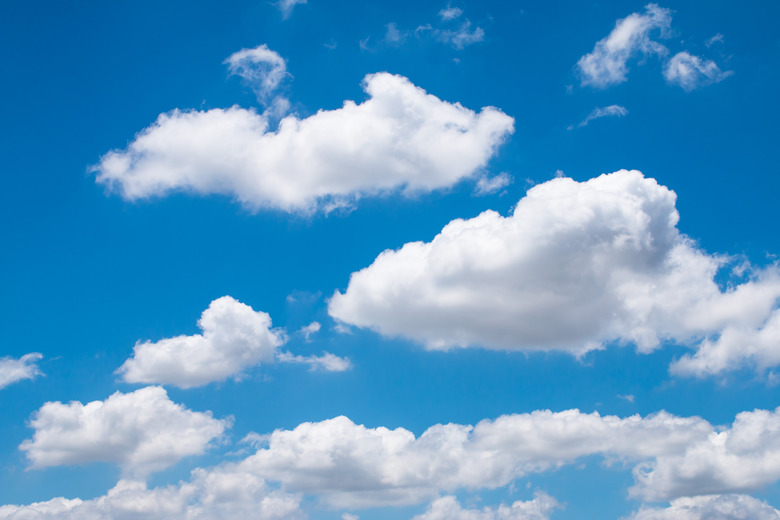
You see this cloud outside; what type of weather can you expect to have?
Fair, nice weather
200
“Over many years, this region usually has hot summers and mild winters.” Does this describe weather or climate? Explain.
Climate, because it describes long-term seasonal patterns.
200
Which extreme weather event has a rotating column of air that reaches from a thunderstorm cloud to the ground?
A tornado
200
A yardstick, ruler, meter stick, and measuring tape are all tools used to measure what?
Length
200
Students test whether wind speed affects drying time. They measure how many minutes each wet towel takes to dry. What is the dependent variable?
The time each towel takes to dry, measured in minutes.
200
Which hypothesis can be tested:
A. “Rainy days are the best.”
B. “If wind speed increases, then water will evaporate faster”?
Explain your choice.
B. “If wind speed increases, then water will evaporate faster”?
300
A smooth, gray layer covers the sky, and light drizzle is falling. Which cloud type best matches these observations?
Stratus
300
A meteorologist wants to measure air pressure and wind speed. Which instrument measures each?
Barometer: air pressure. Anemometer: wind speed.
300
A large rotating storm forms over warm tropical ocean water and has sustained winds of 80 miles per hour. What is it, and what two clues helped you identify it?
A hurricane. It forms over warm tropical ocean water and has sustained winds of at least 74 miles per hour.
300
This tool can help predict when a storm is coming by measuring the pressure in the air.
A barometer
300
Students use low, medium, and high fan speeds to test drying time. Every towel has the same size, material, and starting amount of water.
Identify the independent variable and two constants.
Independent variable: fan speed. Constants: any two of towel size, towel material, or starting amount of water.
300
A student wants to investigate whether sunlight affects how quickly a puddle dries. Share an “If…, then…” hypothesis.
If a puddle receives more sunlight, then it will dry faster.
400
Small, fluffy clouds grow into tall clouds with dark bottoms. Thunder is heard nearby. What cloud type has developed, and what weather is associated with it?
Cumulonimbus, associated with thunderstorms, which can bring heavy rain, lightning, and sometimes hail.
400
One area has high air pressure. Another has low air pressure. Which is more likely to have clear, fair weather, and which is more likely to have cloudy or stormy weather?
High pressure: generally clear, fair weather. Low pressure: generally cloudy or stormy weather.
400
A hurricane knocks down trees and floods a freshwater pond with salty ocean water. Explain how these changes could affect birds and freshwater fish.
Birds may lose nesting sites, shelter, or food sources. Freshwater fish may be harmed or die because they are not adapted to the increased saltiness.
400
Name 3 tools used to measure volume
Beaker, Erlenmeyer Flask, Measuring Cup, Pipette, Eye dropper, teaspoon, tablespoon, etc
400
Olivia tests how water temperature affects the time it takes an ice cube to melt. She places identical ice cubes into equal amounts of cold, room-temperature, and warm water. What is the independent variable, the dependent variable, and 2 constants?
IV: Water Temp
DV: Time to melt
Constants: ice cubes, location
400
Improve this statement so it is a testable hypothesis: “Wind changes things.” Use drying wet clothes on a line as your example.
If wind speed increases, then wet clothes on a line will take less time to dry.
500
At 10 a.m., students see small cumulus clouds. At 2 p.m., the clouds are much taller and darker, and air pressure has fallen. Make a reasonable weather prediction and identify two observations that support it.
A thunderstorm may develop. Evidence: clouds growing taller/darker and falling air pressure. These clues support a prediction, but do not guarantee a storm.
500
Region A has little rainfall in most years. Region B has frequent rainfall in most years. Both get one rainy day today. Would you expect them to support exactly the same kinds of plants? Explain using weather and climate.
No. They share rainy weather today, but their climates differ. Region A is more likely to support plants adapted to dry conditions; Region B can support plants that need more water.
500
After weeks with very little rain, a pond shrinks and nearby plants begin to die. Identify the extreme weather condition and explain two effects on the ecosystem.
Drought. Possible effects: less drinking water for animals, less aquatic habitat, fewer plants for food, or less shelter.
500
A triple beam balance would be used to measure what?
Mass/weight
500
A student tests whether sunlight affects evaporation. One container holds 100 mL in sunlight, and another holds 200 mL in shade.
What is wrong with this investigation, and how should it be fixed?
The student changed both sunlight exposure and starting water volume. Use the same starting amount of water in identical containers, changing only sunlight exposure.
500
A student predicts that warmer air makes water evaporate faster. Equal amounts of water in identical containers take 6 hours to evaporate at 20°C and 3 hours at 30°C. Does the evidence support the hypothesis? Explain using both results.
Yes. Water evaporated in 3 hours at the warmer temperature, compared with 6 hours at the cooler temperature. The results support the prediction.