Classification of matter
Significant Figures
Density
Periodic Table
Types of Energy
100
Is the following a homogenous or heterogenous mixture?

Heterogenous
100
How many significant figures does constants have?
ie. gravity = 9.81 m/s2
Infinite
100
What is the definition of density?
The amount of mass compacted in a space (volume)
100
What are the three types of subatomic particles?
Protons, Neutrons, and Electrons
100
What is the definition of energy?
The ability to do work or cause change.
200
Is the following a compound, mixture, or element?
Steel (Fe and C)
mixture
200
How many sig figs are in the following numbers
a. 7210
b) 0.02810
c)7.0000 x10³
a. 3
b. 4
c. 5
200
An object will float if its density is (more/less) than the density of the fluid?
less than
200
Which subatomic particle is responsible for the stability of the atom?
Neutrons
200
Which type of energy is due to the position of the object?
Potential/Gravitational energy
300
What is the phase at 0.5atm and a temperature of 99oC
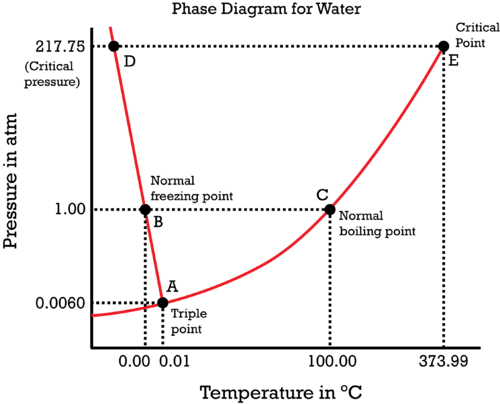
Gas
300
In scientific notation math, if you divide what happens to the exponents?
You subtract them
300
What is the difference between mass and weight?
Mass is how much matter an object has while weight is how much gravity is pulling you towards earth (down).
300
What is group 17 ( fluorine) called?
Halogens
300
This type of energy is due to the vibration of molecules.
Thermal Energy
400
What phase change name is it when a gas becomes a solid?
deposition
400
Perform the following conversion, sig figs count!
Convert 82,345 J to calories.
1 calorie = 4.814J
17105 calories or 1.7105x10⁴ calories
400
Calculate the volume of an piece of aluminum if it has a density of 2.70 g/cm3 and a mass of 17.92g? Sig figs matter!
6.64 cm3 (or mL)
400
What is the structural difference between ions? (Cu+ vs Cu2+)
The number of electrons
400
What is the speed of a car if it has a mass of 1412 kg with an energy of 1.070x10⁶ J? Sig figs matter for this problem
38.93 m/s
500
What is the definition of the critical point?
The point where it is impossible to distinguish the liquid and gas phases.
500
Perform the following conversion and have your answer in scientific notation. Sig figs matter!
Convert 98.2 m/s to miles/hour
1m = 0.001km
1hr = 3600s
1 mile = 1.61 km
2.20x101 mph (miles/hour)
500
What is the definition of buoyancy?
The upward force exerted by a fluid on an object that is submerged (at least partially) in said fluid and is equal to the weight of the fluid displaced
500
How many neutrons and electrons are there in Potassium - 41 if it has a 3- charge?
22 neutrons and 22 electrons
500
A football is thrown at 14.2 m/s and has a mass of 0.425 kg, what is the max height the football can go?
10.3m