Atoms & Elements
Matter & Mixtures
Solutions
Changes & Reactions
IA Challenge
100
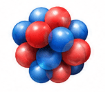
What two particles are in the nucleus?
Protons & Neutrons
100

Is gold an element, compound, or mixture?
Element
100
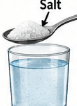
In saltwater, which part is the solute?
Salt
100

Is melting ice a physical or chemical change?
Physical Change
100

What is the name of NaClO₃?
Sodium chlorate
200
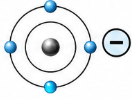
What change does an electron have?
Negative
200

True or false: A mixture is a pure substance.
False
200
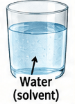
What do we call the substance that dissolves the solute?
Solvent
200
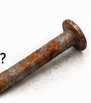
Is rusting iron a physical or chemical change?
Chemical Change
200
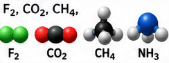
Which is a polar molecule: F₂, CO₂, CH₄, or NH₃?
NH₃
300
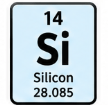
An atom has 14 protons. What element is it?
Silicon (Si)
300
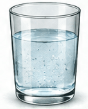
Is evenly mixed saltwater homogeneous or heterogeneous?
Homogenous
300
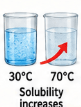
What happens to the solubility of KCl as water warms from 30°C to 70°C?
Increases
300
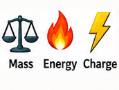
What three quantities are conserved in chemical reactions?
Mass, energy, and charge.
300

What type of bonding has mobile electrons in tungsten metal?
Metallic bonding
400
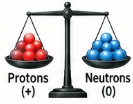
In a neutral atom, how do protons and neutrons compare?
Equal numbers, opposite charges
400
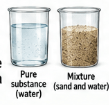
What is one difference between a pure substance and a mixture?
Something with: # of substances or fixed composition
400

What does concentrated mean?
A relatively large amount of solute compared with solvent or solution.
400
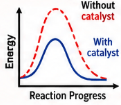
What does a catalyst provide in a chemical reaction?
An alternate reaction pathway with lower activation energy.
400
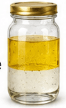
Why does oil-and-vinegar dressing separate into layers?
It is a heterogeneous mixture; oil is nonpolar and vinegar is water-based/polar, so they do not dissolve in each other.
500
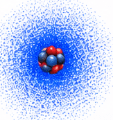
How does the modern model describe electrons?
They are on the outer layer of the nucleus
500
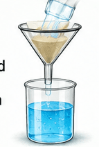
How can mixtures be separated, and how is this different from compounds?
Mixtures by physical methods; compounds require chemical changes to break into simpler substances.
500
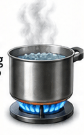
How does dissolved KCl affect the boiling point of water?
The solution boils at a higher temperature than pure water at the same pressure.
500
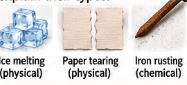
Describe three changes and explain their types.
Example: ice melting—physical, paper tearing—physical, iron rusting—chemical. New substances form in chemical changes.
500
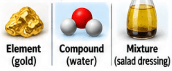
Compare an element, a compound, and a mixture. Give examples.
Element: one type of atom (gold). Compound: chemically bonded elements (water). Mixture: physically combined substances (salad dressing).