Water
Cell Transport
Macromolecules
Mystery
Cell Membrane
100
Water has a positive hydrogen and a negative oxygen, giving it the balanced shape of mickey mouse. This is called __________.
polarity
100
Passive transport has molecules moving from an area of ____ concentration to _____ concentration.
HIGH to LOW concentration (passive transport = osmosis, diffusion, facilitated diffusion)
100
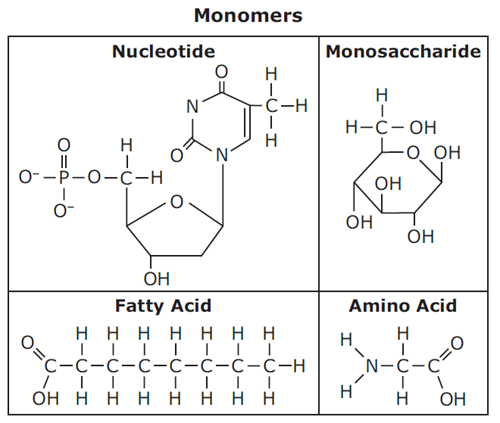
All macromolecules are large molecules called polymers that are made up of smaller building blocks called....
monomers
100
Which 2 macromolecules are important for supplying energy for the body?
Carbohydrates & Lipids
100
The cell membrane is composed of many parts are are in motion or not rigid. This is referred to as...
the fluid mosaic model
200
Plants use __________ to transport water up from the ground to all parts of the plant.
CAPILLARY ACTIONS - This also utilizes the properties of cohesion and adhesion.
200
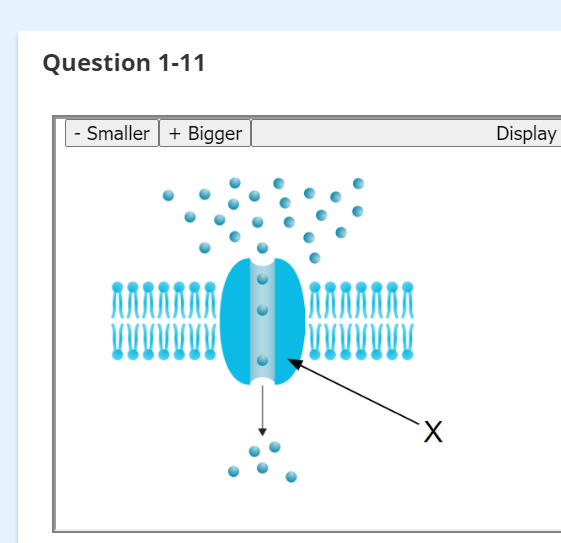
What type of transport is being shown here?
Passive Transport - Facilitated Diffusion
200
What are all macromolecules made of that makes them organic molecules? Name the 2 molecules.
Hydrogen & Carbon
200
How do molecules move with active transport - like endocytosis & exocytosis
low to high concentration
200
What part of the membrane is hydrophobic because it is made of fats

Lipid Tails
300
Water is able to stick together with other molecules with a ___________ bond. This is ___________.
hydrogen - cohesion
300
What type of transport is being shown here?
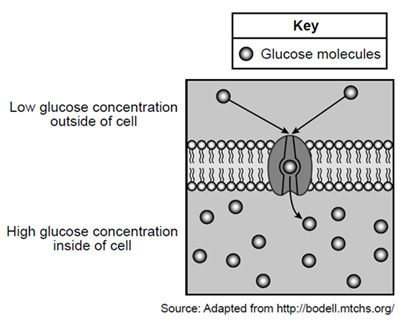
Active Transport using ATP Energy
300
The monomers or building blocks or nucleic acids are nucleotides and the monomers of proteins are _____
amino acids
300
Water covers 70% of the earth. Water specific heat allows the plant to moderate temperature. This is important because...
keeps the planets temperature from getting too hot (overheating)
300
What is this structure in the cell membrane?
Protein Channel
400
waters polarity (positive and negative charges) allow for it to dissolve or break down many substances like sugar in the body. This is an example of...
universal solvent
400
1 2 3
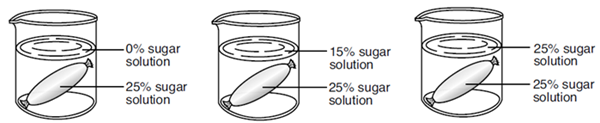
In which beaker would the artificial cell gain the most water (swell or get bigger)?
1 - 0% sugar outside the cell
400
when you eat carbohydrates your body converts food energy into chemical energy in this organelle (part of the cell)
mitochondria
400
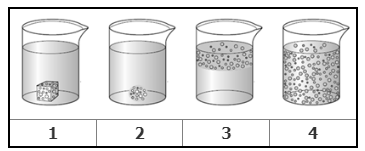
Sugar is dropped into a beaker full of water. Which beaker shows the correct distribution of sugar dissolving in the water?
4
400
The heads of the phospholipids are made of ____ and they are called _____ because they like water
phosphates - hydrophilic
500
Draw how two water molecules are connected. Label the charges of the molecule.
500
ATP is being used to move molecules out of the cell. Which cell - A or B - is not using ATP energy (passive transport)?
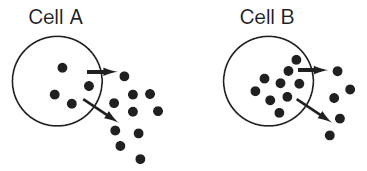
Cell B - moving high to low without ATP energy
500
a macromolecule that is used to store ad transmit heredity (genetic information) in all living things
nucleic acids
500
water will move into and out of the cell for equal amounts inside the cell (70%) and outside the cell (70%) to maintain _______. This movement of water is called __________.
homeostasis - osmosis
500
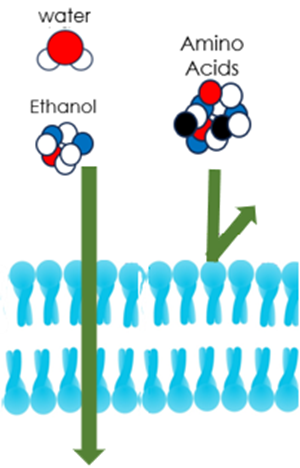
Which molecules are impermeable (cannot go through) the phospholipid bi-layer?
Amino Acids