Tragedy of the Commons
Biodiversity
Simpson's Diversity Index
More Biodiversity
Extinction
100
A shared resource is also known as a _________________
A shared resource is also known as a COMMONS
100
The variation of life forms within a given ecosystem, biome, or on the entire earth is ________________
The variation of life forms within a given ecosystem, biome, or on the entire earth is BIODIVERSITY
100
 n= _________________
N=_________________
n= _________________
N=_________________n= NUMBER OF INDIVIDUALS IN A GIVEN SPECIES
N= TOTAL NUMBER OF INDIVIDUALS OF ALL SPECIES
100
______________: # of species in an ecosystem
Species Richness: # of species in an ecosystem
100
Extinction is _________________________________
Extinction is the process in which entire species of organisms die out, never to exist again.
200
The "tragedy" is referring to _________________ of the commons by ___________________ leading to _____________________________ of the commons
for ______________________.
The "tragedy" is referring to OVER-EXPLOITATION of the commons by INDIVIDUALS leading to DESTRUCTION of the commons for EVERYONE
200
The first organism on any food chain is a ________________
The first organism on any food chain is a PRODUCER
200
 What does this symbol (sigma) mean?
The sum.
Add up everything.
200
Species Evenness AKA _________________________
Species Evenness AKA RELATIVE ABUNDANCE
200
Mass extinctions are __________________________
Mass extinctions are periodic rises in extinction rate caused by catastrophes
300
Which of the following is an example of a Commons?
- Your laundry hamper
- A backyard
- A classroom textbook
- A can of soda
A CLASSROOM TEXTBOOK is a Common resource, all others are owned by individuals.
300
The Lion is a _______________ Consumer
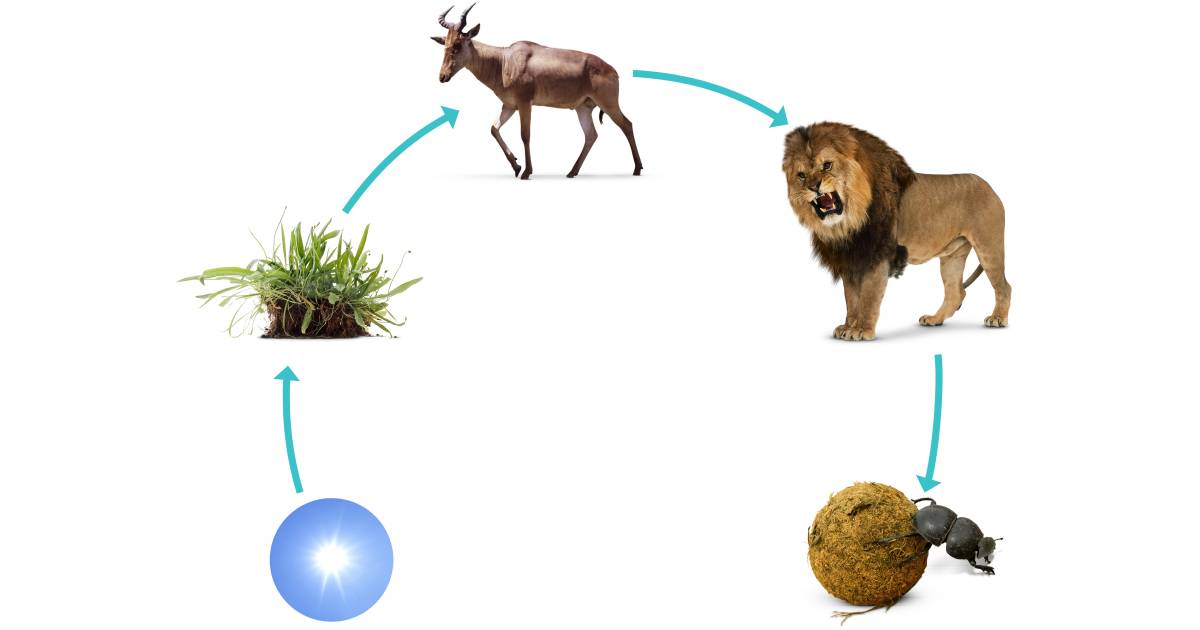
The Lion is a SECONDARY Consumer
300
What is N?
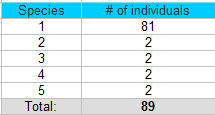
N= 89
300
These ecosystems have the same ___________________ but different ____________________________.

These ecosystems have the same RICHNESS but different RELATIVE ABUNDANCE (EVENNESS).
300
Compare the amount of time the modern humans have been on this Earth relative to the Earth’s geological 24-hour timeline.
Humans have only been on the Earth’s timeline for less than a second
400
Name THREE methods of PROTECTING commons
Methods of Protecting Commons:
- Cooperation
- Privatization
- Regulation
400
WRITE and LABEL with their role in the food chain in order:
- kelp
- otter
- sun
- bacteria
- urchin
- killer whale (orca)
1) Sun (energy source)
2) Kelp (Producer)
3) Urchin (Primary Consumer)
4) Otter (Secondary Consumer)
5) Orca (Tertiary Consumer)
6) Bacteria (Decomposer)
400
What is n/N for Species 1?
81/89= 0.9
400
Define HIPPO + C
H- Habitat loss
I-Invasive Species
P-Population
P-Pollution
O-Overharvesting
+
C- Climate change
400
Explain how human's view on extinction has changed over time.
Extinction was unheard of before the mid-1700's when Cuvier presented evidence of organisms found nowhere alive on Earth.
500
Explain:
- Real-world EXAMPLE of tragedy of the commons
- Real METHOD currently used to protect that commons
Example: Littering
Method: Fines (Regulation), "don't be a litterbug"
(Cooperation)
Example: Poaching
Method: Imprisonment (Regulation)
500
What would happen is all decomposers were removed from an ecosystem? Be specific!
Nutrients would not be available to nourish producers (plants), primary consumers would die off for lack of food, secondary consumers would follow.
Waste would pile up, promoting disease.
500
What is the Simpson's Diversity Index for the following ecosystem?
SDI= 0.168
500
Compare HIPPO + C to real life problems with examples. At least 3.
Habitat Loss: humans are the main cause of this, deforestation is a major factor in habitat loss among hundreds of species.
Pollution: Many people go in blind to the fact that pollution is tearing apart Earth. Global Warming being the reaction to this.
Overharvesting:
Over the years we have seen fish populations decrease more and more quickly. So fast that they can’t reproduce fast enough which leads to ecosystems falling apart.
500
Compare the causes and rate of mass extinctions of the past to the cause and rate of the sixth extinction.
Let's hear it!