Heat/Q/systems
Calorimetry
Combustion + bond enthalpy
Hess's Law
Chemistry Review
100
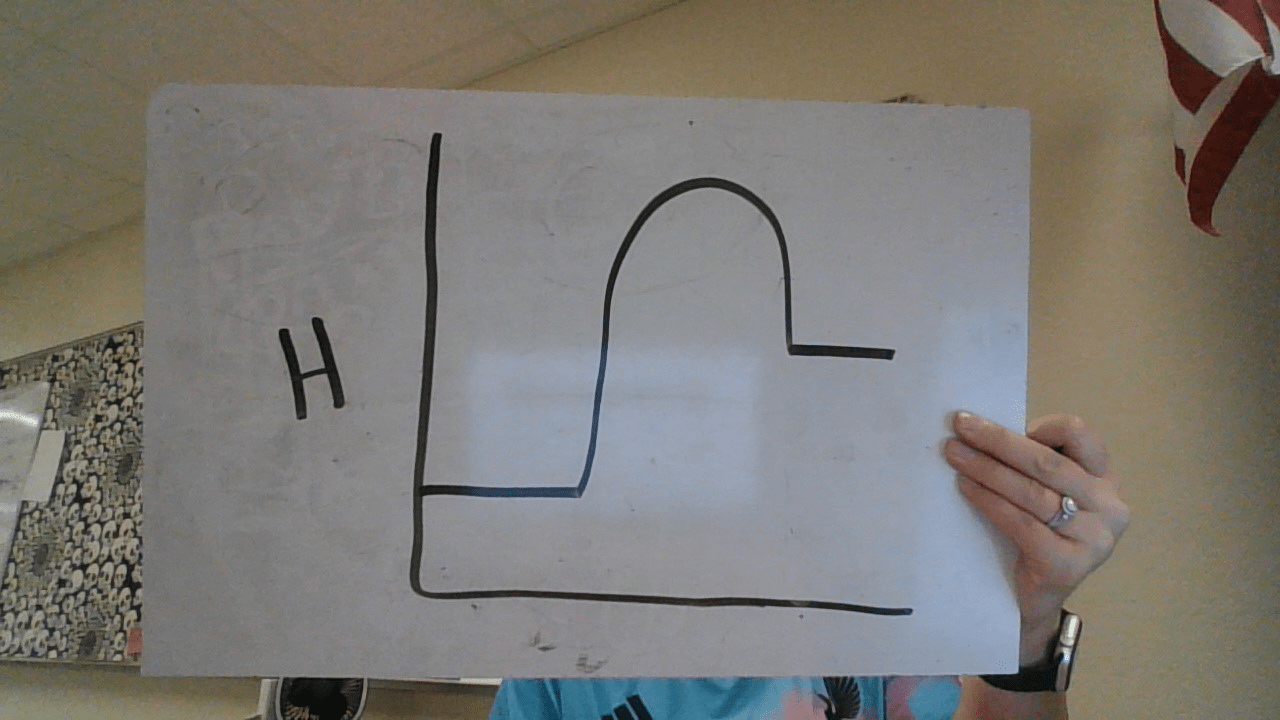
Label
-Activation Energy
-Endo or Exothermic
-What is more stable: Reactants or Products
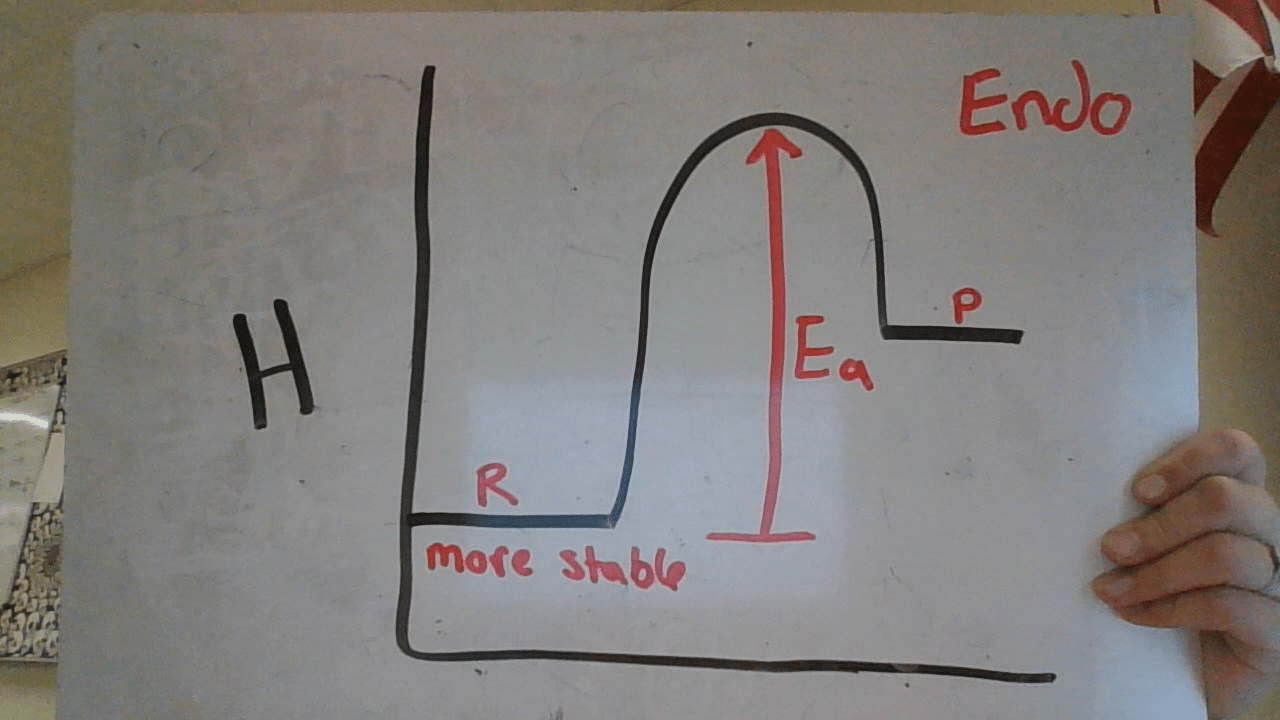
100

Fill in every x for finding the energy released by a potato chip
chip or water

You can't switch between different substances when doing q=mcAT
100
Name the products of a hydrocarbon (CxHyOz) complete combustion reaction.
Name the 2 types of products for incomplete combustion. WHEN does incomplete combustion happen (what situations).
Complete: CO2 and H2O
Incomplete: When limited O2 available
CO + H2O
C + H2O
100
A reaction has a (Delta)H = -273
If you needed to flip that equation and multiply the coefficients by 3, what would the new (Delta)H =?
Flip means - goes to +
multiplying the equation by 3 means you need to multiply 273 by 3
(delta)H = +819
100
What is the ionic formula when rubidium nitride?
Rb+1 N-3
Rb3N
200
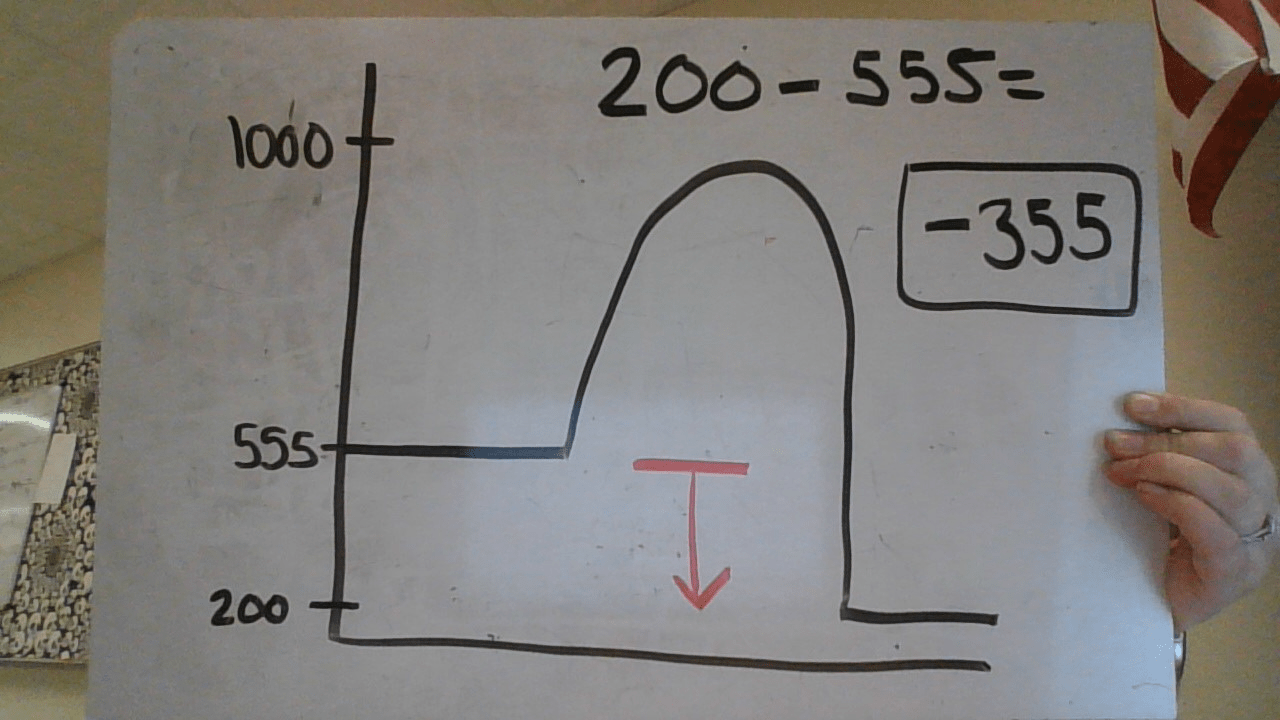
Calculate the enthalpy change of the reaction.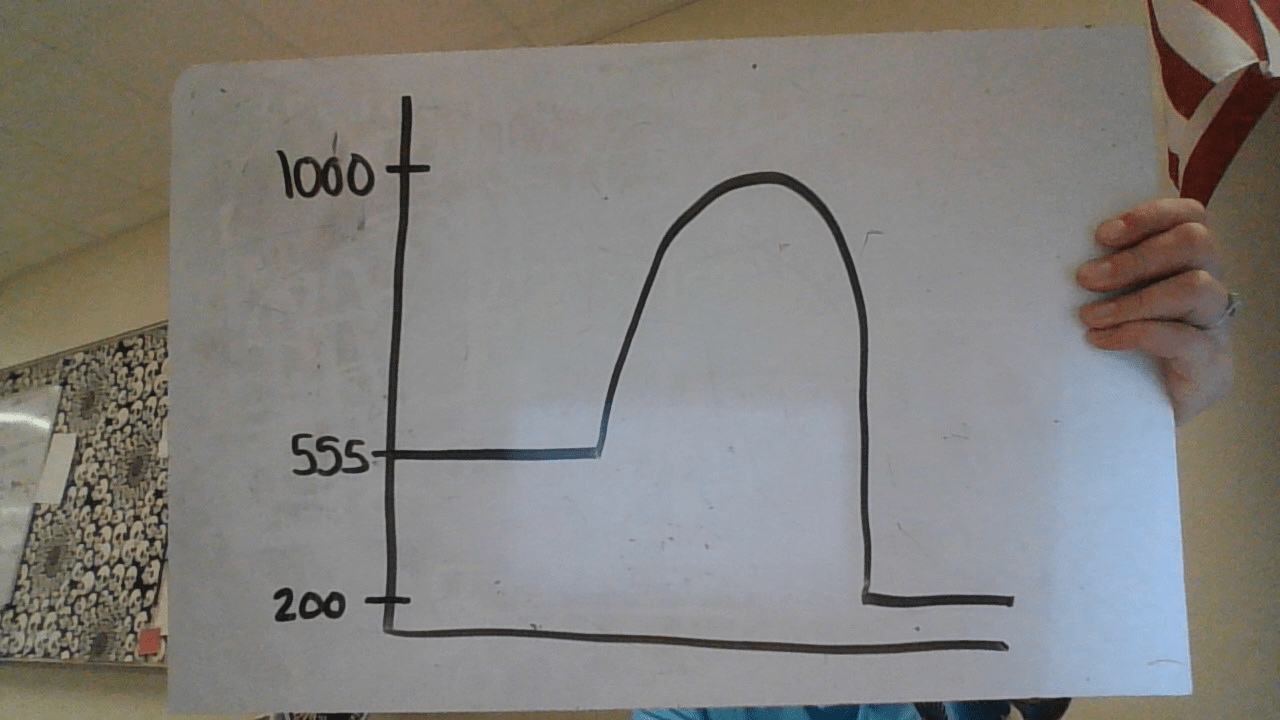
200
If water absorbed 350 kJ of heat, the potato chip that burned absorbed/released _ kJ of heat.
-/+ # kJ
released 350 kJ of heat.
-350 kJ from the chip
QH2O = -Qchip
200
balance this combustion reaction
__ C3H8 + __O2 --> __CO2 + __ H2O
1 5 3 4
200
2N2 + 5 O2 → 2N2O5 ΔH = ?
H2 + ½O2 → H2O ΔH = -285.8
N2O5 + H2O → 2HNO3 ΔH = -76.6
N2 + 3O2 + H2 → 2HNO3 ΔH = -348.2
Reaction 1: flip x2 +571.6
Reaction 2: flip, x2 +153.3
Reaction 3: x2 -696.4
28.4
200
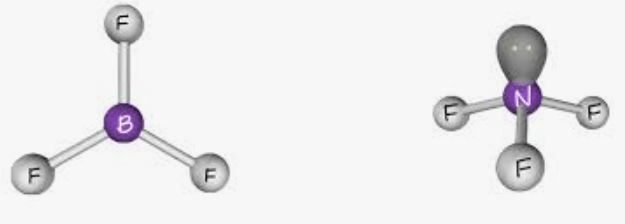
What is the shape of NF3?
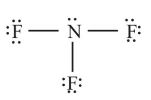
Linear, bent, trigonal planar, trigonal pyramidal, tetrahedral
trigonal pyramidal
300
How many Calories is 84000 joules?
How many calories is 600 kilojoules?
84,000 J * (1 cal)/(4.184 J)*(1 Cal)/(1000 cal)=20.1 Cal
600 kJ * (1000J)/(1kJ)*(1cal)/(4.184J)=143403cal
300
Ethanol was burned. It started out as 10 g and ended at 7 g. There was 50 mL water in the calorimeter. The water started out at 20C and ended at 25C.
How much energy (J) did the water absorb?

Q = 50 * 4.184 * (25-20) = 1046 J
300
Define the term average bond enthalpy
Energy required to break 1 mole of a bond in a gaseous molecule averaged over similar values.
300
"Old" IB chem book - page 192, #4
describe what you would do to the equations
Reaction 1: Leave it
Reaction 2: flip
(don't erase your board, use for next question)
300
What do the electrons do differently in a ionic bond versus a covalent bond?
Ionic bonds - Electrons stolen! cations (+) and anions (-) make bond because opposite charges attract. Lose/gain electrons that follow the octet rule.
Covalent bonds - Electrons shared! make structures that follow the octet rule with shared electrons and lone pairs
400
Mrs. Onushko sets up an experiment in a plastic bag. When the reactants mix, she feels the bag. One observation recorded is that it feels cold. Is this mystery reaction endothermic or exothermic?
feels cold means the system (the reaction) is stealing my heat. It is gaining heat. the system is going through a endothermic reaction.
The surroundings would be considered Mrs. Onushko
400
Ethanol was burned. It started out as 10 g and ended at 7 g. There was 50 mL water in the calorimeter. The water started out at 20C and ended at 25C.
How much energy per gram did the ethanol release? (J/g)

Q = 50 * 4.184*5 = 1046J
mass ethanol burned = 10g -7g = 3g
(-1046J)/(3g)=-348.7J/g
400
C2H2 + 2H2 --> C2H6
Using this and the given Lewis structures, use page 11 to calculate the enthalpy change using bond enthalpy data
-291 kJ
400
"Old" IB chem book - page 192, #4
What is the enthalpy, in kJ, of the reaction?
Reaction 1: Leave it stays -144
Reaction 2: flip +11 flipped to -11
-144 + -11 = -155
400
Write the ionic formula for molybdenum (IV) oxide.
Mo+4 O-2
MoO2 (something about a cow joke)
500
Mrs. Onushko burns ethanol C2H5OH in a watch glass. She puts a lid on over the burning watch glass to collect the products.
1) What are the products?
2) Is this an open or a closed system?
CO2 and H2O
Closed System- No oxygen in/out, products cannot get in/out.
500
A piece of metal was in boiling water (100) and cooled to room temp (20C). If the metal was 60 g and it released 8760 J of energy in the process, what is the metal?

-8760 J = 60 * c * (20 - 100)
c = 1.825
Be
500
sugar (C6H12O6) combusts. Write a balanced combustion reaction.
(complete combustion)
C6H12O6 + 6O2 --> 6CO6 + 6 H2O
500
2N2 + 5 O2 → 2N2O5 ΔH = ?
H2 + ½O2 → H2O ΔH = -285.8
N2O5 + H2O → 2HNO3 ΔH = -76.6
N2 + 3O2 + H2 → 2HNO3 ΔH = -348.2
Reaction 1: flip x2 +571.6
Reaction 2: flip, x2 +153.3
Reaction 3: x2 -696.4
28.4
500
If you have 25 moles of CH4, how many grams of CH4 do you have?
1 mole = X grams (general formula)
1 mole CH4 = 16.04 g CH4
25 mol * (16.04 g)/(1 mol)=401 g