Reproductive System Anatomy
Female Reproductive Cycles
Embryonic and Fetal Development
Skeletal System
Cardiovascular System
100
This contains seminiferous tubules that produce sperm during spermatogenesis
testes
100
The main hormone responsible for ovulation.
Leutinizing Hormone (LH)
100
This structure is a blood vessel-containing stalk of tissue that connects the embryo to the placenta.
Umbilical cord
100
Bone 8
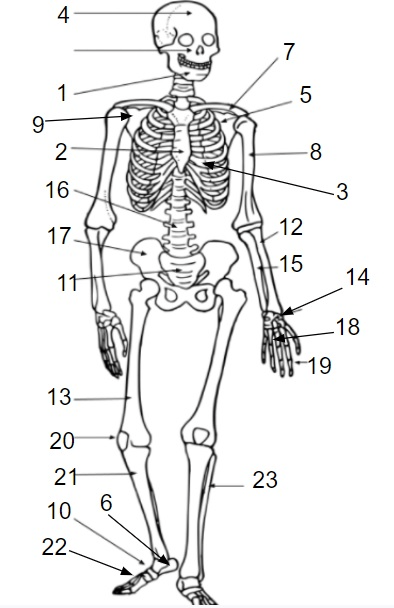
Humerus
100
Structure 7

Superior vena cava
200
These store sperm and convey them to the urethra
ductus deferens / vas deferens
200
This hormone works with estrogen to prepare the endometrium for implantation
progesterone
200
Rapid mitotic cell division of the zygote
cleavage
200
Bone 19
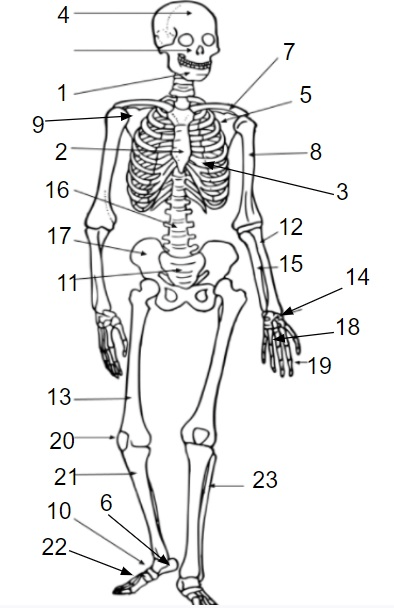
Phalanges
200
Structure 6
Aorta
300
The accessory glands of the male reproductive system include these 3 structures
seminal vesicles, prostate, bulbourethral glands
300
This hormone is responsible for growth and maturity of the follicle.
FSH (follicle stimulating hormone)
300
Hollow ball of differentiated cells
blastocyte
300
Bone 7
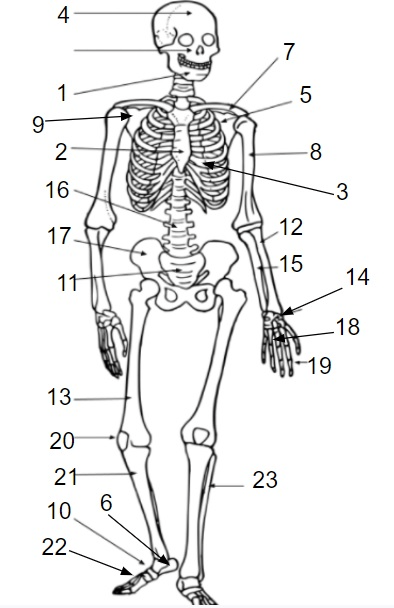
Clavicle
300
Structure 9
Pulmonary veins
400
The thickest layer of the uterus composed of smooth muscle.
Myometrium
400
The structure in the ovary that secretes progesterone.
Corpus luteum
400
Formation and development of oocytes
oogenesis
400
This type of fracture breaks through the skin.
Open fracture
400
The thick middle layer of the heart walls.
Myocardium
500
The usual site of fertilization.
Fallopian (uterine) tubes
500
In this phase, the corpus luteum develops from the ruptured follice
luteal phase
500
A fertilized egg, which represents the first cell of a new individual.
zygote
500
The type of fracture show in this x-ray image.
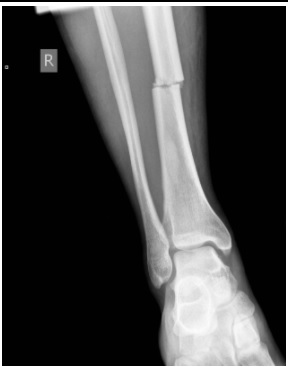
Closed/non-displaced/transverse
500
The largest artery in the human body.
Aorta
600
The innermost layer of the uterus where implantation occurs.
Endometrium
600
The day of the female's uterine (menstrual) cycle when ovulation typically occurs.
Day 14
600
This organ delivers nutrients and oxygen to the embryo, while also removing waste from embryonic blood.
Placenta
600
A type of fracture that results in bone being broken into multiple pieces or fragments.
Comminuted fracture
600
The main heart chamber that pumps blood to the rest of the body.
Left ventricle