Respect & Power
Permission & Consent
Respectful Relationships
Communication
Conflict & Compromise
100
What is a stereotype?
Stereotypes are constructed by society about how certain groups of people should behave, dress, act, the jobs they should do, the sports they should play or the colours they should wear.
100
What does consent mean?
Asking for permission and making sure someone says "yes" before you do something that affects them.
100
What is respect?
Respect is being kind and polite to others and caring about their feelings.
100
Which of the following is an example of non-verbal communication?
A. Saying, “I disagree with you.”
B. Sending someone a text message
C. Crossing your arms and looking away
D. Asking someone a question
C.
100
Two students want the same equipment
What is a compromise?
Take turns using it.
200
What is an example of a stereotype
All boys are good at sports..
200
Your friends encourage you to do something you don't want to do. They say, “Come on, everyone else is doing it!”
Is this a good example of consent? Why or why not?
No. Consent should be freely given. If someone feels pressured, bullied, or forced, they are not freely choosing to participate.
200
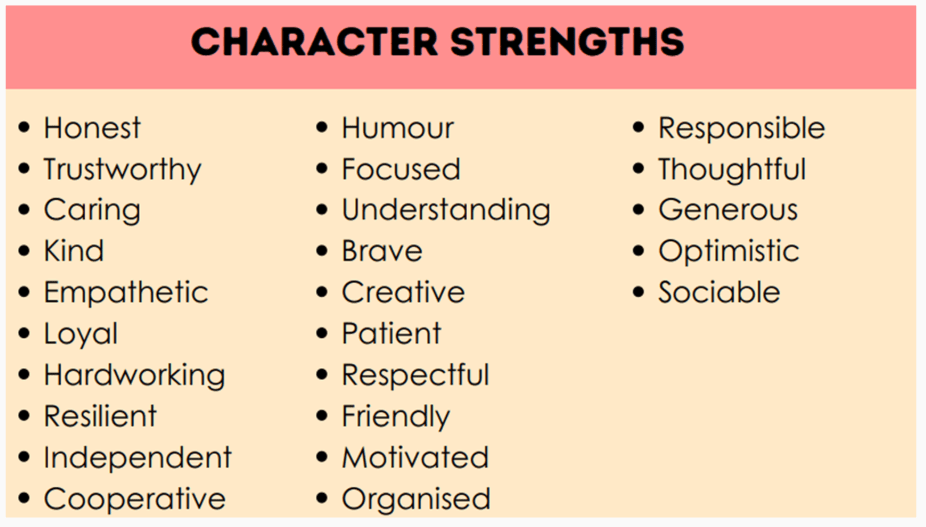
list 5 character strengths?
200
Is this assertive or aggressive?
“I think we should give everyone a chance to share their ideas before making a decision. I feel that some people aren't getting a chance to speak.”
Assertive
200
What is conflict?
300
True or False?
Is this a stereotype?
All old people are grumpy
True
300
What are the four key steps in seeking and giving consent?
Asking, responding, listening and reacting
300
What might happen you don't value trust in a friendship?
Feel insecure or suspicious.
300
Reword the following statement using an I statement:
“You never listen to me and you always interrupt!”
“I feel frustrated when I am interrupted because I want to finish what I am saying. I would like you to let me finish before you respond.”
300
A friend says, “You never include me when you are playing with other people!”
What would be the best response? Explain why.
A. “Well, you're not fun to play with anyway!”
B. “Whatever. I don't care.”
C. “I'm sorry you feel left out. Let's work out a way we can include everyone.”
D. “It's not my problem.”
Answer: C. “I'm sorry you feel left out. Let's work out a way we can include everyone.”
Why? It acknowledges the person's feelings and focuses on finding a solution rather than blaming or insulting them.
400
What is one impact of a negative stereotype?
❌Limit opportunities
❌ Create unfair expectations
❌ Affect confidence
❌ Cause exclusion
❌ Lead to discrimination
400
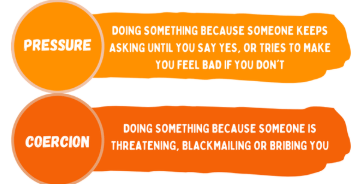
What are the missing levels of consent on the continuum?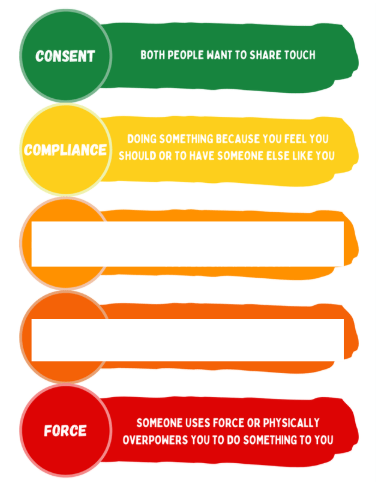
400
Read the situation:
Alex and Jordan are working on a group project. Alex keeps interrupting Jordan and says, “My idea is better, so we're doing it my way.” Jordan becomes frustrated and says, “Fine, whatever.” Alex then asks Jordan to do all the boring parts of the project.
Identify at least three problems with the way they are communicating or treating each other.
- Alex is interrupting Jordan.
- Alex is not listening to Jordan's ideas.
- Alex is being disrespectful and controlling.
- Jordan is not communicating their feelings clearly.
- The work is not being shared fairly.
- They are not working together as a team.
400
What is the difference between assertive and aggressive communication? Give one example of each.
- Assertive communication means expressing your thoughts, feelings, and needs clearly and respectfully.
Example: “I feel upset when you interrupt me. Please let me finish speaking.” - Aggressive communication means expressing yourself in a way that is disrespectful, threatening, or hurts others.
Example: “Stop interrupting me! You never let anyone else talk!”
400
What is the difference between resolution and compromise?
Resolution - act of solving a problem or a way to improve the situation.
Compromise - a settlement of a disagreement where both parties agree to do something.
500
What is stereotypical about this ad?
Gender stereotype: The woman is shown doing many household jobs, such as cleaning, cooking, and preparing food.
Women as caregivers: She is holding and preparing a large family meal, suggesting that women are responsible for feeding and caring for others.
500
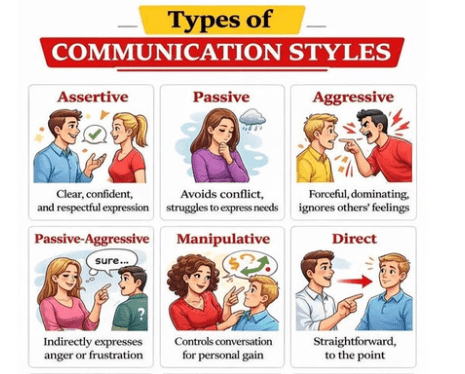
Name the first 3 communication styles (double points if can name all 6 correctly):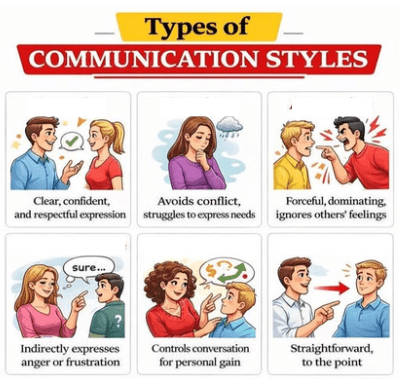
Assertive, Passive, Aggressive
Passive-Aggressive, Manipulative, Direct