Structures of the Respiratory System
Characteristics of the Respiratory System
Process of Respiration
Respiratory Illness and Aging
100
Structure A is the _______.
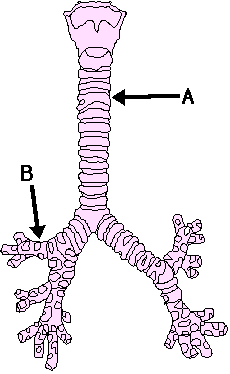
What is the trachea?
100
These structures in your nose function to trap pathogens.
What are hairs?
100
The scientific term for breathing.
What is ventilation?
100
_______________ can be caused by fungal, bacterial, or viral pathogens.
What is pneumonia?
200
The structure labeled X is the ________.
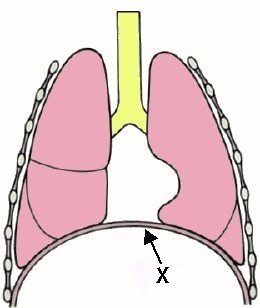
What is the diaphragm?
200
The branching of the trachea results in the _______.
What is/are the bronchus/bronchi/bronchial tree?
200
The step of ventilation in which pressure inside the lungs increases.
What is expiration? OR What is exhalation?
200
Smoking increases your risk of both chronic bronchitis and __________.
What is COPD?
300
The lower respiratory tract consists of the bronchial tree (left and right bronchi), trachea, lungs, and _______.
What is the larynx?
300
This is where your vocal cords are located.
What is the larynx?
300
The step of ventilation in which pressure inside the lungs decreases.
What is inspiration? OR What is inhalation?
300
True or false: Aging increases efficiency of gas exchange.
What is false?
400
The upper respiratory tract consists of the sinuses, nose, nasal cavity, and _______.
What is the pharynx?
400
This component of the trachea functions to trap particles entering the respiratory system.
What is the mucous membrane?
400
________ _______ is the term for the amount of air that remains in the lungs at all times.
What is residual volume?
400
________________ is caused by environmental factors that trigger inflammation of the airway.
What is asthma?
500
Structure B is a _________________.
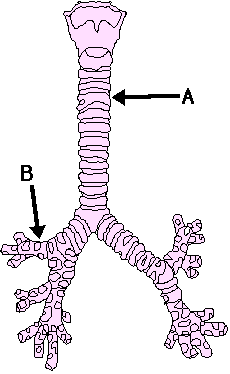
What is a bronchiole?
500
The exact location of gas exchange within the respiratory system.
What is/are the alveolus/alveoli?
500
The respiratory center that senses concentration of carbon dioxide in the body.
What is the medulla oblongata?
500
The contraction of the diaphragm ______________ over time.
What is weaken?