Colour Theory
Types of Light
Cameras and Eyes
The Electromagnetic Spectrum
How Light Moves and Natural Phenomenon
Lenses and Mirrors
100
What colour do you get if you mix every colour of light?
White
100
Which kind of light is created by heat?
Incandescent
100
True or false: only cameras have lenses
False. Eyes also have lenses!
100
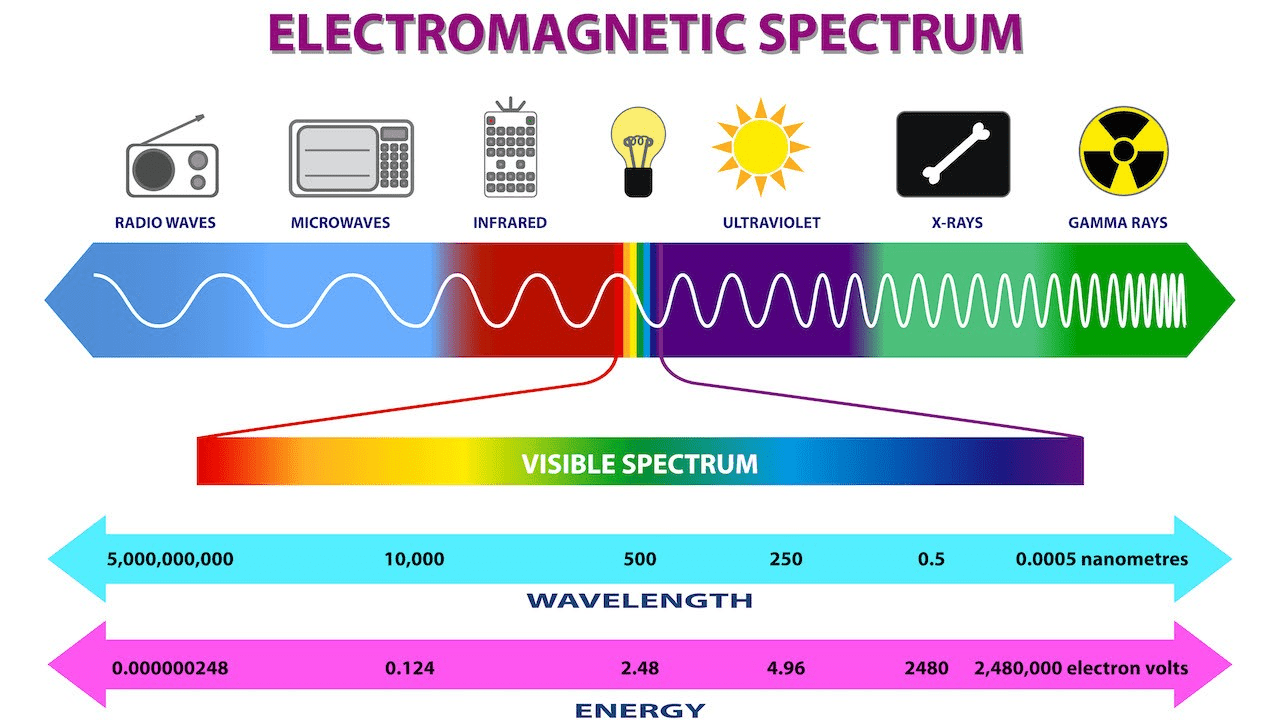
Which kind of light (electromagnetic radiation) has the least energy?
Radio waves.
100
Does light travel in a straight line?
Yes
100
What does a mirror do?
Reflect light
200
Which colour theory does a phone screen use to show you different colours?
Additive theory
200
Do incandescent or fluorescent bulbs use more energy to make light?
Incandescent bulbs
200
What does your iris do?
Widen or narrow your pupil to let more or less light into your eye
200
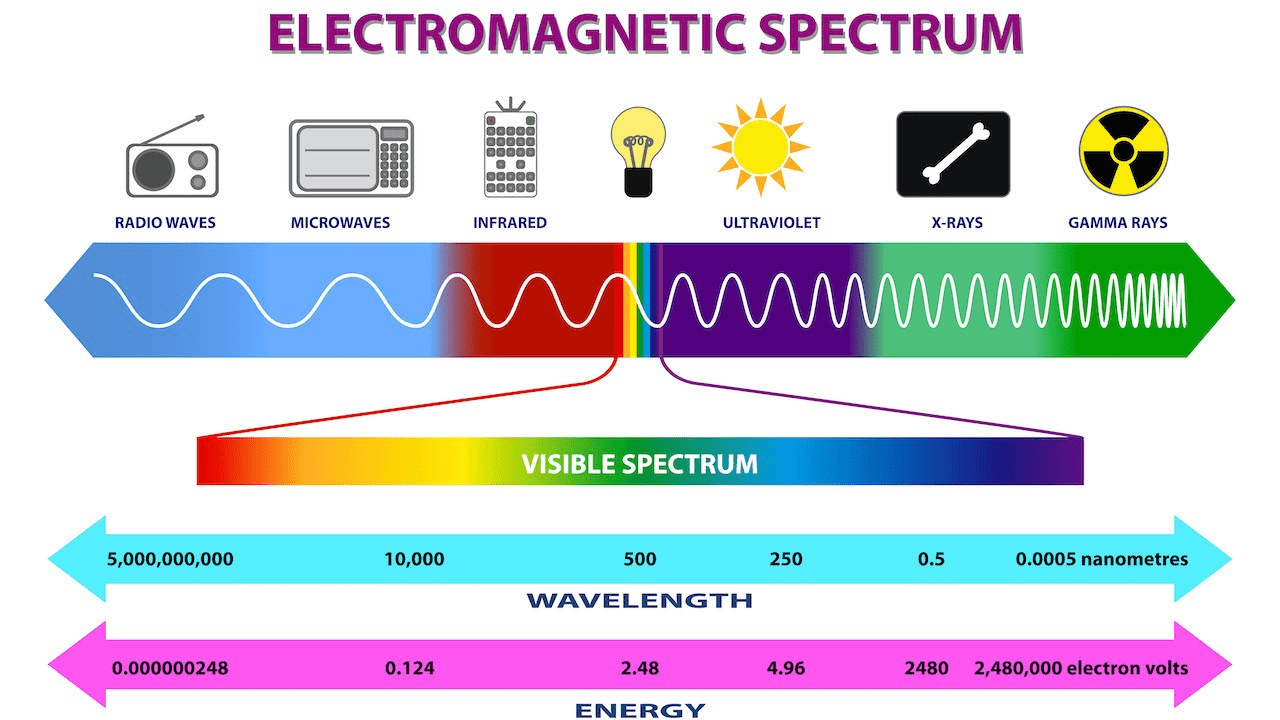
Which kind of electromagnetic radiation do we sense as heat?
Infrared radiation
200
What's the difference between how light is reflected off a bumpy surface and a smooth one?
The bumpy surface scatters the light in all directions, but the smooth one bounces it in a single straight line.
200
What's the difference between convex and concave?
Convex bends outwards, concave bends inwards.
300
What makes a red apple red?
BONUS 100 points: Does that use additive or subtractive theory?
All the other colours of light get absorbed except for red
300
Name two light sources that emit luminescent light
Answers may vary, but include bioluminescent animals, digital screens, glowsticks, etc.
300
Which part of your eye has rods and cones that let you see colour and how bright things are?
The retina
300
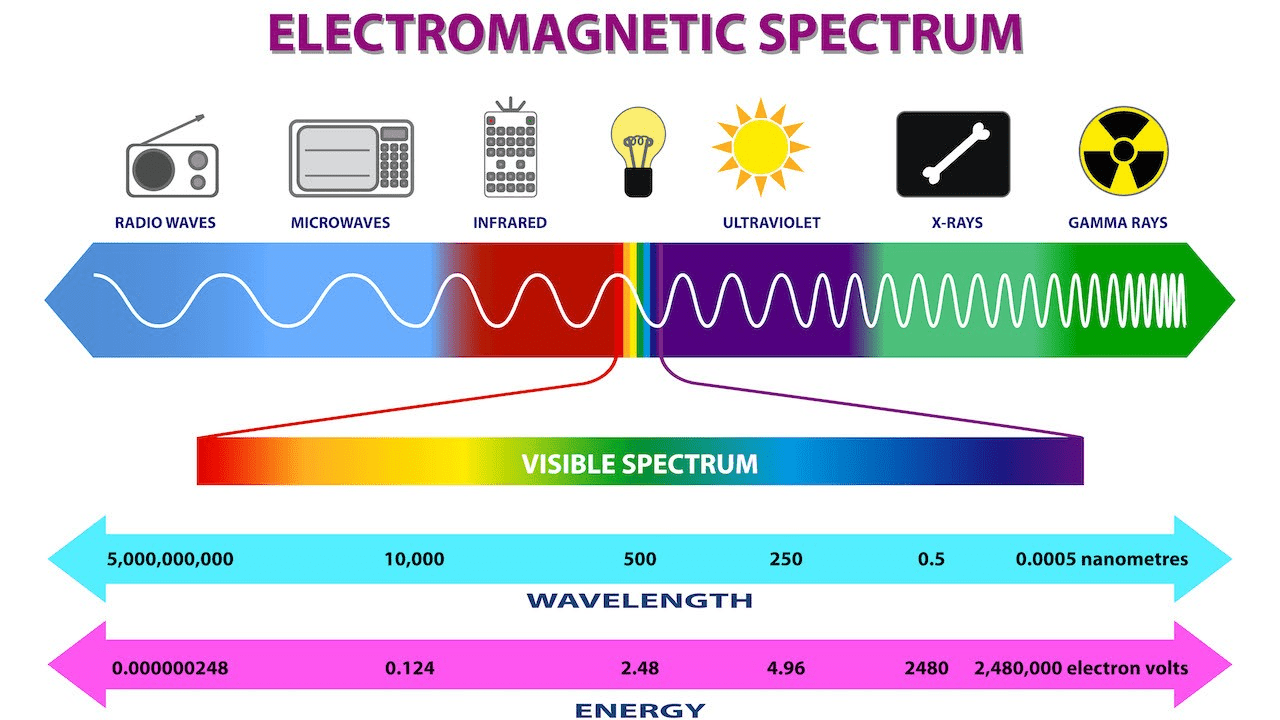
Name one thing that's useful about ultraviolet light.
Plants use it to grow, we use it for solar panels, we use it to sterilize medical equipment, etc.
300
What do we call it when light slows down in a different medium?
Refraction
300
Explain what happens to light when it passes through either a concave lens or a convex lens
Concave: The light disperses (spreads out in different directions)
Convex: The light bends together into a focal point
400
This colour theory is based on what kinds of light are reflected and absorbed by physical items
Subtractive theory
400
Which kind of light emits faint light over a long period of time?
Phosphorescent
400
What happens if our eyes focus images in front of or behind the retinas instead of perfectly on them?
The image is blurry (or: you're near or far-sighted).
400
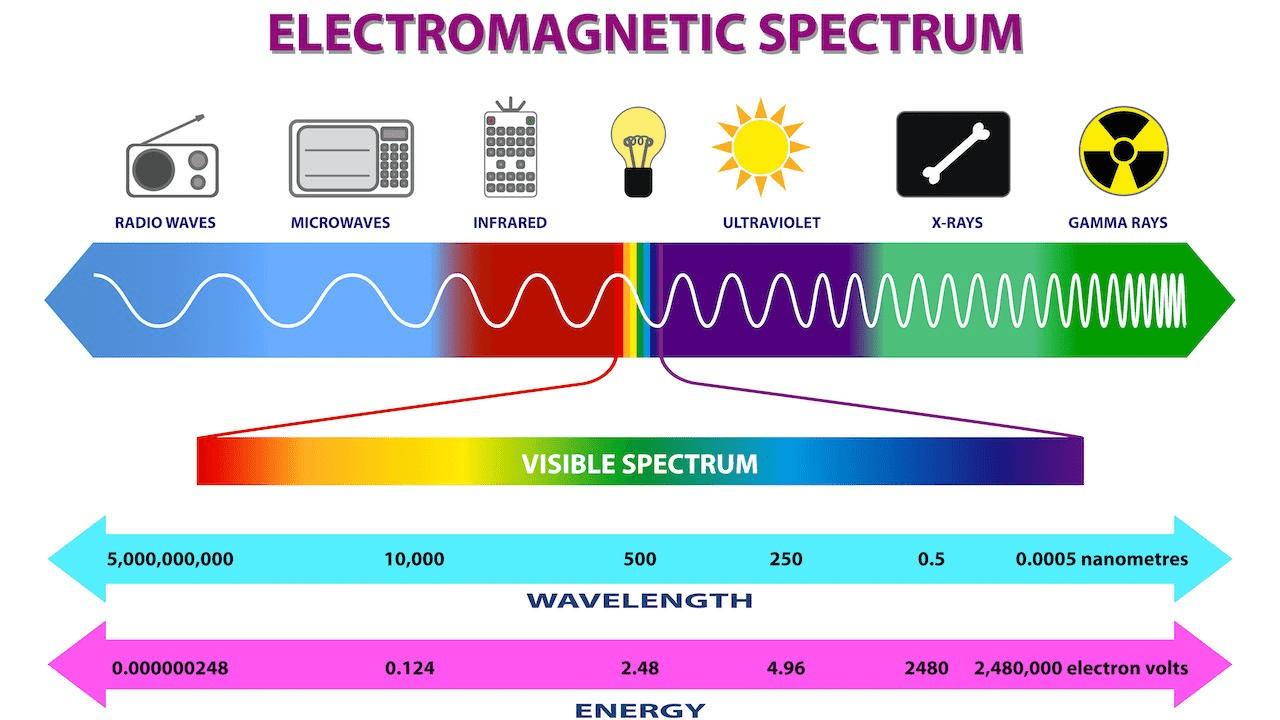
Name a drawback for one kind of light energy.
Infrared rays can burn us, ultraviolet damages our skin, x-rays and gamma rays damage the inside of our bodies and can give us cancer
400
What happens to an image when it passes through the pupil or a pinhole camera?
Bonus 300 points: draw a diagram or explain why!
It gets reversed (it's upside-down). This is because the light travelling from the top of the object and the light travelling from the bottom of the object move in straight lines through the hole, ending up in opposite positions.
400
Name two different devices that use convex lenses.
Microscopes, magnifying glasses, glasses for far-sightedness (reading glasses), your eyes, camera lenses for focusing close-up
500
Why are the primary colours in additive theory red, green and blue?
We have red, green and blue cones in our eyes that we use to sense all colours.
500
Where does the "bio" in "bioluminescent" come from?
Bios, the Greek word for life
500
Name two things that are different between cameras and eyes.
Cameras need their lenses swapped to focus differently, cameras have filters, cameras have apertures but we have irises, cameras don't have blind spots, etc.
500
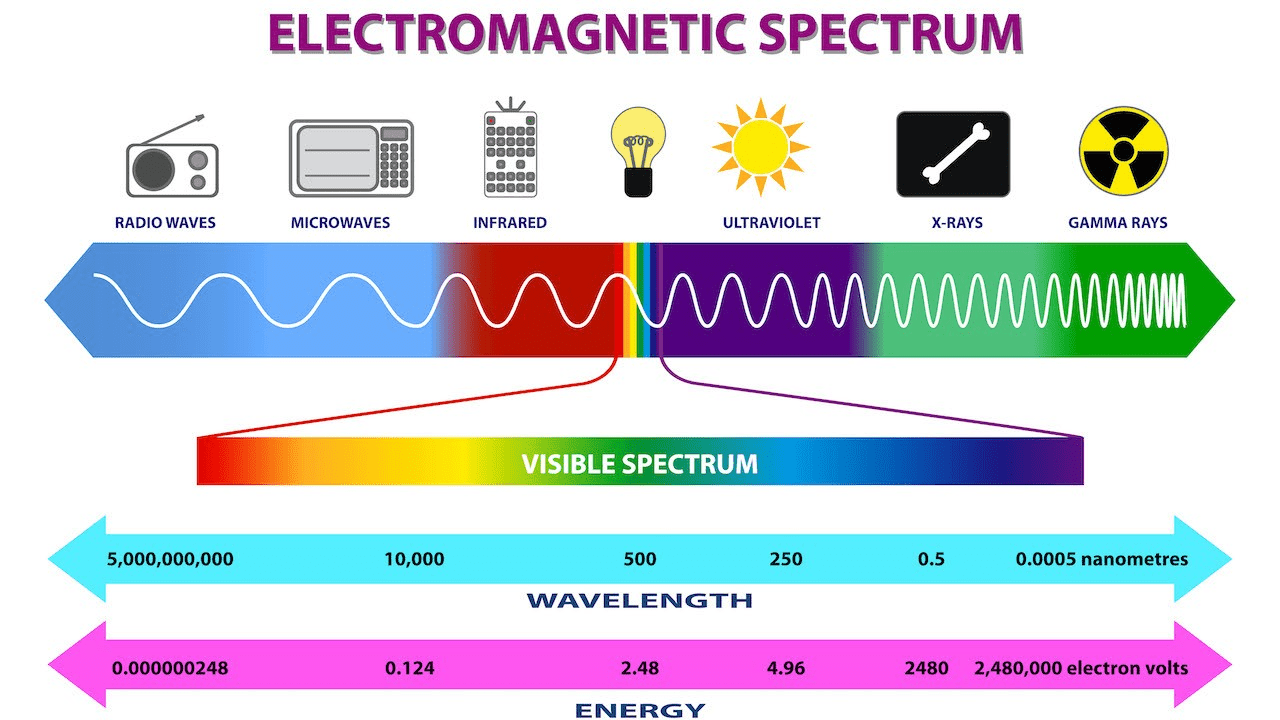
What is a wavelength?
The distance between the same "point" on one wave and the next (for instance, two peaks).
500
How does density affect the way light refracts?
A denser medium refracts light more because passing through more molecules slows it down more.
500
Would someone doing their makeup use a concave or convex mirror?
Concave, because it will make the image appear bigger/close up