Energy Systems
Skeletal
Muscular
Cardiovascular
Respiratory
100
Name the 3 energy systems:
ATP-PC, Anaerobic Glycolysis, Aerobic System
100
What is the name for the process where bones harden?
Ossification
100
What joins muscles to bone?
Tendon
100
How many ventricles does the heart have?
2
100
What does BR/ RR stand for?
Breathing/ Respiratory rate
200
What is a by-product of ATP-PC?
ADP
200
What joins bone to bone?
Ligaments
200
What are the 3 types of muscles?
Smooth, Cardiac and Skeletal
200
Which side of the heart pumps oxygenated blood away from the heart to working muscles?
Left
200
Why should you breathe in through your nose and not your mouth?
Your nose has small hairs called Cilia that filter the oxygen
300
What is the fuel used for the Anaerobic Glycolysis System?
Carbs/Glucose
300
What is a common name for your Calcaneus?
Heel
300
What is the name for the muscle on your forehead?
Frontalis
300
What type of circulation describes the blood going to the lungs and back?
Pulmonary
300
Where does gaseous exchange occur within the lungs?
Alveoli
400
What three macronutrients are used for fuel in the human body?
Carbs, fats and proteins
400
Where are your tarsals located?
Feet
400
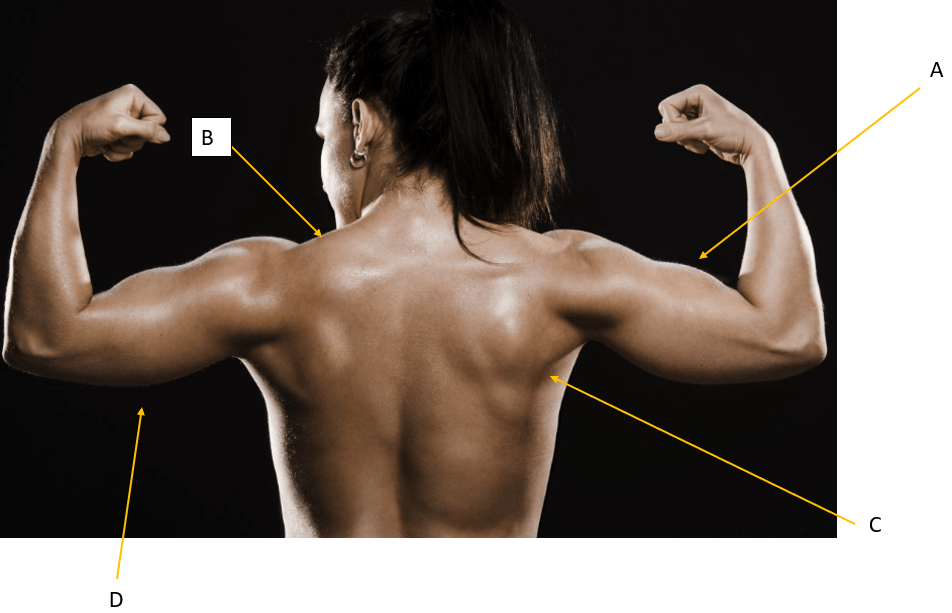
A: Bicep
B: Trapezius
C: Latissimus Dorsi
D: Tricep
400
How does bad cholesterol (LDL) affect the body?
Blocks blood's pathway in blood vessels
400
How does emphysema affect the lungs?
Reduces the elasticity of the lungs
500
What is the word that describes: 3 systems working at once with 1 dominant at a certain time
Interplay
500
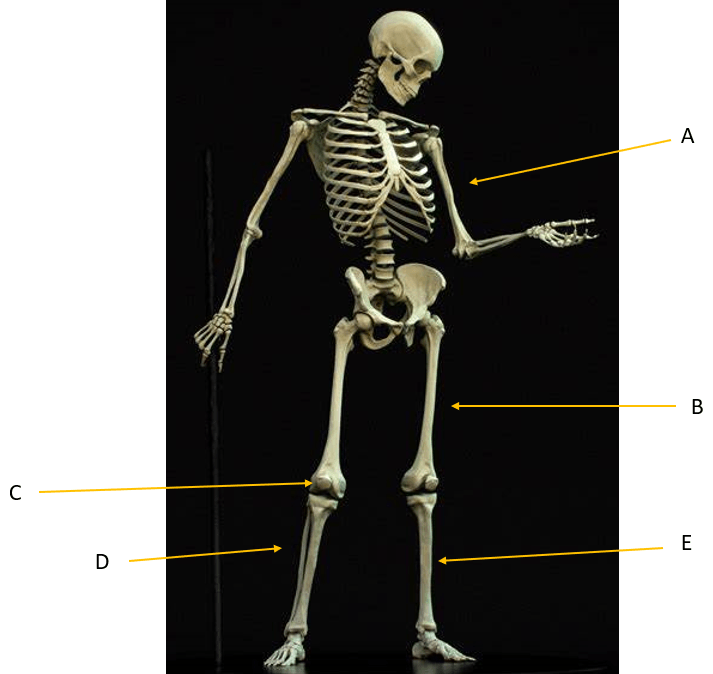
A: Humerus
B: Femur
C: Patella
D: Fibula
E: Tibia
500
Do muscles push or pull?
Pull
500
What does vasodilation mean?
Widening of blood vessels when exercising to allow better transport of blood and release of heat
500
What muscle helps the lungs expand?
Diaphragm
750
What type of recovery is needed for each energy system?
Passive for ATP and Active for the other 2
750
What are the 5 functions of the skeletal system?
RBC production
Protection
Shape/Frame
Support
Movement
750
What are the 4 shapes of muscles?
Circular, triangular, spindle, flat.
750
What 3 examples of acute physical responses to activity can you name?
SV, HR, Q, blood pressure
750
What does the epiglottis do?
Prevents food/water going into the trachea
1000
Explain what interplay means:
3 energy systems working together with 1 dominant at a certain time.
1000
How many bones are in the human body?
206
1000
Provide an example of each type of muscle:
heart, intestines, *skeletal muscle*
1000
Systemic circulation describes:
The circulation of blood away from the heart to the working muscles
1000
Describe the pathway an oxygen molecule goes through in order to get the alveoli
nose/mouth -> pharynx -> laryn -> Trachea -> Bronchus/bronchi -> Bronchioles -> alveoli