The Rock Cycle
Energy & Layers
Types of Rocks
Earths layers & Interior
Plate Tectonics & Bounderies
Continental Drift
100
This is the name for the series of processes on Earth's surface and interior that slowly change rocks from one kind to another.
The rock cycle
100
This is the primary heat source that drives convection currents in Earth's interior.
The Earth's core
100
This type of rock is formed from the cooling and solidification of magma or lava.
igneous rock
100
This is the outermost layer of the Earth.
the crust
100
This is the process where one tectonic plate is forced under another.
Subduction
100
This scientist is credited with developing the theory of Continental Drift.
Alfred Wegener
200
Once a rock makes it all the way through the cycle, this is what it does next.
start the cycle over again?
200
In the diagram of Earth's layers, Layer "A" represents this outermost section.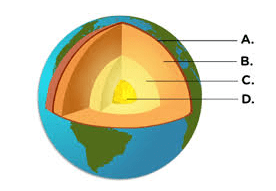
the crust
200
This type of rock is made of layers of compressed sediments.
Sedimentary rock
200
This layer, consisting of the crust and upper mantle, is broken into tectonic plates.
Lithosphere
200
These are the large pieces of the Earth's crust that move on top of the mantle.
tectonic plates
200
This is the name of the supercontinent that Wegener proposed existed millions of years ago.
Pangea
300
This is the process responsible for turning existing rock into sediment and transporting it to new locations.
erosion and weathering
300
This is the method scientists use to find out what is inside Earth since we can't tunnel to the core.
seismic waves from earthquakes?
300
This type of rock is formed when existing rocks are subjected to intense heat and pressure.
Metamorphic rock
300
This part of the Earth's interior is made of solid nickel and iron.
Inner core
300
This type of plate boundary is where two plates move away from each other.
divergent plate boundary
300
Wegener used the distribution of these across different continents as evidence for his theory.
Fossils
400
This process involves sediment settling out of the water or wind that is carrying it.
deposition
400
This layer, labeled "B" in your study guide, sits between the crust and the outer core.
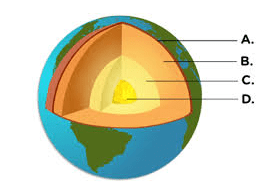
the mantle
400
This is the specific term for molten rock that is found underground.
Magma
400
This layer is made of iron and nickel but is in a liquid state
outer core
400
his type of boundary occurs where plates slide past each other, which often causes earthquakes.
transform boundary
400
This type of geological feature is typically found where two tectonic plates of the same density collide.
Fold mountains
500
One way the water and rock cycles interact is when this falls from the sky and erodes rock into sediments.
precipitation
500
These circular movements in the mantle are thought to be the power behind plate tectonics.
convection currents
500
This is the process that involves the compaction and cementation of sediments to form new rock.
sedimentation
500
This is the primary method scientists use to study Earth's interior since we cannot dig very deep.
bouncing sound waves through the planet?
500
This discovery on the ocean floor—a continuous chain of volcanoes—changed our understanding of tectonic activity.
mid ocean ridges
500
Evidence for seafloor spreading is found in the fact that the age of rocks does this as you move away from a mid-ocean ridge.
increase in age