The Romantic Era
The Contemporary Era
Contemporary Movements
Composers
The Muppets
100
Most music historians agree that the Romantic period began around _______?
1820
100
What year do most music historians regard as the start of the contemporary period?
1900
100
Music of this movement has no tonal center, no key, and no traditional melody.
Atonality
100
Romantic composer who wrote the Nutcracker
Pyotr Tchaikovsky
100
"It's Not Easy Being Green"
Kermit the Frog
200
Romantic composers often wrote this type of music, which tells a particular story or evokes certain images.
Program Music
200
During the contemporary period, music became more _______ than ever, as composers stopped agreeing on what music "should" sound like.
Diverse
200
This contemporary movement informed the creation of most modern pop music.
Jazz
200
This composer died at 31 but wrote 1500+ pieces
Franz Schubert
200
"Ooooo, Kermie!"
Miss Piggy
300
Richard Wagner was famous for using __________ in his operas, which are small themes for particular characters or places.
Leitmotif
300
With the invention of computers, this electronic instrument became widely used and incorporated in digital music and even live performances.
Synthesizer
300
Simple music that is meant to create an atmosphere, color, or feeling with gradual changes
Minimalism
300
20th Century composer famous for his complex, atonal music
Arnold Schoenberg
300
"WOCKA, WOCKA"
Fozzy Bear
400
The Romantic period saw a boom in __________, which means composers became very patriotic about their country's identity and often used folk music in their works.
Nationalism
400
When did the contemporary period end?
Trick question - it hasn't.
400
Complex music that is meant to create an atmosphere, color, or feeling
Impressionism
400
This composer used neoclassicism and new, complicated techniques with rhythm and harmony to create his most famous works.
Igor Stravinsky
400
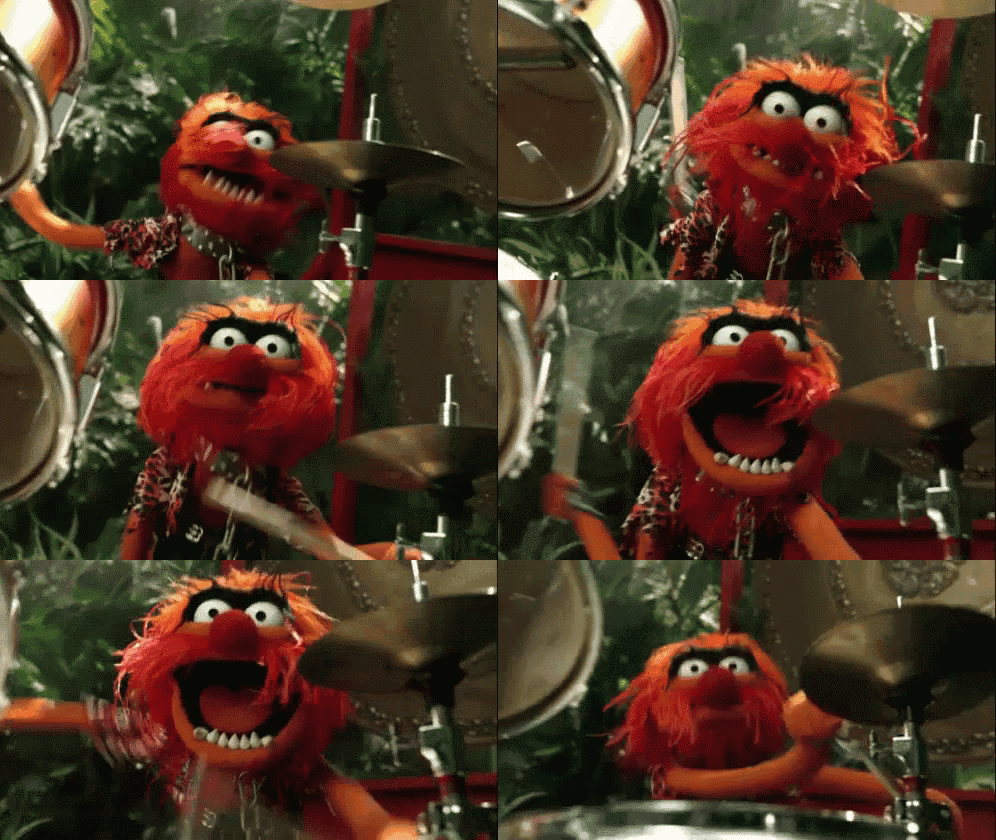
Animal
500
In Symphonie Fantastique by Hector Berlioz, he wrote a solo for this instrument in the Mvt V, which he claims is the most shrill and dreadful-sounding instrument.
E-Flat Clarinet
500
The piece 4'33" by John Cage, written in 1952, can be performed on any instrument, and contains EXACTLY how many notes?
0
500
Stravinksy's "Pulcinella" is a famous ballet that embodies this style of orchestral composition.
Neoclassical
500
This composer's 2nd Piano Concerto is my favorite piece of orchestra music.
Sergei Rachmaninoff
500
"BORK! BORK! BORK!"
Swedish Chef