Atomic Structure
Periodic Table
Periodic Trends
Chemical Bonding
IMF and Properties
100
The location in the atom where the protons and neutrons are found.
The nucleus
100
The element located in group 12, period 4.
Zinc (Zn)
100
In trend in atomic size.
Atomic Radius
100
A chemical rule of thumb that states that all atoms tend to bond in such a way that each atom has 8 valence electrons in its outer shell.
The octet rule
100
The weakest intermolecular force that is the result of the movement of electrons creating a temporary dipole.
London Dispersion Forces (LDF)
200
The atomic number details the exact number of these particles within the atom.
Protons
200
The name used to identify all Group 1 elements.
Alkali Metals
200
The amount of energy required to remove an electron from the outermost energy level of an atom.
Ionization Energy
200
A bond formed between a cation and an anion.
Ionic bond
200
The section of the graph in which a liquid exists.
Section 3
300
The number of neutrons in an atom of Potassium-39.
19
300
The group on the periodic table in which all elements in that group have 7 valence electrons.
Halogens
300
Rank the following atoms in order of increasing (smallest --> largest) atomic radius.
Ga, Br, Ti, Ca, K
K, Ca, Ti, Ga, Br
300
When two covalently bonded atoms share electrons unequally, the bond is said to be....
Polar
300
A substance whose shape and volume does not change.
Solid
400
Carbon-12, Carbon-13 and Carbon-14 are examples of...
Isotopes
400
The name of positively charged ions.
Cations
400
Which of the two elements has a higher ionization energy?
Oxygen or Nitrogen
Oxygen (O)
400
The shape of this molecule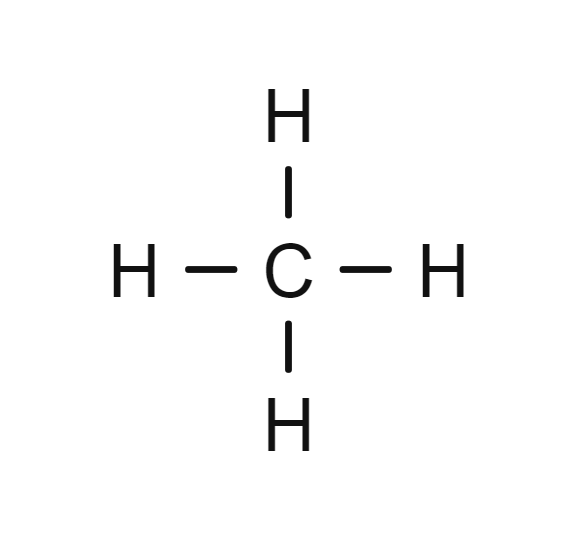
Tetrahedral
400
As temperature increases, kinetic energy _____________.
Increases
500
Silicon exists as 3 different isotopes: Silicon-28, Silicon-29 and Silicon-30. Which is the most abundant isotope?
Silicon-28
500
The most abundant classification of element on the periodic table.
Metals
500
The reason that atomic radius decreases from left to right across a period.
Effective nuclear charge
(# of protons increases, increasing the attraction towards the nucleus)
500
Determine the polarity of the following molecule: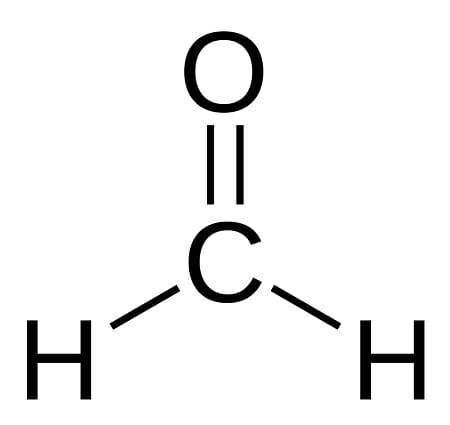
Polar
500
Which of the following molecules DOES NOT have hydrogen bonding?

Structure 1