Rates of Reaction
Atoms
Periodic Table
Chemical Formulae
100
Name two ways to increase the rate of a chemical reaction
Any of:
Add a catalyst
Increase the concentration
Increase the temperature
Decrease particle size (Increase surface area)
100
Name the element that is made of 8 protons.
oxygen
100
Name an element that is in the Halogens family.
Any of fluorine, chlorine, iodine, bromine, astatine
100
write the formula for carbon dioxide
CO2
200
Describe why increasing the temperature of a reaction increases the rate of reaction - you must include the word "collisions or collide".
Reactant particles gain energy, move around faster and therefore have more successful collisions which increases the rate of reaction
200
How many neutrons does this atom of potassium have?
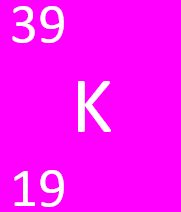
20
200
Name an element in the same row as hydrogen
helium
200
What is the valency of aluminium?
3
300
Which reaction is faster? A or B. Explain why.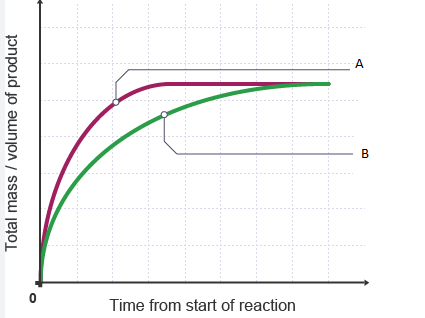
A is faster because it is the first to finish and has a steeper curve
300
What is the name given to these three atoms of hydrogen?
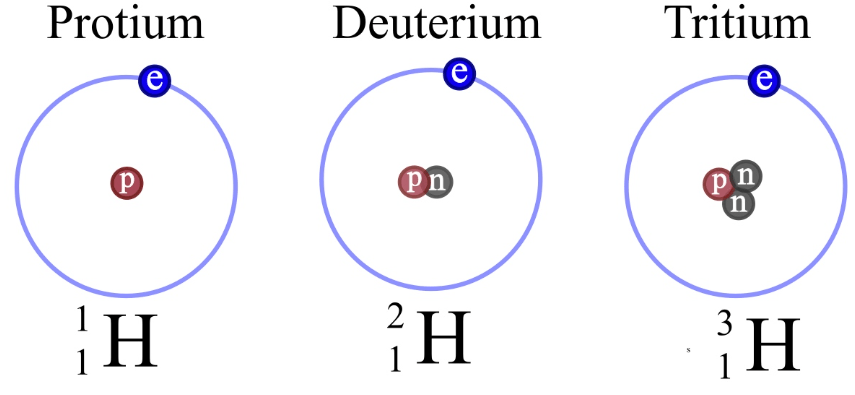
isotopes
300
Describe the reactivity of the elements in group 1
they react with air (oxygen) and water. as you go down the group they become more reactive - they can react with a coloured flame. They are stored under oil as they are so reactive.
300
What is the chemical formula of phosphorus oxide?
P2O3
400
Why do both reactions slow down (shown by the curving of the line)?
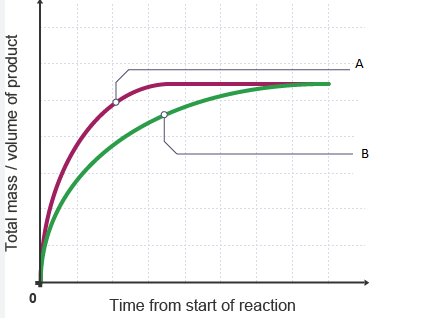
Because the reactants are running out or the reactants are being used up or the concentration of the reactants is decreasing therefore there are fewer successful collisions
400
The relative atomic mass of strontium is 87.6. What does that tell us about the proportions of these atoms?
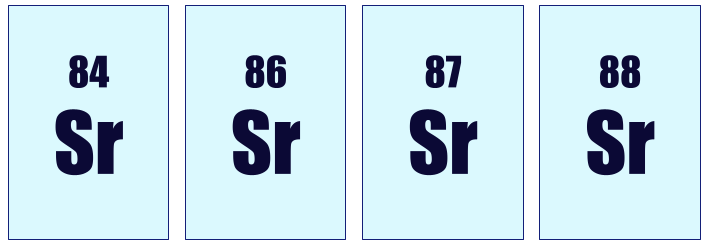
There is more of the strontium-88 than the others/ there is a greater abundance of strontium 88
400
Name an element with similar chemical properties as magnesium
Any of: calcium, beryllium, strontium, barium or radium
400
Name an element that does not make compounds (and therefore can be called monatomic).
Any of the Noble gases
500
Calculate the rate of reaction between 20 and 60s.
0.4 cm3s-1
500
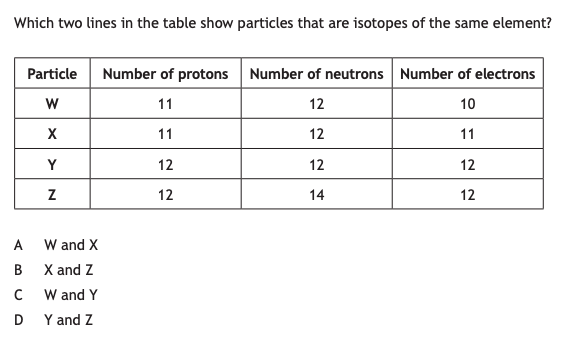
D
500
Why do atoms in the same group have similar chemical properties?
They have the same number of outer electrons
500
What is the chemical formula for dinitrogen tetroxide?
N2O4
600
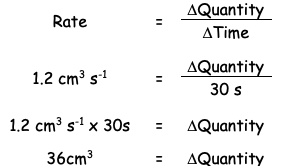
A student calculated the average rate of reaction to be 1.2 cm3s−1 for the first 30 seconds of the reaction. Calculate the volume of gas, in cm3 , collected in the measuring cylinder after 30 seconds.
600
Using your knowledge of Chemistry write down everything you know about the atomic structure and chemical reactivity of the element below:
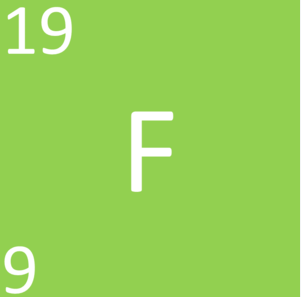
Answers could include:
It's fluorine - it is a non-metal, it is the most reactive of the halogens. It's in group 7 so has 7 outer electrons. It needs one electron to be stable so often reacts with group 1 alkali metals to make salts (eg. sodium fluoride). At room temperature it exists as a diatomic gas, F2, with a gfm of 38. An atom has an atomic number of 9 therefore has 9 protons and 9 electrons. This isotope of fluorine has a mass number of 19 so has 10 neutrons.
600
Give the electron arrangement for magnesium and name the family it belongs to
2, 8, 2 and
Alkaline Earth Metals or Earth Alkaline Metals
but NOT
alkali earth metals
600
Write the chemical formula for potassium oxide
K2O