Rates of Reaction
Atomic Structure
Types of Bonding
Acids and Bases
Titration
100
To find the rate of reaction you need to take measurements.
Which of the following could you take measurements of to work out the rate of a reaction?
A. Mass
B. Volume of solution
C. Temperature
D. Frequency
A. Mass is the correct answer.
100
State the name used to describe the region where most of the mass of an atom is found.
The nucleus
100
Sulfur is an element which was used as an ingredient in gunpowder in China in the 11th century.
State whether a sulfur atom will gain or lose electrons to form an ion.
Gain electrons
100
A student measured the pH of some everyday substances. The results were...
Beer - pH 4
Bicarbonate of Soda - pH 9
Milk - pH 6.99
State whether each everyday substance is an acid or alkali or neutral?
Beer and Milk are acidic and bicarbonate of soda is alkaline.
100
A student is setting up a titration to find the concentration of an alkali using a standard solution of acid.
Name the piece of apparatus used to accurately measure a fixed volume of alkali into a conical flask.
Pipette
200
A student investigated the rate of a chemical reaction between a solid and a solution.
Which of the following changes would not cause the rate of the chemical reaction to increase?
A. Increasing the concentration of the solution.
B. Heating the reaction mixture to a higher temperature.
C. Using a larger volume of the solution, but keeping the concentration the same.
D. Grinding the solid reactant so that it forms a fine powder.
C is the correct answer.
Bonus 50 Points for anyone else on the same team:
What is one more way of increasing the rate of a chemical reaction?
200
An bromine atom can be represented by the nuclide notation,
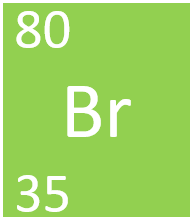
State the mass number of bromine.
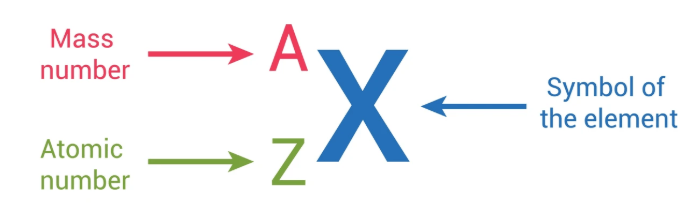 Bonus 50 Points for anyone else on the same team:
What is the mass number the number of?
200
State what it is meant by the term diatomic molecule.
A diatomic molecule is a covalent molecule containing just two atoms.
Bonus 50 Points for anyone else on the same team:
Name the 7 diatomic elements.
200
The student tried to make an alkaline solution by dissolving copper(II) oxide in water.
Explain why copper(II) oxide would not produce an alkaline solution.
It is insoluble/does not dissolve in water.
200
A student carried out a titration where 0.165 mol l-1 hydrochloric acid was used to neutralise 22 cm3 of magnesium hydroxide.
State which titres below the student would use when calculating the average titre of hydrochloric acid. Ignore any results which are not concordant.
Titre 1: 35.10 cm3
Titre 2: 33.30 cm3
Titre 3: 33.40 cm3
Titre 4: 33.35 cm3
The student should use Titre 2, 3 and 4 to calculate the average titre of hydrochloric acid.
300
Samples of three catalysts with the same surface area and same mass were added to hydrogen peroxide solution. The same volume and concentration of hydrogen peroxide was used each time. The volume of oxygen was measured and recorded in this graph.
State the most effective catalyst. Explain your choice.
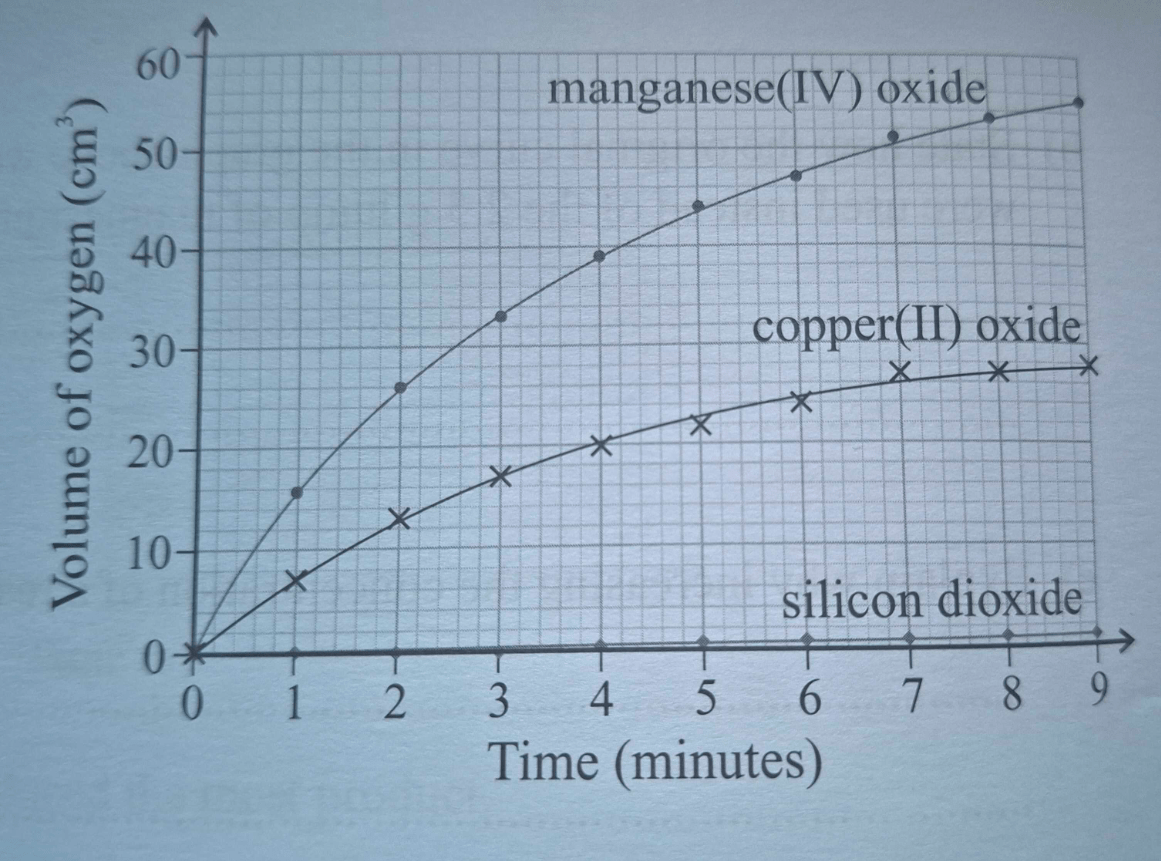
Manganese(IV) oxide is the most effective catalyst because it led to the greatest volume of oxygen being produced over the time period measured.
OR
Manganese(IV) oxide is the most effective catalyst because it increased the rate of reaction by the greatest amount.
300
Atom X has a mass number of 51 and an atomic number of 23.
Atom Y has a mass number of 51 and an atomic number of 22.
Atom Z has a mass number of 52 and an atomic number of 23.
Identify which pair are isotopes and explain why.
X and Z are isotopes. They have the same atomic number but different mass numbers.
300
State the shape of nitrogen trichloride.
trigonal pyramidal
300
State the ion produced by an acid in aqueous solution that determines it's pH.
H+ ion or hydrogen ion
300
Which of the following statements is false?
A. Universal is the most suitable indicator for use in titrations.
B. Titrations can be used to determine the concentration of an unknown substance.
C. Concentration can be measured in mol l-1.
D. An indicator is usually used to identify the point of neutralisation in an acid-base titration.
A is false because titration requires an indicator that changes color dramatically and immediately, whereas universal indicator changes color slowly over a wide range of pH.
Bonus 50 Points for anyone else on the same team:
State an indicator that would be suitable for titrations based on this criteria.
400
A reaction lasts 125 seconds and produces 40 cm3 of gas. Calculate the average rate of this reaction, in cm3 s-1, between 0 and 125 seconds.
average rate of reaction = change in quantity ÷ change in time
= 40 cm3 ÷ 125 s = 0.32 cm3 s-1
400
State what are the rings electrons are arranged in are called.
The correct answer is energy levels or electron shells
400
Explain why lithium chloride conducts electricity when dissolved in water.
Lithium chloride has strong ionic bonds. In solution, the ions are free to move, so they can carry a charge.
400
The student reacts magnesium carbonate with nitric acid. State the name of the salt formed and the gas evolved during the reaction.
magnesium nitrate and carbon dioxide
400
State what is meant by the term 'concordant' in the context of a titration.
Concordant in chemistry are titre values that are within 0.2 cm3 of each other.
500
When an apple is sliced, it's cells are damaged and exposed to oxygen in the air. Substances in these damaged cells react with oxygen in the air, which leads to the browning of apples.
Using your knowledge of chemistry, comment on how to reduce the rate of browning of a sliced apple.
Refridgerating the sliced apple/ storing it in a cold place would decrease the temperature, decreasing the rate of browning of the apple.
OR
Storing the sliced apple in an airtight container/bag would reduce the number of oxygen molecules available to take part in the reaction, so the rate of browning of the apple would decrease.
OR
Reducing the surface area of sliced apple exposed to the air reduces the frequency of successful collisions between the particles. So rate of reaction causing the browning would decrease.
500
State the name of A, B and C on this diagram and their relative mass numbers.
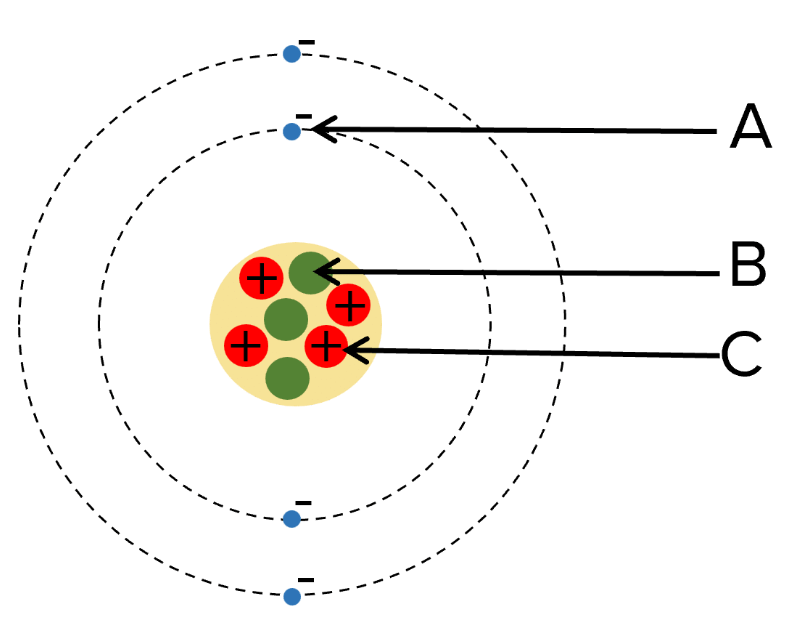
A: electron with a mass of approx. 0.
B: neutron with a mass of 1.
C: protron with a mass of 1.
500
A student have two substances, A and B. A is a solid at room temperature and B is a gas at room temperature. The student knows that one of the substances has a covalent network structure and that the other has a covalent molecular structure.
Using your knowledge of chemistry, comment on which substance, A or B, has a covalent network structure and which has a covalent molecular structure.
Here are some points your answer may include:
Substance A is a solid at room temperature so it must have a covalent network structure.
Covalent network structures have high melting points because all of the atoms are bonded to each other by strong covalent bonds.
Substance B is a gas at room temperature so it must have a covalent molecular structure.
Covalent molecular structures tend to have low boiling points because the forces of attraction between molecules are weak.
500
A student has samples of three different alkaline solutions.
Solution A has a pH of 11, solution B has a pH of 13 and solution C has a pH of 8.
Water is added to solution A. State how this affects the concentration of hydroxide ions and describe what will happen to the pH of solution A.
The concentration of hydroxide ions will decrease, causing the pH to decrease towards 7.
500
A student wants to find out the concentration of a solution of alkali by titrating it with an acid.
Suggest why a burette is useful for identifying the end-point of the reaction.
A burette allows an acid/alkali to be added to a solution drop-by-drop which helps to determine the end-point more accurately.