Space
Chemistry
Biodiversity
Electricity
EnviroChem
100
This technique combines the images of two or more telescopes to achieve the resolution of a single, massive telescope.
What is Interferometry?
100
The sub atomic particle with a negative charge
electron
100
What part of the world is the most diverse?
The equator
100
Electricity is the movement of these subatomic particles.
What are electrons?
100
Which chemical is more toxic? Agent 1 or Agent 2?
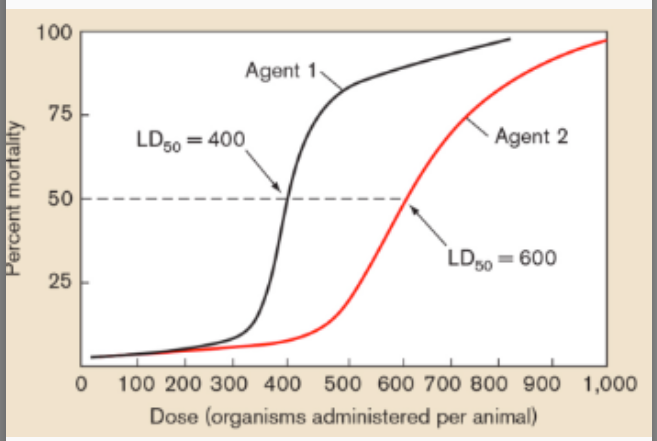
Agent 1. Lower LD50 - meaning it takes less to kill the same amount of the population
200
U nlike optical telescopes, these metal-mesh, dish-shaped systems analyze radiation in the radio frequency range and are completely unaffected by clouds, pollution, or daytime weather.
What is a radio telescope?
200
C6H12O6 is a molecular or ionic compound? What are 2 properties?
Molecular (all non metals)
Properties: low melting point, poor conductivity,
200
What is mutualism, parasitism and commensalism?
+,+ +,- +,0
200
Something which allows electricity to flow through it.
What is a conductor?
200
How do you tell if something is organic?
It has carbon (carbon-hydrogen bonds) and from living things.
300
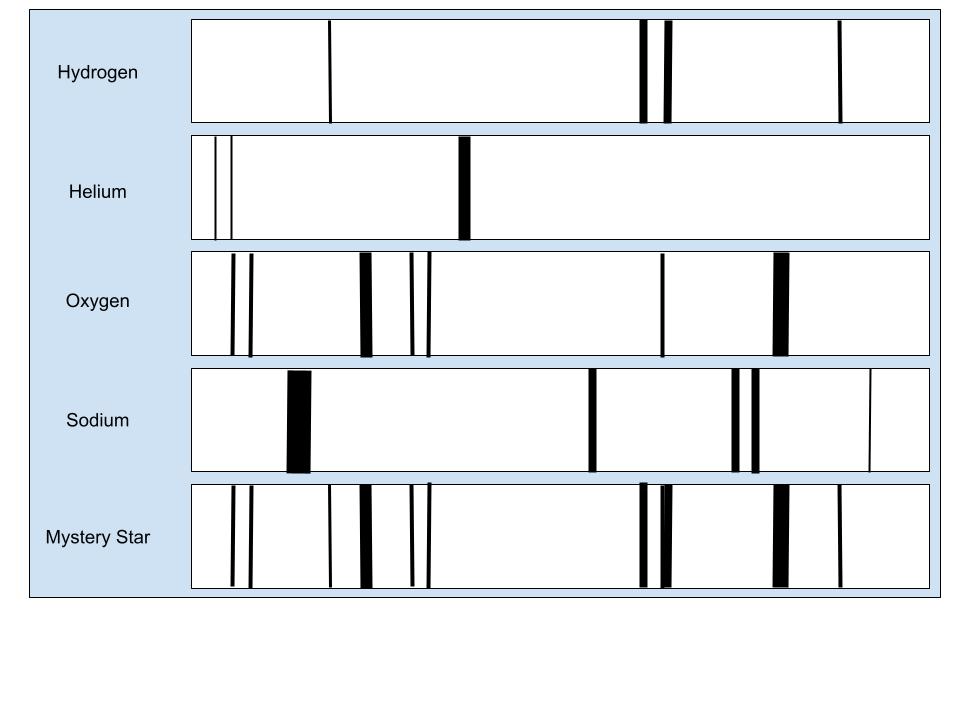
These two elements are found in the mystery star of the image above.
What are hydrogen and oxygen?
300
Name Ca3N2
Calcium Nitride (ionic so we don't use prefixes - mono, di, tri etc).
300
What is Fertilization (not the fertilizer kind) and what does it make?
Egg and sperm combining to form a zygote
300
The unit used to measure current.
What are Amperes?
300
Calculate the ppm of 3mL in a 3000 mL solution
1,000ppm
400
We would expect to observe this type of shift in spectra when the observed object is moving away from us.
What is red-shift?
400
Name one of the atomic models we discussed and name one feature about it.
Dalton: Solid sphere
Thomson: Negative electrons in positive ball (raisin bun)
Rutherford: Negative electrons orbiting positive nucleus
Bohr: Negative electrons in energy shells around positive nucleus
400
What is the difference between continuous and discreet traits?
Continuous has many values e.g. height
Discreet is either/or e.g. Ear lobes, Hitchhikers thumb
400
The unit used to measure power.
What are watts?
400
Scenario: Students set up four identical 10-L tanks with the same water temperature (20 degrees), gravel, and species of stonefly nymphs. Each tank is adjusted to a different pH level. Over two weeks, students count the survival rate of the nymphs. What is the manipulated, responding and control (1) variable in this experiment?
Manipulated: pH level
Responding: Survival rate of nymphs
Control: Temperature, 10L tanks, species of nymphs
500
2 in 1!!!
This is the measure of a celestial body's angle above the horizon.
Satellites in this type of orbit appear to be stationary to those on Earth's surface.
What is Altitude?
What is geosynchronous orbit?
500
How many neutrons are in calcium if it's atomic number is 20 and it has a atomic mass of 41.
21
500
Contrast Meiosis and Mitosis
(2 each)
Meiosis: 2 divisions, makes 4 different gametes with half the DNA
Mitosis: 1 division, makles makes 2 identical cells with the same DNA as mother cell
500
The amount of electrical energy (with correct unit) if a 50 Watt TV is left on for 1 minute.
Hint E=Pt, t needs to be in seconds
300 J
500
Is Diffusion active or passive transport? Explain using concentration.
Passive transport because it goes from a high concentration to a low concentration without the need for extra energy.