natural disasters 1
natural disasters 2
?
100
name as many as you can natural disasters
Common types include floods, earthquakes, hurricanes, tornadoes, tsunamis, volcanic eruptions, wildfires drouts and limnic eruptions 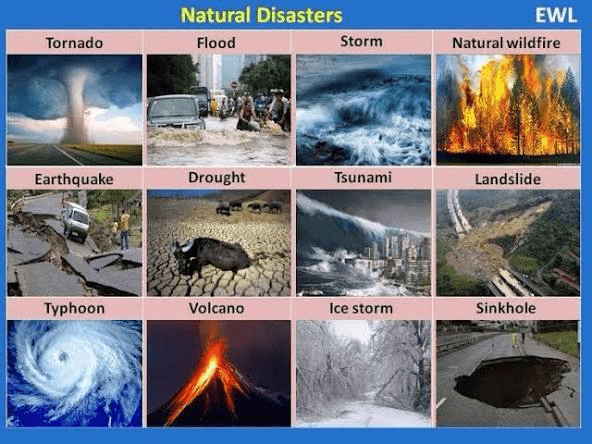
100
what is a avalanche
An avalanche is a rapid flow of snow down a hill or mountainside
100
how many people live on earth?
8.3 billion
200
what year was hurricane katrina
August 23, 2005 – August 31, 2005
200
how do people measure earth quakes
People measure earthquakes using seismographs (or seismometers) to detect ground shaking, creating a seismogram, from which magnitude (energy released) and intensity (effects) are determined using scales like the modern Moment Magnitude Scale
200
what is a natural hazard
A natural hazard is a powerful, naturally occurring event (like an earthquake, flood, volcano, or hurricane) that threatens people, property, and the environment, with the potential to cause damage, destruction, and loss of life.
300
the number 1 state with the most tornadoes
Texas. Texas experiences the highest number of tornadoes annually. The National Weather Service and NOAA report that the state sees an average of over 155 tornadoes per year. Central Texas is particularly active, with tornado activity driven by warm Gulf air clashing with cold air from the north
300
how do people measure tornadoes
using the Enhanced Fujita (EF) Scale
300
what is the difference between and nature disaster and natural hazard
A natural hazard is a potential threat from a natural event (like an earthquake or hurricane), while a natural disaster occurs when that hazard actually impacts a community, causing significant damage, loss of life, or disruption, meaning a hazard becomes a disaster when people and property are affected. Essentially, hazards are the natural processes themselves, whereas disasters are the severe consequences of those processes in populated areas
400
worst hurricane in history
The Great Hurricane of 1780
400
what was the worst tsunami
Approximately 230,000 people died in the 2004 Indian Ocean earthquake and tsunami. It is one of the deadliest disasters in modern history. The Sumatra-Andaman earthquake, which caused the tsunami, is estimated to have released energy equivalent to 23,000 Hiroshima-type atomic bombs
400
what was the worst tornado
The tri-state tornado
March 18, 1925, in Missouri, Illinois and Indiana. The tri-state tornado remains the deadliest in U.S. history. It crossed from southeastern Missouri, through southern Illinois and then into southwestern Indiana.
500
what was the worst natural disaster ever?
1900 Galveston Hurricane (deadliest with ~8,000+ deaths)
500
the rarest natural hazard
Limnic eruptions
A limnic eruption, also known as a
lake overturn, is an extremely rare and catastrophic natural disaster where a massive cloud of dissolved gases—primarily carbon dioxide —suddenly erupts from deep lake waters
500
what was the worst avalanche
The worst avalanche by death toll was the 1970 Huascarán avalanche in Peru, triggered by an earthquake, killing an estimated 22,000 to 70,000 people and destroying entire villages.