Matter and Energy
Force, Motion and Energy
Earth & Space
Organisms and Environments
EXTRA
100
A material that allows heat and electricity to flow through it easily.
What is a conductor?
100
The bouncing of light off a shiny surface like a mirror.
What is refraction?
100
The movement of Earth on its axis that causes the day and night cycle.
What is rotation?
100
An organism that makes its own food using energy from the sun.
What is a producer?
100
The non living parts of an ecosystem.
What is abiotic factors?
200
The amount of matter in an object, often measured using a triple beam balance.
What is mass?
200
The constants (what does not change) in an experiment.
What is the dependent variable?
200
The movement of Earth in an orbit around the Sun, taking about 365 days.
What is revolution?
200
A characteristic passed from parents to offspring, like eye color or leaf shape.
What is an inherited trait?
200
These are the living parts of an ecosystem.
What is biotic?
300
A material that does NOT allow heat or electricity to flow through it easily.
What is an insulator?
300
The bending of light as it passes from one medium to another (like air to water).
What is refraction?
300
The process that breaks down rocks into smaller pieces called sediment.
What is weathering?
300
All the living and nonliving things interacting in a specific area.
What is an ecosystem?
300
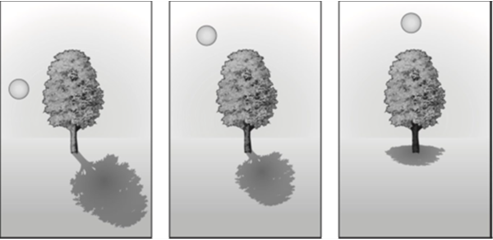
This process between the Earth and Sun causes the shadow to move throughout the day.
What is rotation?
400
The property that describes a substance's ability to dissolve in another liquid.
What is solubility?
400
A complete path that allows electrical current to flow.
What is a closed circuit?
400
The process of moving weathered sediment from one location to another.
What is erosion?
400
The path of energy flow from one organism to another in an ecosystem.
What is a food chain?
400
Students are investigating forces acting on a ball. They conducted a simple experiment.
Which part of the experiment shows an example of equal forces?
A) A ball kicked by a foot
B) A ball sitting on a chair
C) A ball falling off a table
D) A ball rolling on the floor
B) A ball sitting on a chair
500
This physical property determines whether an object will sink or float in water.
What is relative density?
500
Name all 6 types of energy. (C.M.E.L.T.S.)
What is Chemical, Mechanical, Electrical, Light, Thermal, Sound?
500
These things are needed for fossil fuels to form. (3 parts to this)
What is
1. Dead plants and animals buried under mud
2. Heat
3. Pressure (compaction)
500
An organism that breaks down dead plants and animals and returns nutrients to the soil.
What is a decomposer?
500
Which of these statements describes an organism interacting with abiotic parts of its environment?
A)A rabbit feeds on dandelions and clover plants.
B) A bird uses twigs and grass to make its nest in a tree.
C) A loblolly pine takes in water from the soil through its roots.
D) A butterfly gathers nectar from a flower and transfers pollen to another plant.
C) A loblolly pine takes in water from the soil through its roots.