PROPERTIES OF MATTER
FORCE & MOTION
ENERGY
EARTH & SPACE
WEATHER & CLIMATE
ORGANISMS & ENVIRONMENT
STRUCTURE, FUNCTION & SURVIVAL
100
A substance bubbles and changes color during a reaction.
👉 What does this indicate?
A chemical change; a new substance formed
100
Net force = 0
👉 What happens to motion?
No change; constant speed or at rest
100
Energy transfer by direct contact
👉 What is it called?
Conduction
100
What class of star is the sun?
Class G
100
What is the main source of energy for weather?
The Sun
100
What happens to energy as it moves through a food chain?
Decreases
100
What is the function of the cell membrane?
Controls what enters and leaves the cell
200
A sample has a density of 2 g/mL and is placed in water (1 g/mL).
👉 What will happen and why?
It sinks; it is more dense than water
200
Same force applied to two objects, different masses
👉 Which accelerates more and why?
Smaller mass; acceleration inversely related to mass
200
Hot air rises and cool air sinks
👉 What type of transfer?
Convection
200
What type of galaxy is the Milky Way?
Extra points if you can say where in the Milky Way we are located (100)
Spiral
200
What causes wind? How does air flow?
Differences in air pressure; Air flows from areas of high pressure to areas of low pressure
200
What type of succession occurs after a wildfire?
Extra points if you say which has a faster recovery time, primary or secondary and why (200)
Secondary
200
What do mitochondria do?
Produce energy (ATP)
300
A student mixes sand and iron filings.
👉 How can they separate them and why does it work? What kind of mixture is this?
Magnet; iron is magnetic, sand is not; heterogeneous mixture
300
A car stops suddenly and passengers lurch forward
👉 Which law explains this?
Newton’s 1st Law (inertia)
300
What does increasing temperature do to particles in terms of energy?
Higher temperature = higher kinetic energy
300
Why do seasons occur?
Earth’s axial tilt
300
How do ocean currents affect climate?
They redistribute heat
300
Why does biodiversity increase stability?
More species = more resilience to change
300
How do genes determine traits?
Code for proteins that express traits
400
A chemical equation is balanced.
👉 What does this show about matter?
Atoms are conserved and rearranged
400
Forces acting in opposite directions: 10 N left, 6 N right
👉 Net force and direction?
4 N left
400
Why does energy decrease at higher trophic levels?
extra points if you say how much is transferred (100)
Energy lost as heat at each transfer
400
Why do spring tides occur?
Extra points if you can say why neap tides occur (100)
Sun, Moon, Earth aligned → stronger gravity
400
How do greenhouse gases affect Earth’s temperature?
Extra points of you say the main greenhouse gas that has an effect (100)
Trap heat, increasing temperature
400
How do abiotic factors affect organisms?
Limit survival (water, temperature, light)
400
Why does sexual reproduction increase variation?
Combines different genes from two parents that creates new variation
500
Why is a color change alone NOT always proof of a chemical reaction?
Extra points if you give an example (200)
Must show new substance; physical changes can also alter color.
500
Why do rockets move forward when gas is expelled backward?
Extra points if you can say how all three laws work in this scenario (200)
Newton’s 3rd Law; equal and opposite forces
500
A wave has high frequency and short wavelength
👉 What does this indicate about energy?
Higher energy
500
How does plate tectonics create mountains AND earthquakes?
Extra points if you can say how rift valleys are formed (200)
Convergent continental plates collide; transform boundaries sliding past each other causing stress
500
Why can volcanic eruptions temporarily cool Earth?
Ash blocks sunlight, reducing solar energy
500
How does removing a keystone species affect an ecosystem?
Disrupts populations and food web balance
500
Why do advantageous traits become more common over generations?
Individuals with those traits survive and reproduce more (natural selection)
600
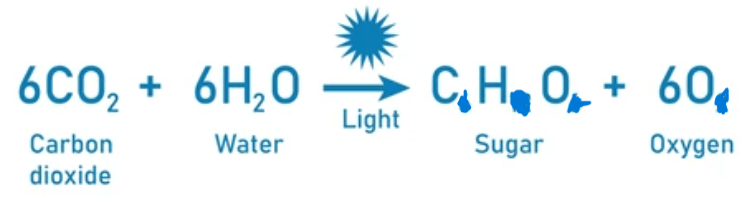 How many carbons, hydrogens and oxygens are there before and after the reaction?
Carbon =6
Hydrogen = 12
Oxygen = 18
the same number of atoms before and after, just rearranged
600
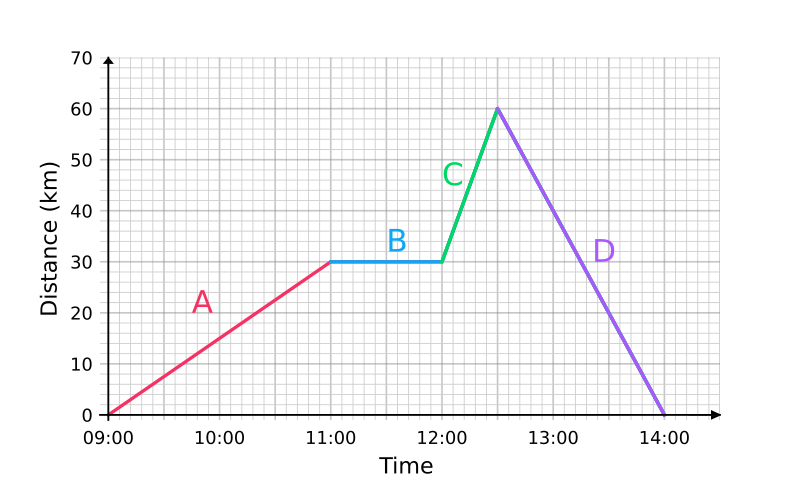
At which point is there no motion?
B
600
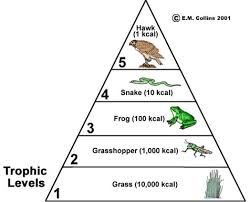
Why does a hawk receive less energy in a longer food chain?
More trophic levels = more energy lost as heat, so less energy reaches the hawk.
600
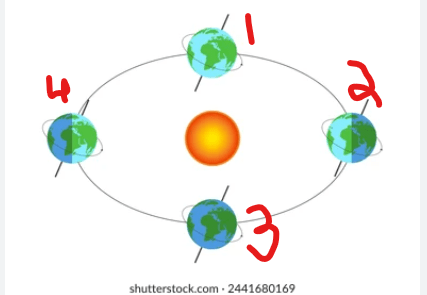 Which position shows summer in the north hemisphere? Which shows winter in the Northern hemisphere?
4 = summer in north
2 = winter in north
600
Why do coastal areas usually have milder temperatures than inland areas?
Water heats and cools slower than land, so it stabilizes nearby air temperatures.
600
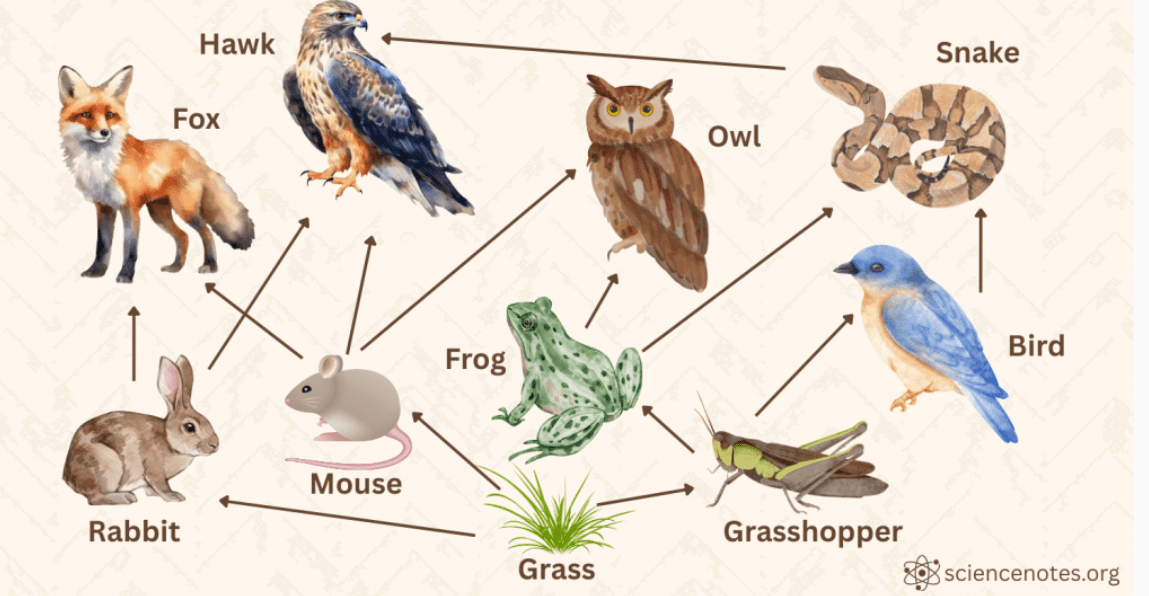
What animal would be most effected by the removal of mice and frogs and why?
The owl because that was its only sources of food. The hawk and fox have other species they can get food from.
600
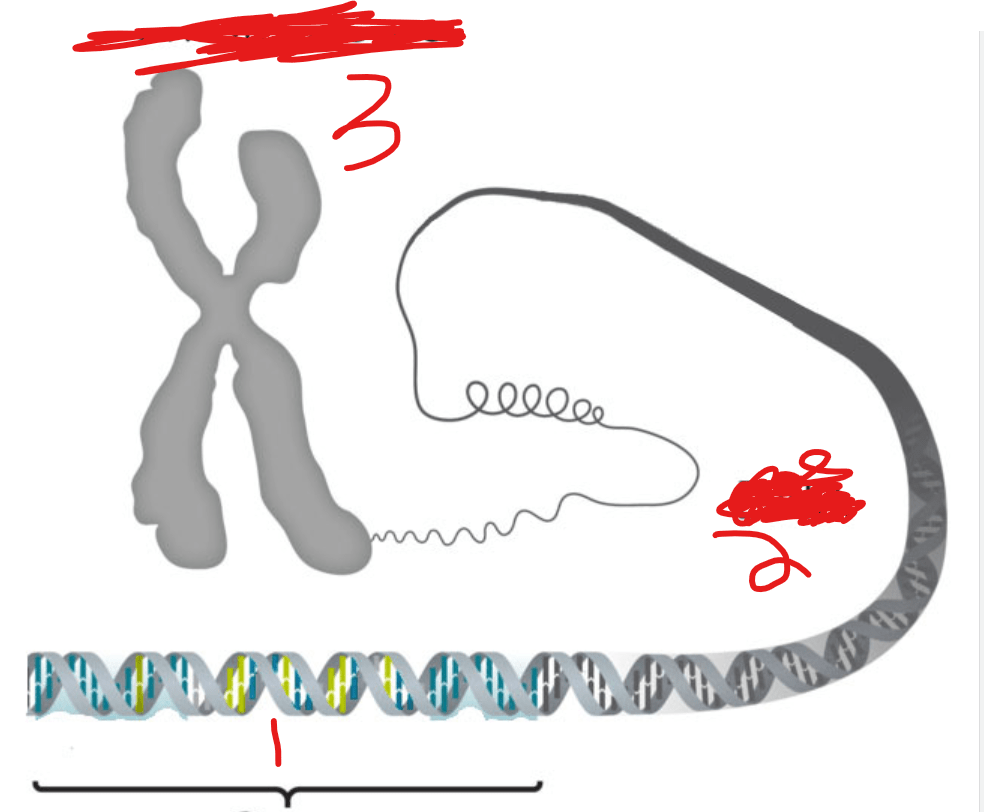 What are the following structures
1 = gene
2 = DNA
3 = Chromosome