Fossils
Landforms
Erosion, Weathering, and Deposition
Waves
Earth Processes
100
what do fossils provide evidence for?
Past environments
100
what is a valley?
An area between 2 high areas
100
What is the process where wind and water wear away land and sand?
Erosion
100
What is amplitude?
the height of a wave
100
Name an impact an earthquake has on the Earth
Cracks roads; buildings fall
200
Coral reefs that are found on land provide evidence of what?
Sea levels have changed over time
200
Describe how a mountain can be formed
Eruptions of lava flow; Deposition
200
What is the process that causes changes in the Earth surface (example: cracks in mud and dirt)?
Weathering
200
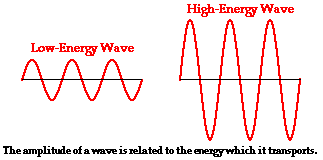
Which wave has a higher amplitude? (left=wave A; right= wave B)
Wave B
200
Name two solutions for a hurricane
Constructing seawalls; designing hurricane resistant buildings
300
where are fossils found AND where are the oldest fossils found?
Rock layers; bottom layer
300
Name a factors that can form a valley
Erosion, rivers, volcanoes, tectonic plates, or glaciers
300
what affects the rate of erosion
angle of slope
300
What is happening to a wave as it gets closer to the coastline?
Amplitude increases
300
If a storm surge and high tides combine what will this cause?
flooding
400
Give a specific example of a clue on how we can see that the Earth surface changed over time
fish fossils- tell us there was once a water environment
400
compare and contrast a valley verses a mountain (give an reason for each)
Compare: land forms, habitats, affected by erosion and weathering
Contrast: formation, elevation (height), shape, climate
400
Name one way to prevent erosion.
planted grass, sea walls, (other examples...)
400
Explain how S-waves (Seismic Waves) move through the Earth's crust
Earth's crust move up, down, and sideways
400
compare and contrast the impacts of earthquakes and hurricanes
both cause sever damage; earthquakes shake the ground while hurricanes is a storm surge
500
 Compare and Contrast fossils B and E (be specific!)
fossil B is not as old as fossil E; or fossil E comes from a very early environment while fossil B comes from a more recent environment
500
Are valleys or mountains more livable for humans? Use evidence for your answer (your evidence gives you your points!)
Valleys- easier access for water, better climate and soil for crops, livable climate and terrain
500
If the angle of slope is very high what is happening to the erosion?
Erosion increases or the rate of erosion is very fast
500
How can you tell if a wave has a high frequency?
count the number of crests or troughs a wave has
500
what type of adjustments can be made to building to protect against earthquakes?
ensure the use of steel and flexible foundations for buildings