WED
Fossils
Rocks
Grab Bag
100
True/False:
Erosion can be stopped entirely.
False
100
This type of fossil is formed when an imprint of an organism is turned into rock.
Mold Fossil
100
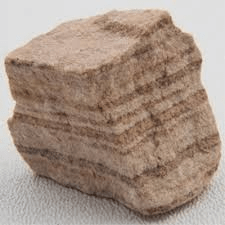 This type of rock is formed when layers of sediment harden over time. A common way to identify this type of rock is flat, visible layers.
Sedimentary Rock
100
Waves transfer:
Energy
200
Name the four agents of erosion.
Water, Wind, Ice, Gravity
200
This type of fossil is formed when an organisms entire body is trapped in tar, amber, or ice. The body does not decompose.
True-Form
200
This type of rock is formed when intense heat and pressure are applied to a rock, causing it to change.
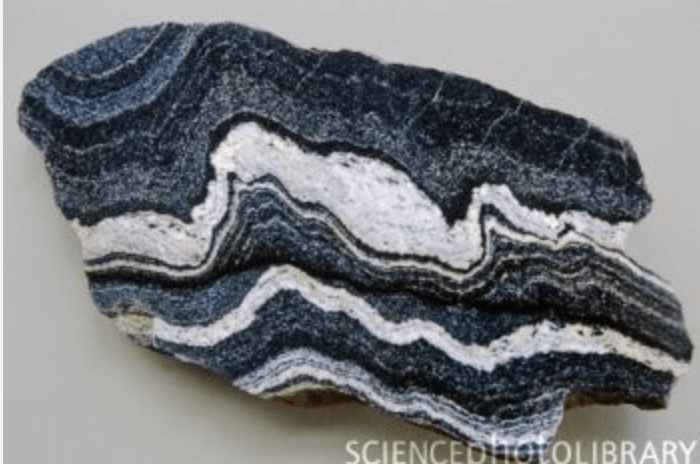
Metamorphic Rock
200
This layer of the earth is made of Magma. It is located directly below the crust.
Mantle
300
New layers of sediment forming at the bottom of the ocean.
Deposition
300
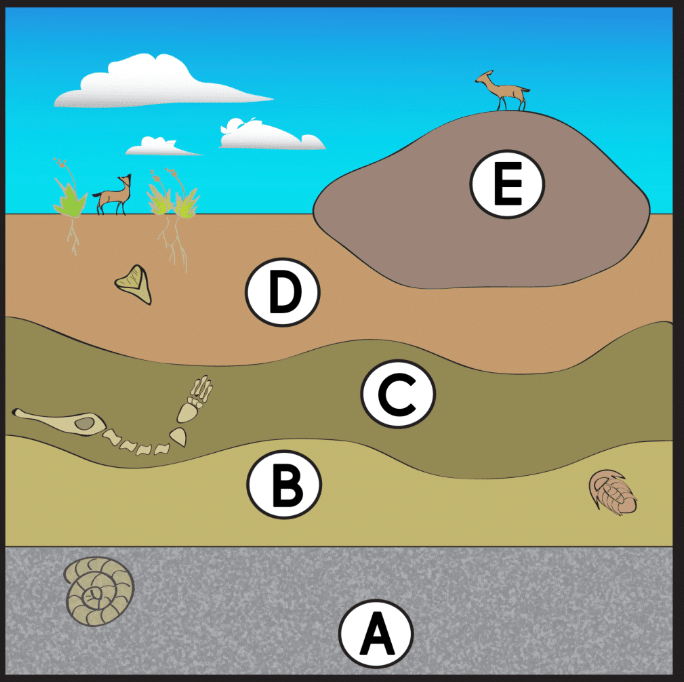 A scientist wants to tell the story of how this rock sample changed over time. Where should the scientist begin their story? Why?
Layer A because it is the oldest layer.
300
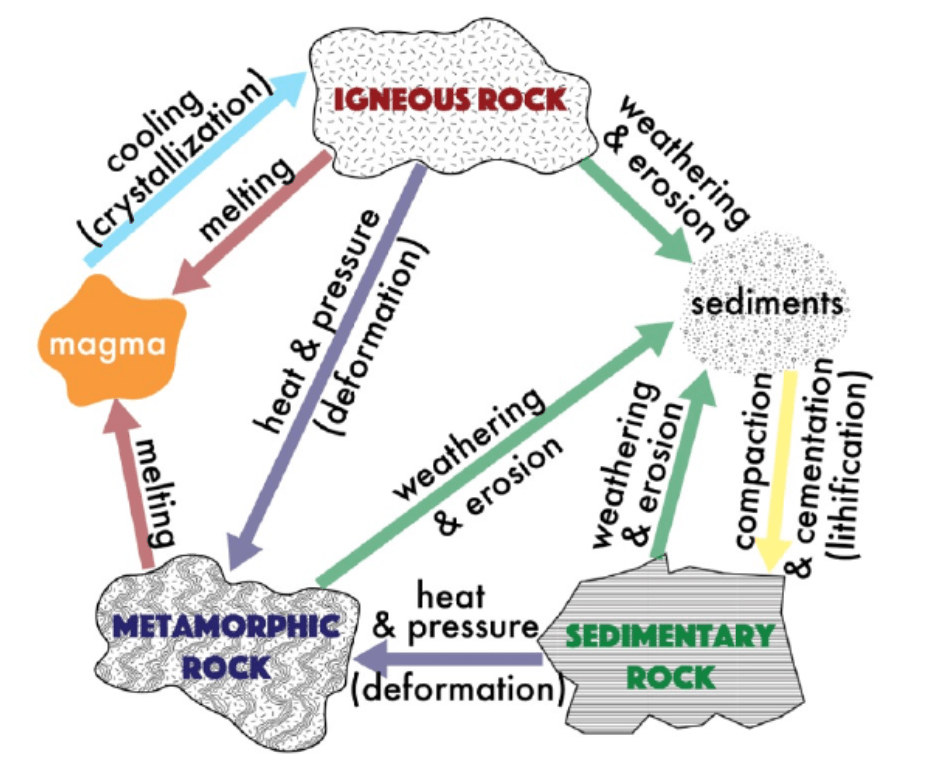
This is the process where rocks can change into other types of rocks.
Rock Cycle
300
When water seeps into a rock crack, freezes, and expands the rock, causing it to break.
Ice Wedging
400
Tree roots growing in the cracks of rocks and expanding the rock.
Weathering (Root Wedging)
400
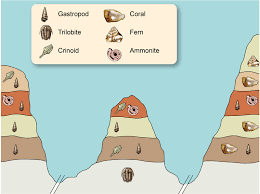 Which fossil is the youngest?
Fern
400
Explain how a sedimentary rock can change into an igneous rock.
The sedimentary rock will melt and cool into igneous rock.
400
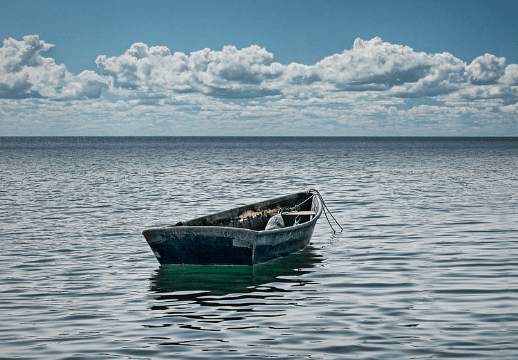 Describe the motion of the boat in the ocean as waves pass through.
The boat will bob up and down.
500
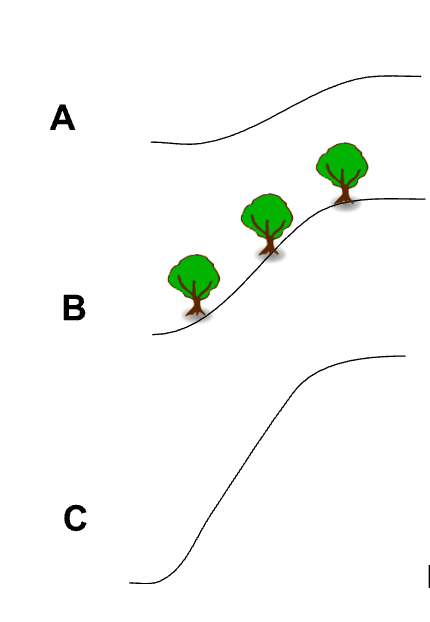
Which slope has the greatest chance of a landslide? Why?
Slope C because it is the steepest slope, and there is no vegetation.
500
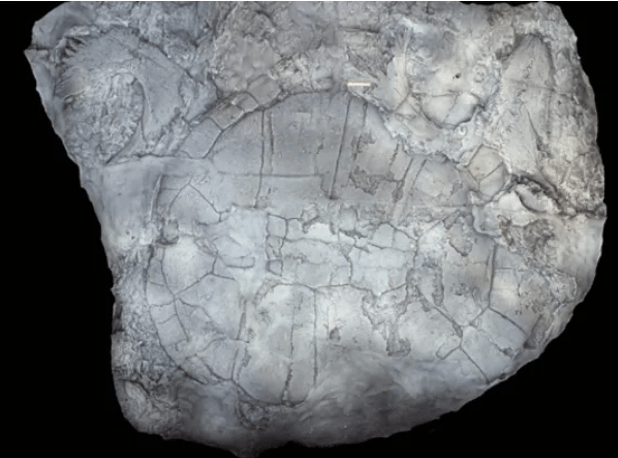 This is a fossil of a tropical turtle that was discovered in the Arctic. What does this say about the environment where the turtle was discovered?
The landscape changed from a tropical environment to an arctic environment over time.
500
Term scientists use when determining the relative order of past geological events and rock formations without assigning specific numerical ages.
Relative Dating
500
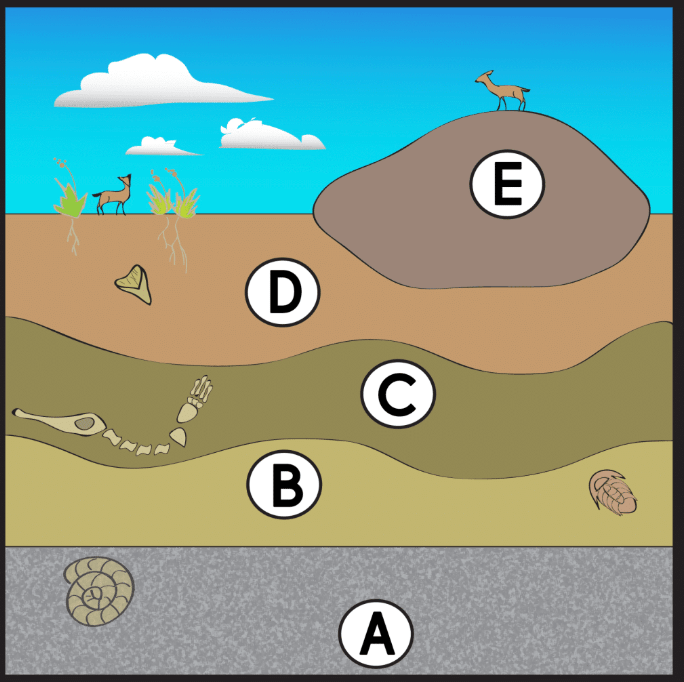
Explain one time the landscape has changed over time.
Answers may vary.