Miscellaneous
Without a Trace
Imagery
location, location, location
red pill blue pill
100
Which of the following activities can be considered to post the least amount of risk for a patient with epilepsy to pursue?
A. Motorbike riding
B. Hang gliding
C. Target shooting
D. Bullfighting
C. Target shooting
100
The slow activity seen in the anterior channels in the following EEG most likely represents: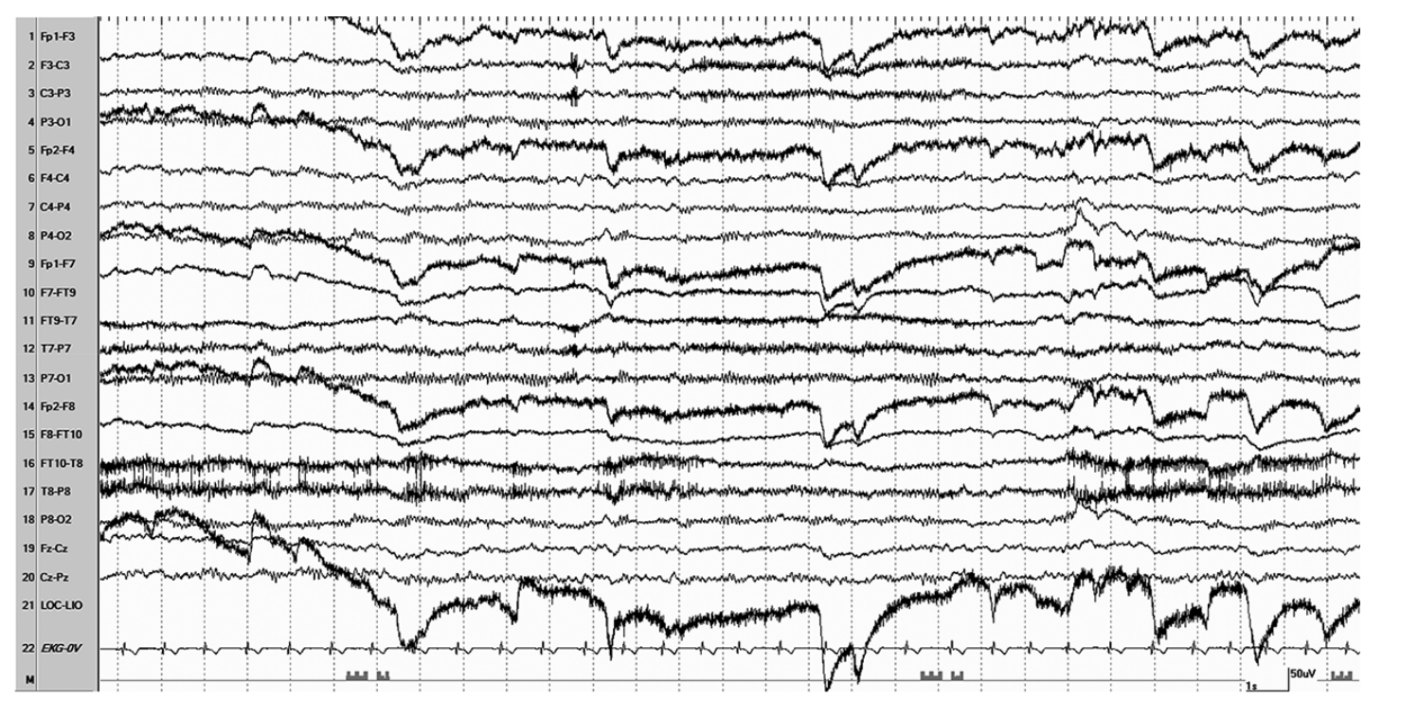
A. Horizontal nystagmus
B. 60-Hz line noise
C. Sweat artifact
D. Frontal intermittent rhythmic delta activity (FIRDA)
C. Sweat artifact
100
A 10-year-old girl with cognitive impairment presents with seizures since the age of 5 years. She has focal seizures characterized by staring, eye deviation to left, left arm posturing, and unresponsiveness lasting <1 min followed by drowsiness. Axial FLAIR images of her brain MRI are shown. Which of the following findings is most likely to be seen on physical exam? 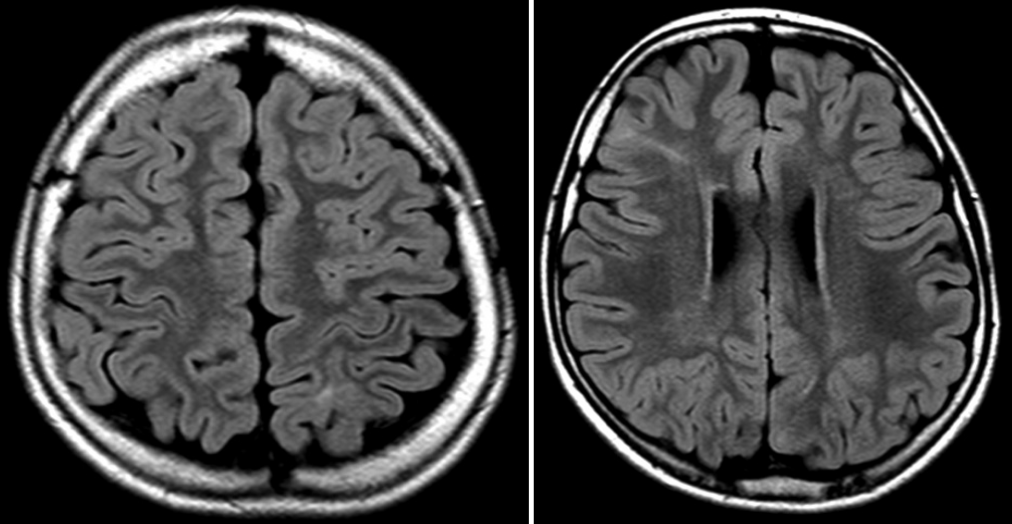
A. Café au lait spots
B. Ash leaf spots
C. Linear, raised hyperpigmented lesions
D. Nevus flammeus
B. Ash Leaf Spots
100
Localize this seizure semiology:
Fencing pose 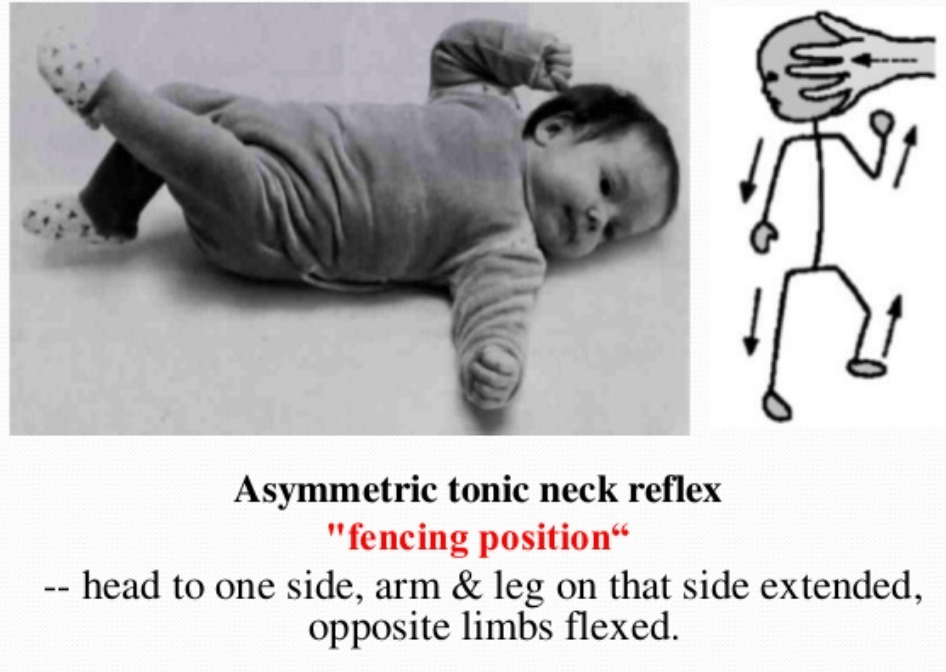
Contralateral frontal and temporal lobes
100
An 8-year-old boy was noted to be staring in class. His teacher was concerned that he may be having seizures, but his parents never witnessed any convulsions. Hyperventilation induced a brief staring episode with swallowing automatisms. Soon after the seizure, he appeared normal. Which of the following would be the best antiepileptic drug to start?
A. Ethosuximide
B. Valproate
C. Lamotrigine
D. Carbamazepine
A. Ethosuximide
200
A 9-year old boy has seizures characterized by staring, sudden impairment of consciousness with complete unresponsiveness, and pause in ongoing activity lasting 20 seconds. The EEG shows 3Hz spike-wave discharge. About 6 seconds after the onset of the EEG discharge, he has mild myoclonic twitching of eyelids, which persists for a few seconds. His seizure is best classified as this type.
Typical absence seizure
200
18yo female with new-onset seizures undergoes a routine EEG as shown in the following (filter 1-70Hz). Point 1 and Point 2, respectively, correspond to: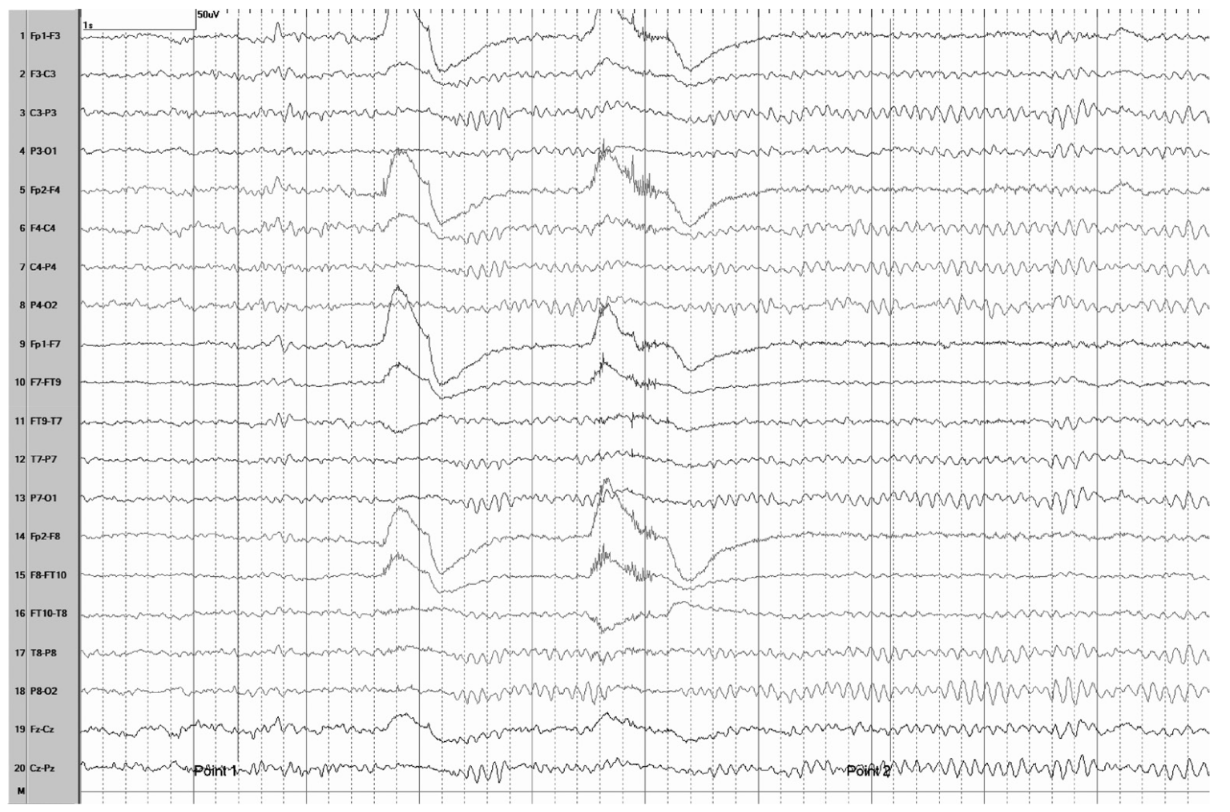
Eyes open and eyes closed
200
A 6-year-old, right-handed boy with mild developmental delay and sensory integration disorder presents with intractable epilepsy. His seizures consist of throat clearing, unpro- voked laughter, and postictal confusion. Neurological examination was nonfocal. MRI was normal. Ictal EEG showed initial, rhythmic, left frontotemporal fast activity with rapid spread to bilateral fronto-central regions. An ictal single photon emission computer tomography (SPECT) scan was performed as shown in the following, with the injection administered within 10 seconds of seizure onset. Where is the seizure focus?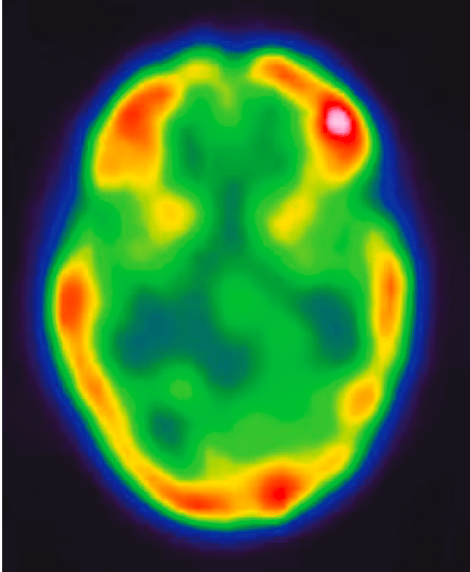
left frontal
200
Localize this seizure semiology:
Gelastic
Mesial temporal or hypothalamus
200
Which of the following is the most common adverse effect of vagus nerve stimulation (VNS) 3 months after implant?
A. Cough
B. Palpitation
C. Dyspnea
D. Hoarseness
D. Hoarseness
300
Interictal epileptiform discharges are LEAST likely to occur in this stage of sleep.
REM sleep.
300
An 11yo girl with seizures consisting of brief eye fluttering is admitted for video EEG monitoring. Her EEG is shown below. Which is true regarding the predominant waveforms seen in this segment?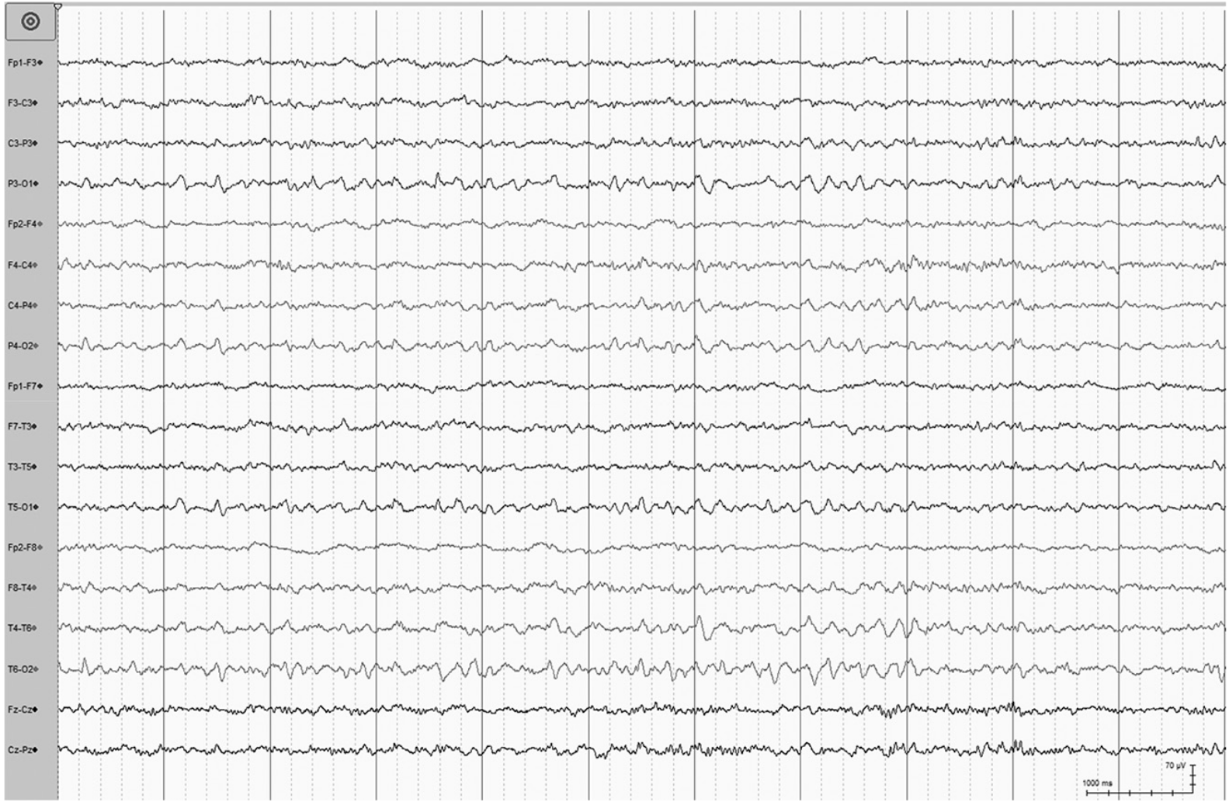
A. They are seen during light sleep
B. They are normal during wakefulness in young children
C. They appear when during scanning or reading
D. They are associated with an increased risk of epilepsy
A. They are seen during light sleep
300
A 1-year-old girl presents with intractable epilepsy. She was born at full term and was noted to have an extensive port wine stain over the right side of her face. At 6 weeks of age, she was diagnosed with epilepsy after she had focal motor seizures. Currently, she continues to have daily seizures despite treatment with four antiepileptic drugs (AEDs) and aspirin. On exam, she has moderate left upper extremity weakness and right gaze preference. An axial, postcontrast, T1 image of her MRI is shown. Which of the following statements describes her diagnosis and the best treatment option?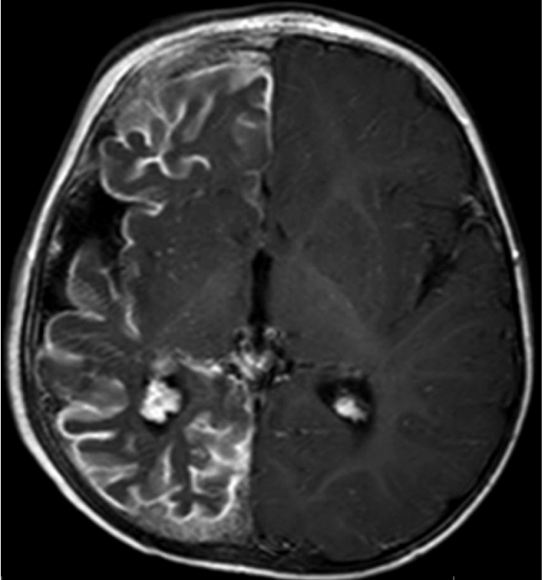
A. She has right occipital cavernoma and stereotactic thermal laser ablation is indicated
B. She has Sturge–Weber syndrome (SWS) and functional hemispherectomy is indicated
C. She has leptomeningeal carcinomatosis, and biopsy and chemotherapy are indicated
D. She has right occipital arteriovenous malformation (AVM) and radiosurgery is indicated
B. She has Sturge–Weber syndrome (SWS) and functional hemispherectomy is indicated
300
Localize this seizure semiology:
Loud vocalization
Frontal and temporal lobes
300
Which of the following statements is true regarding gabapentin?
A. It acts on the voltage-gated sodium channels
B. Its bioavailability is independent of its dose
C. It is contraindicated in patients with porphyria
D. It may worsen myoclonus
D. It may worsen myoclonus
400
Which of the following occurs in status epilepticus (SE)?
A. Destruction of gamma-aminobutyric acid (GABA) receptors
B. Internalization of N-methyl-D-aspartate (NMDA) receptors
C. Efflux of calcium
D. Overexpression of neuropeptite Y
A. Destruction of gamma-aminobutyric acid (GABA) receptors
400
The frequency of the posterior dominant rhythm (PDR) is:
A. 3Hz by age 3 months
B. 4Hz by age 12 months
C. 6 Hz by age 3 years
D. 10Hz by age 8 years
A. 3Hz by age 3 months
400
A 12-year-old girl presents with seizures since age 6 years. Seizures consists of tingling in the mouth and tongue followed by generalized convulsions. She was developmentally normal. An axial T2 image of her brain MRI is shown. What is the most likely diagnosis? 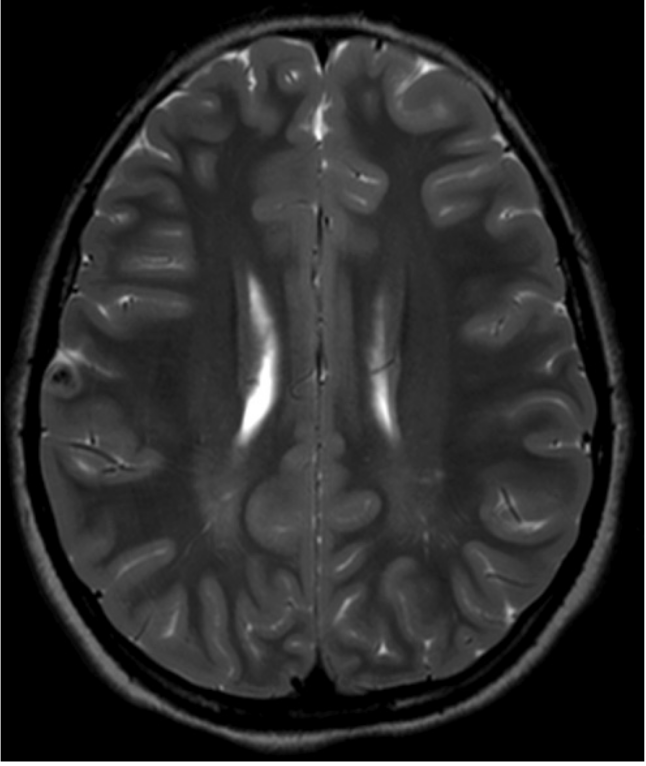
A. Cavernoma
B. Ganglioglioma
C. Meningioma
D. Pilocytic astrocytoma
A. Cavernoma
400
Localize this seizure semiology:
Sensation of constriction, suffocation or choking
Insula
400
Which of the following adverse effects are associated with the use of felbamate?
A. Thrombocytopenia and liver failure
B. Aplastic anemia and liver failure
C. Aplastic anemia and renal failure
D. Hemolytic anemia and liver failure
B. Aplastic anemia and liver failure
500
A 1-year-old boy presented with episodes of sudden extension of upper extremities, quick head drop, and upward rolling of eyes. Initially, the episodes occurred once a day and subsequently increased in frequency to occur in short clusters over 3 seconds. Cognitive development and behavior remained normal. Interictal EEG was normal. During seizures, the EEG showed irregular, generalized polyspike-and-wave discharges. His mother had febrile seizures as a child. Brain MRI was normal. His seizures were controlled after initiation of valproate. What is the most likely diagnosis?
Benign myoclonic epilepsy of infancy.
500
Which of the following statements is true regarding the evolution of sleep spindles?
A. They are first seen around age 2-3 months
B. They exhibit midline (vertex) predominance at 6 months
C. They reach a frequency of 14 Hz by 1 year
D. They have a burst duration of <1 second by 2 years
A. They are first seen around age 2-3 months
500
A 3-mo old girl presented with episodes of flexion of her neck and extremities, right more than left, which occurred in clusters, most frequently upon awakening. On exam, she had macrocephaly and hypotonia in the axial musculature. EEG showed high amplitude chaotic delta activity with intermixed multifocal spikes on the left side with relatively preserved normal background over the right. Her T2 MRI image is shown. What is the best treatment option for this child? 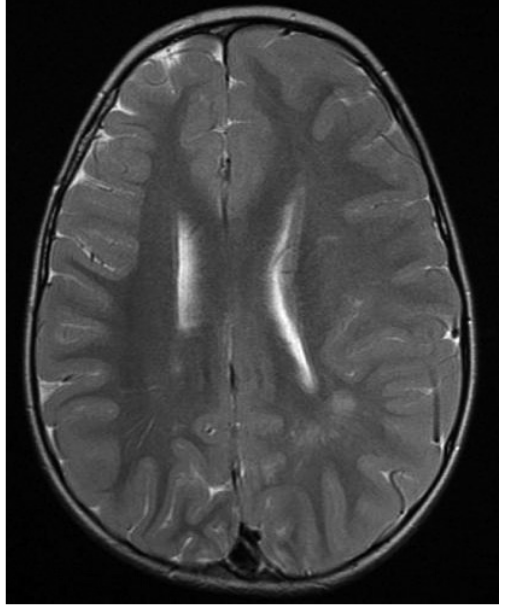
A. Adrenocorticotropic hormone (ACTH)
B. Vigabatrin
C. Functional hemispherectomy
D. Intravenous immunoglobulin
C. Functional hemispherectomy
500
Localize this seizure semiology:
Post-ictal nose rubbing
Ipsilateral temporal and frontal lobes
500
Which of the following visual disturbances is associated with vigabatrin treatment?
A. Irreversible homonymous hemianopia
B. Irreversible, bilateral, concerntric peripheral visual field constriction
C. Irreversible, bilateral, bull’s eye maculopathy
D. Reversible, bilateral, concentric peripheral visual field constriction
B. Irreversible, bilateral, concerntric peripheral visual field constriction