Species Interactions & Populations
Energy Flow & Ecosystem Change
Metabolism & Homeostasis
Nutrition & Disease Risks
Pop Culture
100
What are the two types of factors that make up an ecosystem? (Hint: one refers to living things, the other to non-living things).
Biotic (living) and abiotic (non-living) factors
100
In a stable ecosystem, does energy increase, decrease, or stay the same as you move up from producers to consumers?
Energy decreases.
100
What is the "sweet spot" or stable state that the body tries to maintain for blood glucose levels called?
Homeostasis
100
What are the three main classifications of food in the NOVA system used in class?
Unprocessed (or Minimally Processed), Processed, and Ultra-Processed
100
Which sandbox game exploded in popularity in the 2010s, allowing players to build entire worlds out of blocks?
Minecraft
200
In a mutualistic relationship, how are the two species affected?
Both species benefit.
200
In a food chain or food web diagram, what do the arrows connecting two organisms represent?
They represent the direction of energy flow (pointing from the organism being eaten to the organism that eats it).
200
Which organ is responsible for releasing insulin when blood glucose gets too high?
The Pancreas.
200
If you were looking at a food label for "Strawberry Fruit Snacks" and saw ingredients like "corn syrup, modified corn starch, sugar, and red dye 40," how would you classify this food in the NOVA system and why?
It would be classified as Ultra-Processed because it contains industrial ingredients (like dyes and modified starches) and added sugars that you wouldn't find in a home kitchen.
200
Short for "charisma," what specific slang term was named Oxford’s 2023 Word of the Year and refers to one's ability to charm or attract a romantic interest?
Rizz
300
Define Carrying Capacity in the context of a population graph. What happens to the population number when it reaches this point?
It is the maximum population size an environment can support. The population numbers will hover or oscillate around this number rather than growing indefinitely
300
According to the energy pyramid model, approximately what percentage of energy is successfully transferred from one trophic level to the next (e.g., from producers to primary consumers)?
Approximately 10%.
300
When cells take in glucose from the blood, what specific process do they use to convert that glucose into usable energy (ATP)?
Cellular Respiration.
300
What is insulin resistance and how does it affect blood glucose levels?
A condition where the body’s cells stop responding properly to insulin, causing blood glucose levels to stay high.
300
This slang term, popularized by streamer Kai Cenat, refers to the "rule" or act of stealing a bite of your friend's food.
Fanum Tax.
400
Explain the Predator-Prey relationship observed between wolves and rabbits. If the rabbit population spikes, what will happen to the wolf population shortly after, and why?
The wolf population will eventually increase because there is more food (rabbits) available to support them. If rabbits crash, wolves will eventually decrease.
400
If the Producer level in a pyramid contains 10,000 kcal of energy, how much energy will be available for the Secondary Consumers?
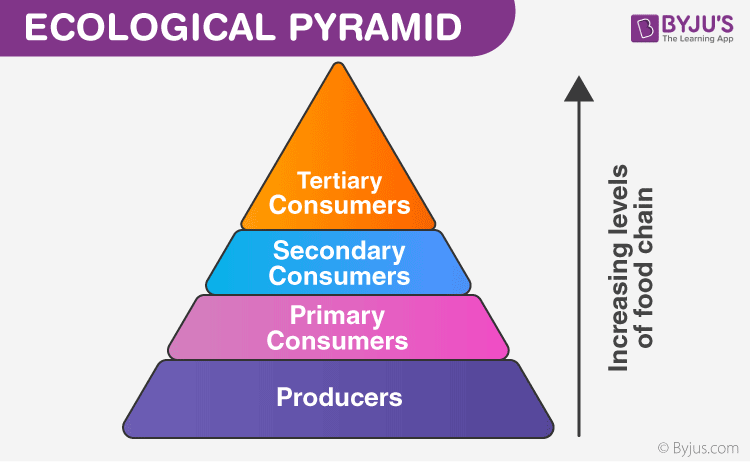
100 kcal (10,000 → 1,000 for Primary → 100 for Secondary)
400
In a healthy individual, how does the graph of blood glucose differ after eating an ultra-processed meal (high GI) versus a minimally processed meal (low GI)?
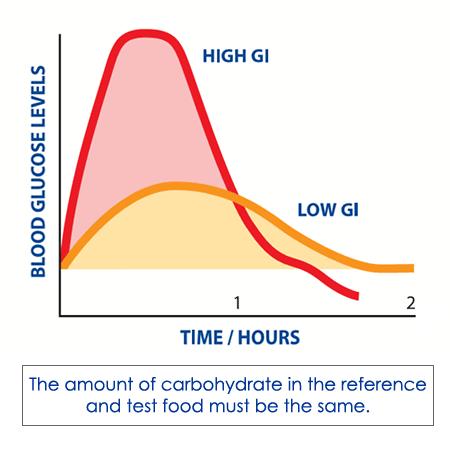
Ultra-processed foods cause a faster and higher spike in blood glucose compared to minimally processed foods.
400
What happens to the levels of glucagon in the blood when blood glucose levels go up?
Glucagon levels decrease. Glucagon is a hormone that increases blood glucose levels and therefore needs to be decreased when blood glucose levels are already high in order to maintain homeostasis.
400
In Stranger Things, what is the name of the ice cream parlor where Steve and Robin work?
Scoops Ahoy
500
While both predation and parasitism involve one organism benefiting at the expense of another, what is the primary difference regarding the effect on the prey or host? Select the answer choice that best applies.
A) Predators typically kill their prey immediately to consume it, whereas parasites generally feed on a living host without killing it immediately.
B) Predation requires the predator to be larger than the prey, while parasitism requires the parasite to be the same size as the host.
C) Predation involves physical consumption, whereas parasitism is strictly limited to microscopic bacterial or viral infections.
D) Predators rely on the prey for shelter only, while parasites rely on the host for transportation only.
A is Correct: Predators (like lions or eagles) kill their prey to eat them. Parasites (like ticks or tapeworms) need their host to remain alive so they can continue to harvest nutrients from them.
500
A producer population starts with 50,000 kcal of energy. An invasive beetle species arrives and consumes 20% of the producers (removing that energy from the main food web). How much energy will now be available at the producer level?
40,000 kcal
500
Which of the following sequences correctly describes the body's negative feedback loop response immediately after eating a high-sugar meal?
A) Blood glucose levels drop --> Pancreas releases Glucagon --> Liver releases stored glucose --> Return to Homeostasis.
B) Blood glucose levels rise --> Pancreas releases Insulin --> Muscle cells take in glucose and Liver stores it as glycogen --> Return to Homeostasis.
C) Blood glucose levels rise --> Liver releases Insulin --> Pancreas filters out excess sugar --> Return to Homeostasis.
D) Blood glucose levels drop --> Pancreas releases Insulin --> Body cells release water to dilute the sugar --> Return to Homeostasis.
B) Blood glucose levels rise --> Pancreas releases Insulin --> Muscle cells take in glucose and Liver stores it as glycogen --> Return to Homeostasis.
500
We learned that Insulin Resistance links to four major chronic diseases. Which of the following options correctly matches the disease to its specific cause?
A) Heart Disease: The pancreas works too hard and eventually fails.
B) Alzheimer’s Disease: Brain cells become resistant to insulin, starve from lack of energy, and shrink.
C) Type 2 Diabetes: High insulin signals cells to divide uncontrollably.
D) Cancer: Plaque builds up in the arteries, narrowing the blood vessels.
Answer: B (Alzheimer's Disease).
500
What was the #1 streamed song of all time on Spotify as of 2025?
Blinding Lights by the Weeknd