1.6a Sensation Basics
1.6b Vision: Anatomy & Theories
1.6c Hearing
1.6.d.e.f.g Taste, Smell, & Body Senses
2.1a Perception & Attention
2.1ab Depth & Gestalt Principles
Science Practice
Scenarios
100
Detecting energy from the environment and sending it to the brain.
What is sensation?
100
The structure that focuses light by changing shape/accommodation.
What is the lens?
100
The structure where transduction of sound occurs.
What is the cochlea?
100
People who have a greater sense of gustation than the majority of people are called________.
What are supertasters?
100
The process of organizing and interpreting sensory information.
What is perception?
100
The ability to see objects in 3D and judge distance.
What is depth perception?
100
This measure of central tendency is most affected by extreme scores.
What is the mean?
100
A student reads the sentence "The cta sat on the mat" and automatically interprets it as "The cat sat on the mat." This is an example of __________.
What is top-down processing?
200
Remy seeing colors while tasting food is an example of this.

What is Synesthesia?
200
This is the place where the optic nerve leaves the eye and no receptor cells are located.
What is the blind spot?
200
The height of sound waves that determines loudness.
What is amplitude?
200
Taste receptors detect these 6 flavors.
What are sweet, sour, salty, bitter, oleogustus, umami?
(bonus: oleogustus = fats)
200
Processing that starts with sensory input and works up to the brain.
What is bottom-up processing?
200
A binocular cue where the brain compares slightly different retinal images.
What is retinal disparity?

200
A researcher finds that students who study more tend to earn higher test scores. This finding demonstrates a ______.
What is a positive correlation?
200
This phenomenon explains why a student looks at a white wall and briefly sees red after staring at a green image for one minute.
What is an afterimage?
300
Diminished sensitivity due to constant exposure to a stimulus.
What is sensory adaptation?
300
The location with the highest density of cones.
What is the fovea?
300
Hearing loss caused by damage to the hair cells or auditory nerve.
What is sensorineural hearing loss?
300
The only sense that bypasses the thalamus.
What is smell / olfaction?
300
The long term mental frameworks that influence how we interpret stimuli.
What are schemas?
300
A monocular cue where closer objects block distant ones.
What is interposition?
300
In an experiment testing whether sleep affects memory, the number of hours slept is the ______ variable.
What is the independent variable?
300
Janet has a very difficult time reading books because the words look blurry. However, she has a very easy time driving. Janet is ____________.
What is far-sighted?
400
The minimum stimulus needed to detect a stimulus 50% of the time.
What is absolute threshold?
400
Competing theory explaining afterimages and color pairs like red–green.
What is opponent-process theory?
400
We locate sounds by comparing differences in this between our ears.
What is timing/intensity (sound localization)?
400
The sense that monitors balance using semicircular canals.
What is vestibular sense?
400
We see an object as having the same shape even when viewed from different angles.
What is shape constancy?
400
The idea that a whole is perceived as being more than the sum of its parts.
What is Gestalt?
400
A researcher gives a survey to 15 people with dichromatic colorblindness to determine how their lives are impacted by their condition. This study is an example of a __________.
What is a case study?
400
After moving into a house next to train tracks, Jordan initially finds the train noise distracting. After several weeks, he rarely notices it. This is an example of __________.
What is sensory adaptation?
500
The smallest detectable change in a stimulus.
What is the difference threshold / Just Noticeable Difference?
500
Brain ability to process features (color, motion, shape) simultaneously.
What is parallel processing?
500
In hearing, this is the theory that the rate of nerve impulses traveling up the auditory nerve matches the frequency of the tone.
What is frequency theory?
500
The sense that tracks body part movement without seeing them.
What is kinesthesis?
500
Failure to notice something obvious when focused elsewhere.
What is inattentional blindness?
500
A human's ability to visually differentiate between an object and its background.
What is Figure-Ground?

500
A psychologist sits in a coffee shop and records how many customers cover their ears when a loud espresso machine turns on, without interacting with them. This study is an example of __________.
What is naturalistic observation?
500
While reading a textbook, Maya does not notice her friend walk into the room because she is completely focused on studying. This is an example of __________.
What is inattentional blindness?
600
The principle that change must be proportional to the original stimulus to be noticed.
What is Weber’s Law?
600
Theory explaining color vision due to three types of cones—red, green, and blue.
What is Young Helmholtz/trichromatic theory?
600
Theory that different sound frequencies stimulate different parts of the cochlea.
What is Place Theory?
600
Specialized sensory receptors that detect and transmit pain signals to the brain
What are nociceptors?
600
This phenomenon proves attention is selective: you're able to carry a conversation with your partner in a loud classroom.
What is the cocktail party effect?
600
The tendency to see an unbroken whole even when parts are missing.
What is closure?
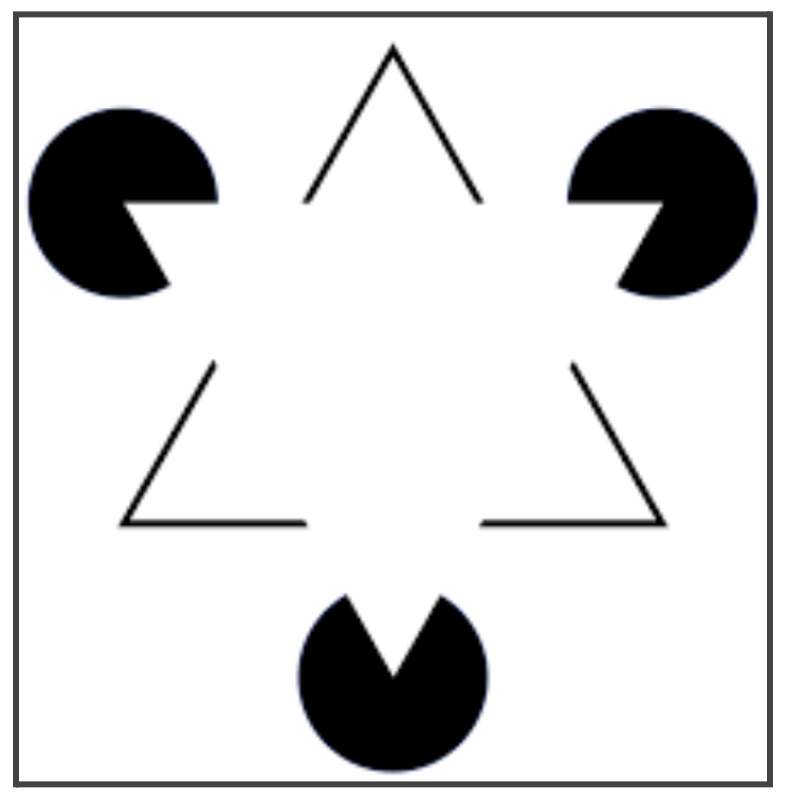
600
This statistic tells researchers the probability that their results occurred by chance. On the AP exam, a result is often considered statistically significant when it is less than .05.
What is the p-value?
600
At a concert, Brandon can hear notes played by a bass guitar. His auditory neurons work together by alternating their firing rates so that, collectively, they match the frequency of the sound wave. This is an example of _________.
What is volley theory?