Allergy/Immunology
Psych
General IM
Rheumatology
100
A 42 yo female is seen in clinic for 3 month history of nasal congestion, loss of smell/taste, and an increase in asthma symptoms. She does not smoke. Exam reveals unilateral small nasal polyp. What is the most appropriate next step in evaluation?
What is CT scan of the sinuses?
100
A 38 yo man is evaluated for an 8-week history of insomnia and irritability. He previously saw another physician in the practice, whom he describes as a “terrible doctor.” He was treated for depression for several years and has a history of several low-lethality suicide attempts, usually related to interpersonal conflicts. He also reports having turbulent relationships with his parents and siblings.
During the appointment, he makes several compliments about your bedside manner and calls you the best doctor he has ever had. In discussing his symptoms, he attributes many of them to the break-up with his previous girlfriend. After the break-up, he engaged in a 3-day drinking and gambling binge. The patient says he is doing great now because he is in a new relationship with “the perfect woman.”
Which of the following is the most likely diagnosis?
What is borderline personality disorder?
100
A 60 yo woman is evaluated for L wrist pain that began 3 months ago. She describes the pain as aching with intermittent tingling sensation over her L thumb, index, and middle fingers. Symptoms are worse at night and with repetitive motion of the wrist. She types frequently during her work day.
Exam: vitals normal; L wrist exhibits full range of motion, with no visible swelling. There is no evidence of sensory loss, muscle atrophy, or weakness.
What is the most appropriate initial management?
What is splinting of the wrist?
100
A 55 yo man presents with a swollen knee and fever. Arthrocentesis reveals a leukocyte count of 125,000 per mm, rare rhomboid-shaped crystals, and no organisms on Gram stain.
While culture findings are pending, what is the most appropriate empiric treatments?
What is Ceftriaxone and Vancomycin?
200
A 31 yo woman is evaluated for a skin rash. Initially noted the rash on her hands but now it involves her neck and earlobes. She notes that she has stopped wearing earrings. She has a h/o allergic rhinitis and had atopic dermatitis as a child.
On exam, the skin around her neck is erythematous and lichenified. Similar changes are noted on her earlobes. She also has a slight rash on her wrist, where she wears a watch.
What is the best test for identifying the cause of this patient's rash?
What is perform a patch test for nickel sensitivity?
200
A 19-year-old man is evaluated in ED after his roommate became concerned about his behavior. The patient began college 7 months ago, and since then, his roommate has watched the patient become increasingly isolated from others and lacking in emotion. The patient has frequently expressed concerns that the government is tracking his movements and even his thoughts. In the past 2 months, he has stopped attending classes and spends long periods in bed. The roommate called the patient's parents after the patient sealed up the ventilation in their room because he believed government agents were injecting gas into the building. The patient says he does not feel depressed. He had no behavioral problems before starting college, and he does not use alcohol, recreational drugs, or OTC medications.
What is the most likely diagnosis?
What is schizophrenia?
200
A 35 yo woman is evaluated during a routine follow-up exam for hypothyroidism and requests a prescription for birth control pills. She is in a new sexual relationship. She has regular menstrual cycles, and her last menstrual period was 4 weeks ago. Her most recent Pap smear was obtained 2 years ago and was normal. Her only medical problem is hypothyroidism treated with levothyroxine. Her mother had breast cancer at age 67 years.
On exam, vital signs are normal. BMI is 25. The remainder of the examination is unremarkable.
Which of the following is the most appropriate next step in her management?
What is urine pregnancy test?
200
A 32 yo woman is evaluated during a follow-up visit for a 3-month history of arthralgia affecting the hands, wrists, knees, and feet. At her initial visit 3 weeks ago, joint examination demonstrated nine tender and six swollen joints; prednisone, 10 mg/d, was initiated at that time. She now reports some benefit from the prednisone for morning stiffness and joint pain. Family history is notable for her mother with seropositive erosive rheumatoid arthritis.
Laboratory studies from 3 weeks ago showed an ESR of 38 mm/h, and high levels of rheumatoid factor and anti–cyclic citrullinated peptide antibodies.
On exam today, vital signs are normal. The second and third proximal interphalangeal joints on the right hand and the second metacarpophalangeal joint on the left hand are tender and swollen. Her clinical disease activity index score is 12, indicating moderate disease activity.
Radiographs of the hands and feet are normal.
What is the most appropriate treatment for this patient?
What is initiate methotrexate?
300
A 37 yo man is evaluated for a nighttime cough that has lasted 6 weeks. He says he had asthma during childhood but that he has had no symptoms for 20 years. He has never smoked. He had an upper respiratory infection 6-8 weeks ago, from which he recovered. Now, his cough wakes him from sleep about 3 times per week; in addition, he has chest tightness with exercise that is relieved by rest. Exam is normal including normal breath sounds. Spirometry demonstrates an FEV1 of 78% predicted and an FEV1/FVC ratio of 64%.
What is the most appropriate tests to determine if this patient has asthma?
What is measurement of FEV1 before and after administration of an inhaled beta-agonist?
300
A 36 yo woman is brought to the ED after being found unresponsive in a fast food restaurant. EMS report that when they arrived, she was unresponsive with pinpoint pupils and a respiratory rate of 6. She was given 3 doses of intranasal naloxone after which she became arousable and was able to answer questions. Finger stick glucose was 77.
She reports that she injects heroin several times daily and injected her usual amount just before losing consciousness. She is prescribed a benzo and took her prescribed dose that morning. She reports that she has not eaten for several days.
Her exam in the ED is notable for moderate psychomotor agitation, enlarged pupils, piloerection, and mild rhinorrhea.
What is the most likely explanation for this pt's episode of unresponsiveness?
What is heroin contaminated with fentanyl?
300
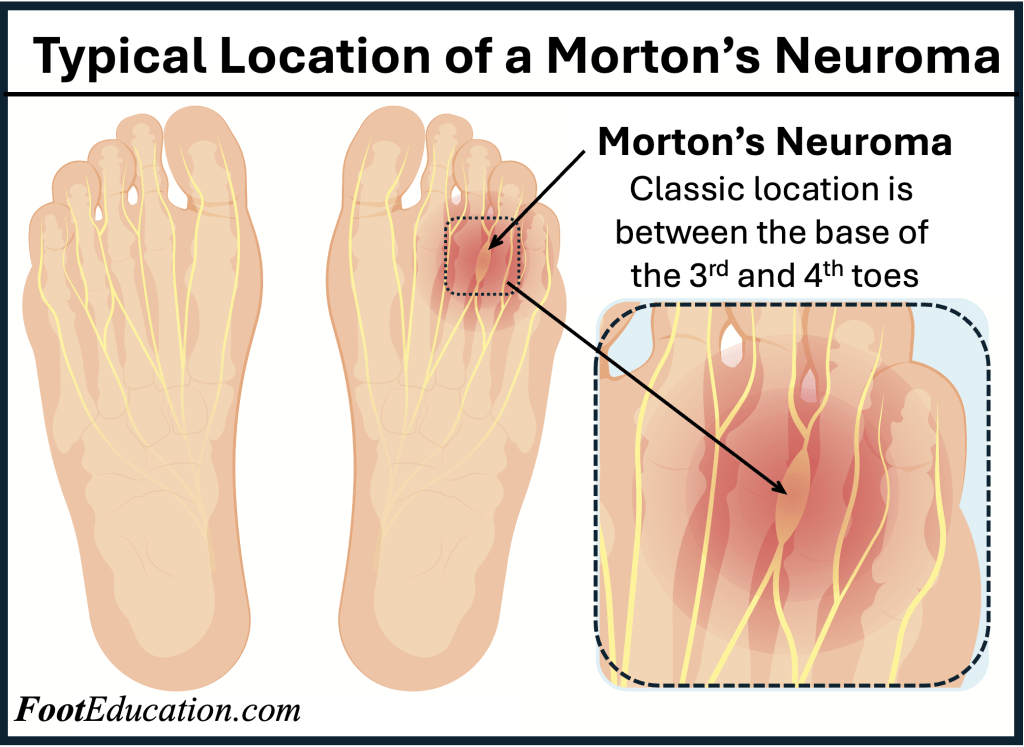
A 42 yo woman is evaluated for a 2-month history of left foot pain between the third and fourth toes, accompanied by a burning sensation and the sensation of walking on a pebble. She has not experienced any trauma in the area, and she does not have edema or erythema. Symptom onset was insidious, and the pain only occurs when she is standing or walking. She works as a restaurant hostess and wears high-heeled shoes for her job.
On exam, vital signs are normal. The left foot appears normal, with no palpable abnormalities or tenderness between the third and fourth toes. Sensation is intact throughout the foot, and posterior tibial and dorsalis pedis pulses are palpable.
What is the most likely diagnosis?
What is a morton's neuroma?
300
An 83 yo man describes frequent episodes of severe pain, swelling, redness, and warmth in the joints of his hands and feet during the past year. PMH includes T2DM, HTN, CKD, and tophaceous gout. Current medications are asa 81 mg daily, metoprolol succinate 75 mg daily, losartan 50 mg daily, allopurinol 200 mg daily, HCTZ 25 mg daily, and acetaminophen PRN. No recent changes in medications.
Exam reveals multiple tophi in his olecranon bursae; at the 2nd, 3rd, and 4th proximal interphalangeal joints of both hands; and at the 3rd interphalangeal joint of his L foot, with erythema and swelling surrounding each joint.
Labs:
BUN - 42
Cr - 1.7
Albumin 3.0
Uric acid - 8.2
What medication is most likely exacerbating this patient's hyperuricemia?
What is HCTZ?
400
A 35 yo man with chronic, crampy abdominal pain and diarrhea that is not related to any specific food is found to have low levels of food-specific immunoglobulin E against wheat and soy. No other symptoms. Exam is benign.
What is the most likely diagnosis?
What is IBS?
400
A 47 yo woman is evaluated during a follow-up visit for major depressive disorder that was diagnosed 2 months ago. At that time, she reported a 4-month history of anhedonia, depressed mood, decreased energy, insomnia, and weight loss. Her PHQ-9 score was 14, indicating moderate depression. She was prescribed sertraline, and her symptoms improved; her PHQ-9 score is now 9. However, she is distressed because she has had anorgasmia since starting sertraline.
What is the next most appropriate step in treatment?
What is discontinue sertraline and initiate bupropion?
400
A 49 yo woman is seeking therapy for a 6-month history of increasing hot flushes, now occurring six to eight times per day. She also has night sweats that occur 3-5 times per night and result in disrupted sleep and daytime fatigue. Her last menstrual period was 14 months ago. She has no personal or family history of breast or ovarian malignancies. She takes no medications.
On exam, vital signs are normal, as are pelvic and breast examinations.
What is the most appropriate management?
What is combination hormone therapy with estrogen and progesterone?
400
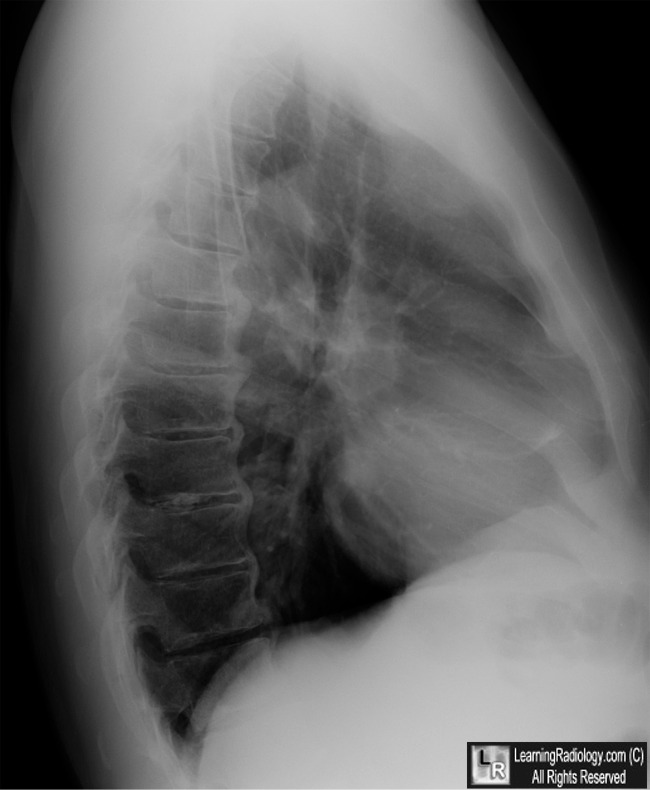
A 74 yo man is evaluated for pain and stiffness in the mid and lower spine that has progressively worsened over the past 10 years. The pain is worse with physical activity. He notes recent difficulty when bending to pick something up from the floor. He takes no medications.
On exam, vital signs are normal. No rash or nail changes are seen. Limited range of motion and pain on motion of thoracic and lumbar spine are noted. There is no peripheral joint swelling or tenderness and no sacroiliac tenderness. The FABER test of the hip is normal.
Laboratory studies show a normal ESR.
Thoracolumbar spine radiographs reveal bridging ossification on the right side along the anterolateral aspects of the vertebral bodies of T9-L2. Radiographs of the sacroiliac joints are normal.
What is the most likely diagnosis?
What is diffuse idiopathic skeletal hyperostosis (DISH)?

500
A 62 yo man is admitted to the hospital following a MVA. He underwent a craniotomy for treatment of intracranial hemorrhage following which he was started on carbamazepine. On post-op day 19, he was noted to have rash on his chest, arms, proximal legs, and buttocks as well as redness to his face. The next day he had diffuse papules and macules on his trunk and proximal extremities, tachycardia, and hypotension.
On exam, vital signs are normal after fluid resuscitation. He is lethargic and confused. Skin findings:
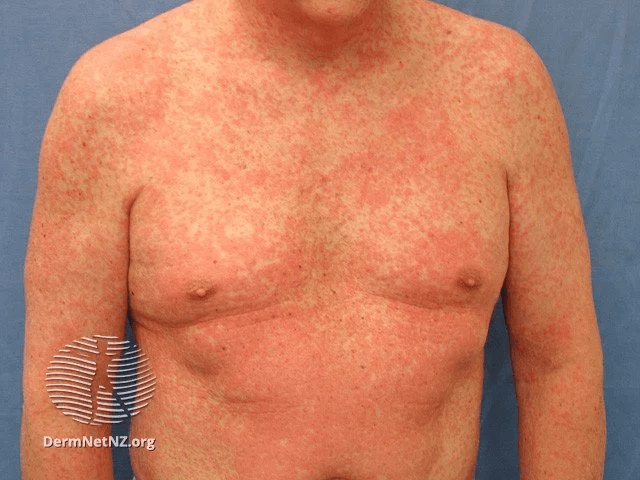
He has prominent swelling of his face. There is minimal skin erosion and no sloughing when shearing pressure is applied. There are a few erosions in the oropharynx but no eye or genital involvement. Generalized lymphadenopathy is present.
What is the most likely cause of this patient's clinical presentation?
What is DRESS (Drug reaction with eosinophilia and systemic symptoms)?
500
A 42-year-old woman is approaching discharge from the hospital for alcohol withdrawal. She has had severe alcohol use disorder for several years but says she is willing to do whatever it takes to quit. Medical history is also significant for hypertension and chronic kidney disease. Medications are amlodipine and chlorthalidone.
Physical examination, including vital signs, is normal.
CBC and CMP are normal. The estimated GFR is 50.
What is the most appropriate pharmacologic treatment?
What is Naltrexone?
500
A 61 yo man is evaluated in an urgent care center for acute frontal headache and pain in the R eye that began a few hours earlier while he was watching his grandson's basketball game. The pain extends through the anterior scalp and downward across the nose. The patient is also nauseated and vomiting acutely. He has photophobia and notes that lights appear “fuzzy.” PMH is significant for hypertension and anxiety. Medications are hydrochlorothiazide and citalopram.
On exam, blood pressure is 150/90 mm Hg; other vital signs are normal. Severe conjunctival erythema; photophobia; a mid-dilated, nonreactive pupil on the right side; and corneal cloudiness are noted. Upon gentle palpation of the eyes, tenderness and increased firmness are noted over the right globe compared with the left. Right eye visual acuity is grossly decreased. No discharge is noted.
What is the most likely diagnosis?
What is acute angle-closure glaucoma?

500
A 32 yo woman is evaluated in the ED for a 2-day history of headache and vomiting. She was diagnosed with Raynaud phenomenon 1 year ago and GERD 6 months ago. Her only medication is omeprazole.
On physical examination, temperature is 38.0 °C (100.4 °F), blood pressure is 240/140 mm Hg, pulse rate is 88/min, respiration rate is 16/min, and oxygen saturation is 96% breathing ambient air. Skin findings are digital pitting at the ends of the fingers, thickening of the skin over the fingers and dorsum of the hands, and thickening with poikilodermic changes over the skin of the anterior chest.
Labs:
Hct 32%
Platelet count 75,000
Creatinine 1.5
UA with 2+ protein; no blood
Peripheral blood smear shows diminished platelet numbers and schistocytes.
What is the most appropriate treatment?
What is ACEi (captopril)?